


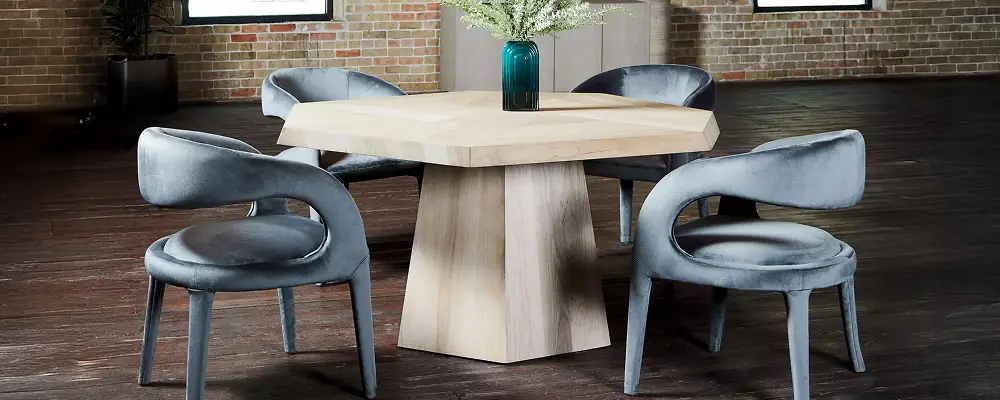
How to Match Dining Chairs to Your Table
You don’t need a perfectly matched set for your dining space to feel pulled together. In fact, mixing styles, shapes, or colors often leads to a more thoughtful, lived-in look. The key is balance. Your chairs and table should complement each other without blending into one flat, matchy-matchy moment. Key Takeaways- Your dining chairs don’t need to match your table perfectly
- Balance is key! Think proportions, colors, shapes, and textures
- Avoid going too matchy-matchy or picking style over comfort
- Mixing materials or finishes often makes the space feel more inviting
- Plus, we highlight sets and mix-and-match options to make it easy
-
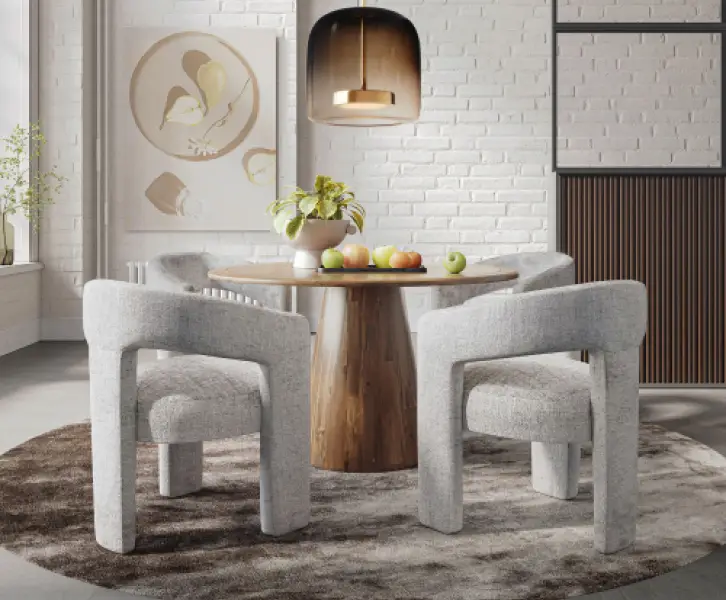
Mixing materials? Great. But when it comes to style, staying in one lane usually works best. Matching your table and chairs within the same design family keeps things cohesive and makes your space feel intentional.
For example:
A mid-century table pairs effortlessly with club-style dining chairs. Try something like the Nash Walnut Round Pedestal Dining Set for a clean, sculptural feel.
Farmhouse tables look right at home with bench seating or ladder-back chairs. The Arlo Natural Extendable Set gets it just right.
For something more modern, go for mixed materials like wood with metal, or upholstered seats with sleek lines. The Lawson Gathering Table Set shows how to do this without overcomplicating the look.
You don’t need to match every detail, but make sure the overall vibe feels consistent.
-
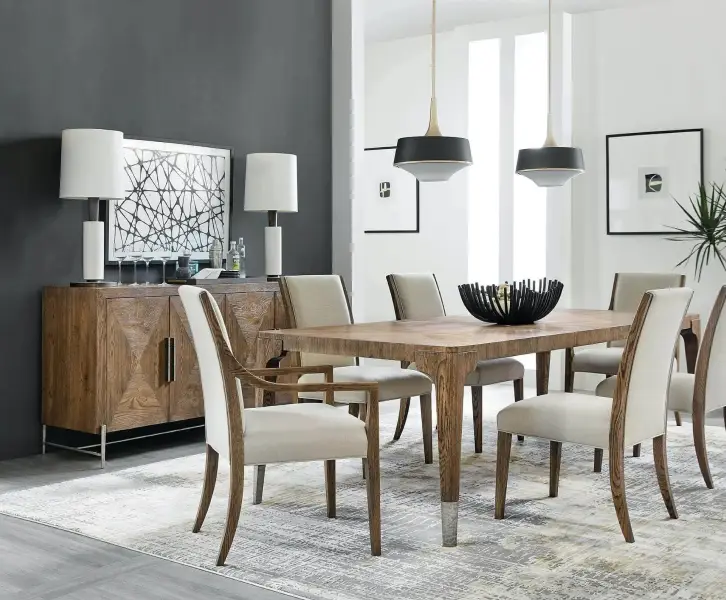
Before you fall in love with a look, make sure it will work in your space. You’ll want about 24 inches of space between chairs so people aren’t elbow-to-elbow at dinner. Also, check that chair arms can slide under the table without bumping the apron or legs.
Pro tip: Standard dining tables are around 30 inches high. Your chairs should have a seat height of 18–19 inches to leave room to sit comfortably.
If you’re working with a rectangular table like the Chapman Brown Extendable Dining Set, test a few chairs around it and make sure everything feels right, not cramped or oversized.
-
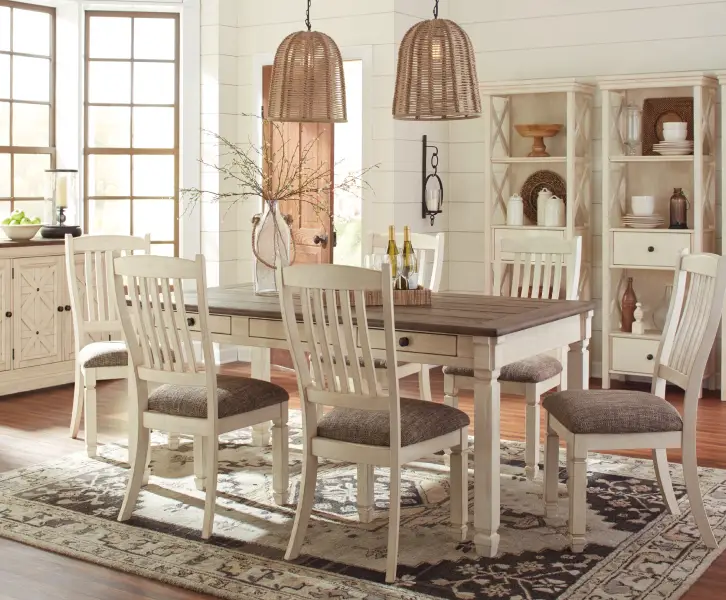
Proportion is everything when pairing chairs and a dining table. If your table is chunky and oversized, delicate chairs will feel lost. On the flip side, heavy, upholstered chairs can overpower a slim pedestal table.
Start with the basics: dining chairs should be around 18 inches tall at the seat to fit comfortably with a standard 30-inch high table. Beyond that, scale matters. A large rectangular table can handle more visual weight, like wide seats or armchairs, while a smaller table looks cleaner with simpler chair silhouettes.
Shape matters too. Round tables pair naturally with curved or rounded chairs, while straight lines and right angles (like a Parsons chair) complement rectangular tables.
Need a visual? The Bolanburg White and Gray Dining Set nails this balance with perfectly scaled pieces that feel relaxed and coordinated.
-
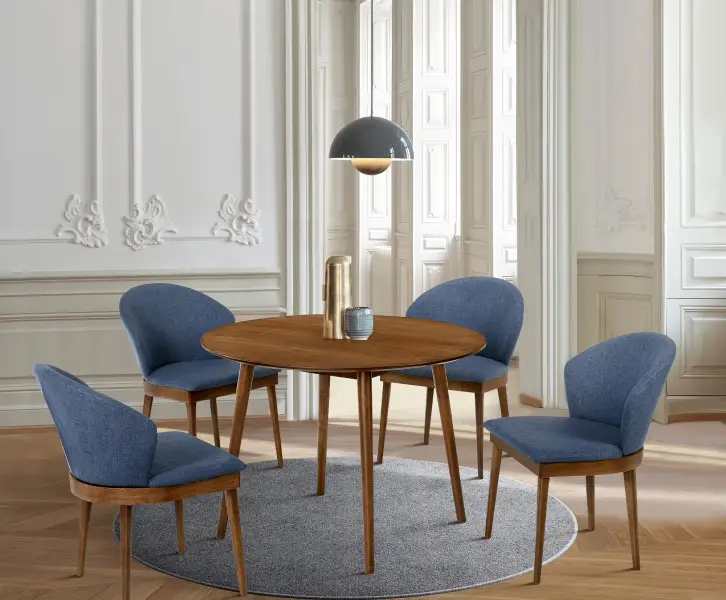
You don’t need an exact match. Actually, it’s often better if you don’t have one. Contrast creates depth, and the right mix of tones can bring your space to life.
If you’re working with wood, vary the tones slightly. For example, pair a darker walnut table with medium-toned oak chairs. Or try a weathered wood table with painted chairs in a neutral or earthy hue. The contrast should feel intentional, not accidental.
You can also add color through your chairs. A pop of navy or forest green can ground a natural wood table without overpowering the space. Want something a little more classic? Keep the palette tight. Black or white on wood always looks sharp.
For inspiration, check out the Arcadia Walnut Round Set. The darker tabletop and pop of color from the chairs strike the right note without feeling too matchy.
-
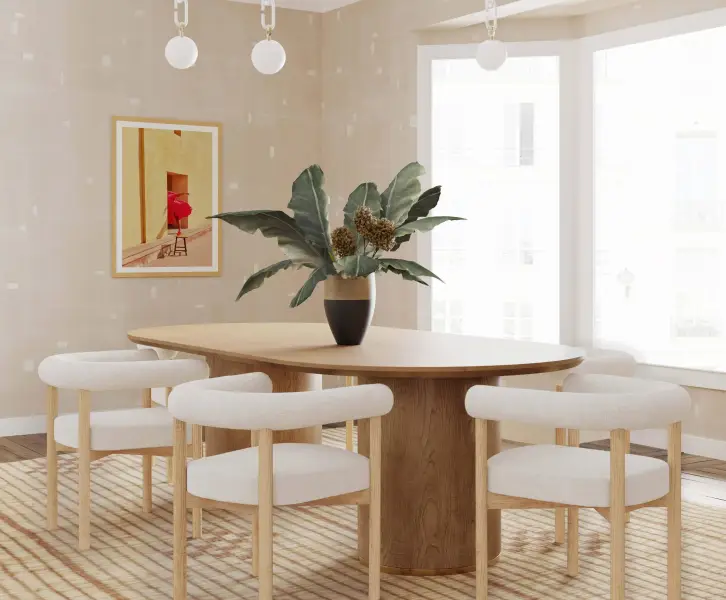
The shape of your dining chairs can either complement or clash with your table. The trick is to echo the table’s lines without mirroring them exactly.
For a round table, lean into softer, curved-back chairs that flow with the table’s shape. It creates a relaxed, approachable feel, perfect for casual meals and long conversations. Rectangular or square tables, on the other hand, pair best with straighter lines like Parsons chairs or modern side chairs.
You can also mix things up with armchairs at the ends of the table for a touch of formality, or to help anchor a longer table visually. Even subtle curves in the chair legs or back can add dimension without going over the top.
The Brandy Oval Dining Set is a great example of thoughtful chair shape pairing, with curved seats that echo the table’s silhouette. The Brandy Oval Dining Set is a great example of thoughtful chair shape pairing, with curved seats that echo the table’s silhouette.
-
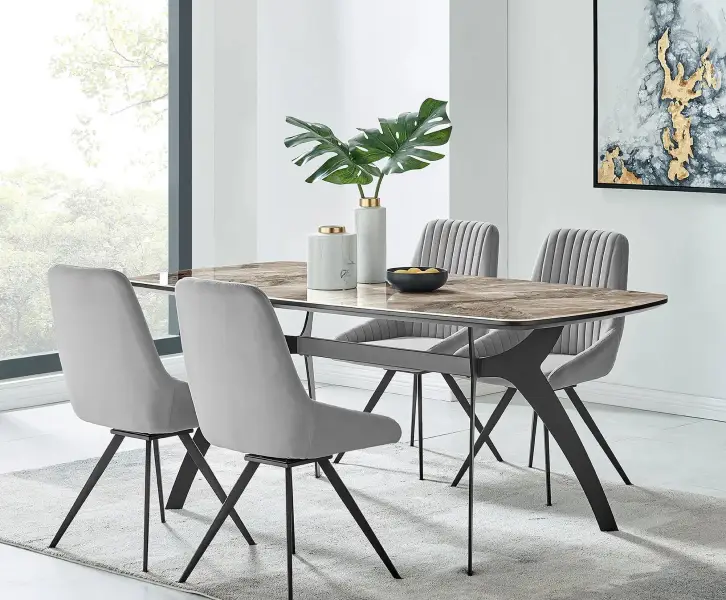
Texture is what takes a dining setup from flat to layered. It’s easy to focus on color and shape, but the materials you choose make just as much of an impact.
Pairing smooth finishes with tactile ones creates contrast that feels lived-in and interesting. Try cane or rattan chairs with a solid wood table for an organic mix. Velvet adds polish and softness, especially when paired with natural or industrial materials like oak or metal. Leather? Always a win.
Again, not everything needs to match. One statement texture can be the thing that ties your whole setup together.
Take a look at the Alison Swivel Velvet Dining Chair. It’s sleek and soft at the same time, and works beautifully with both rustic and modern tables.
- Going too matchy-matchy. A full set in the exact same wood tone and shape can feel flat or overly traditional. Instead, look for pieces that share a design element, like color, material, or leg shape, but still have their own personality.
- Forgetting about size and scale. Your chairs should feel like they belong at the table, not crowd it. Oversized chairs with a slim table (or vice versa) can throw off the balance of the room.
- Ignoring your layout. Make sure you have enough space for the chairs to pull back comfortably, especially in tighter spaces or open-concept rooms. Aim for at least 24 inches of clearance between chairs when they’re pulled out.
- Choosing style over practicality. It’s easy to fall for a trendy design, but remember to factor in your lifestyle. Got kids? Go for wipeable materials. Host often? Look for comfort that lasts through dessert.
- Matching the floor too closely. When the table, chairs, and flooring all blend together, the space can feel washed out. Break it up with varied tones or a dining rug to anchor the setup.
-
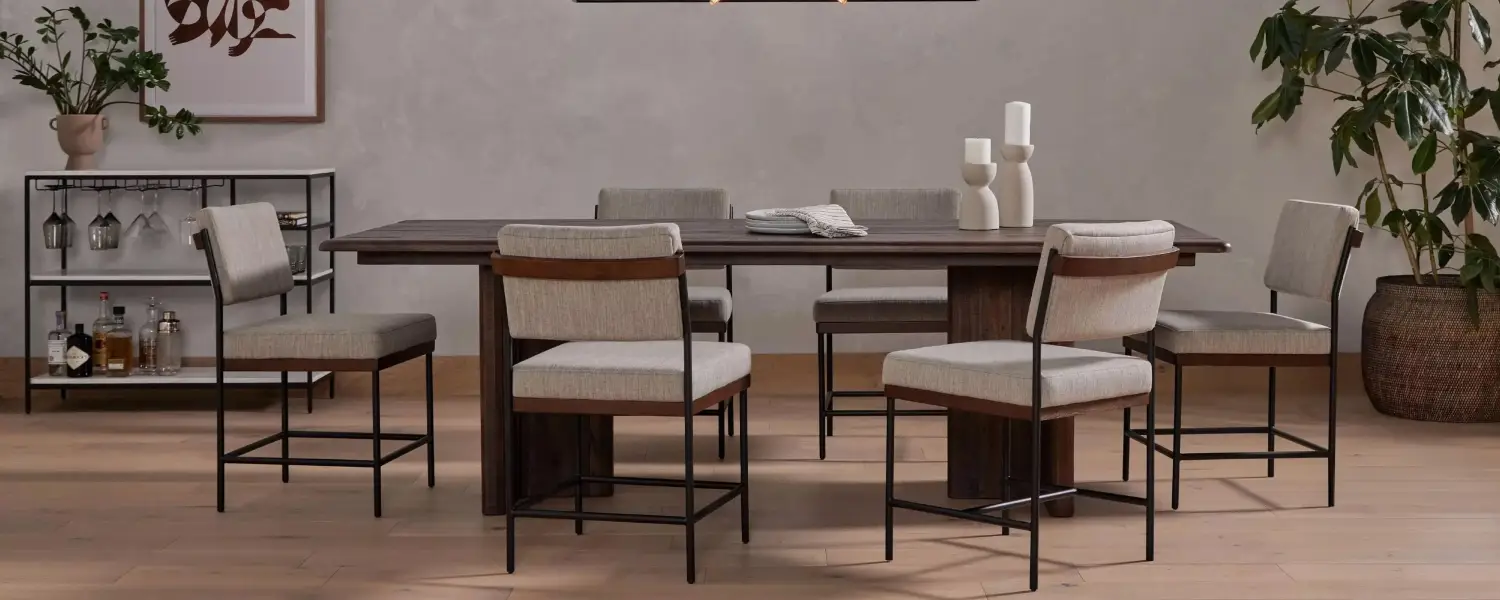
Clean lines meet cozy texture. Beige or cream chairs soften a sleek wood table and bring warmth into modern spaces.
-
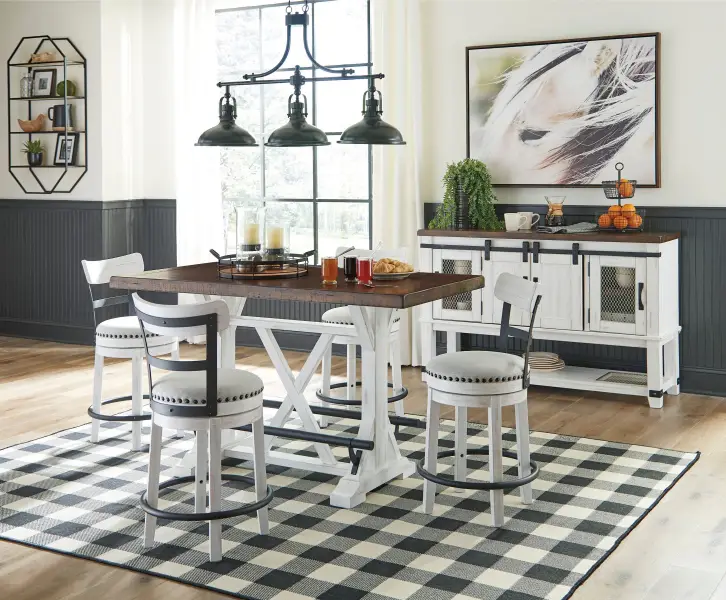
Rustic meets casual. A counter-height setup keeps the look relaxed and functional, perfect for families or open kitchens.
-
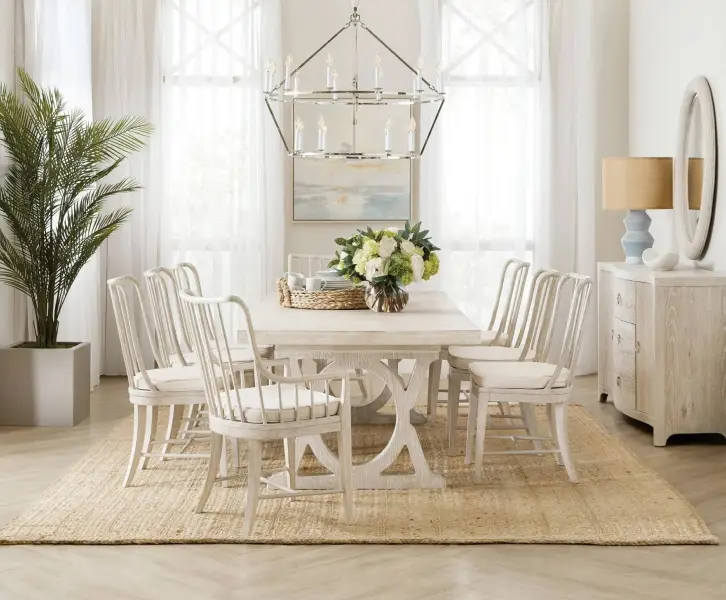
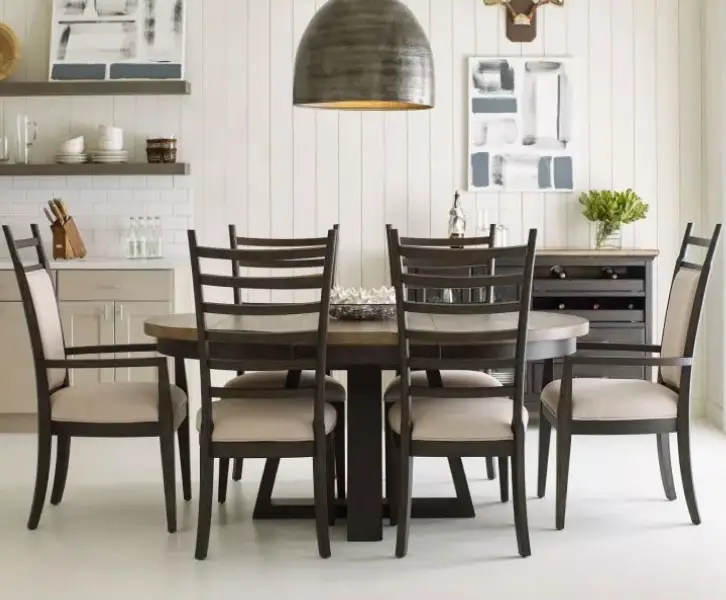
Classic, coastal, or cottage, this pairing has timeless charm. The slat-back design adds a touch of structure to a soft, weathered table.
Double-check dimensions, not just of the table and chairs, but of your room. Leave at least 36 inches around the table so everyone can move comfortably. Know your seat height.
Most standard dining tables are about 30 inches tall. Look for chairs with a seat height of 18 to 20 inches so you have enough legroom without feeling low. Think through delivery and setup.
Dining furniture can be heavy and bulky. Luckily, Coleman Furniture offers free delivery within the contiguous U.S., with white glove service available on many items. That means your new dining pieces arrive right to your room of choice, assembled and ready to use. Consider a full set or mix from one collection.
Buying a complete dining room set can make everything easier, but don’t worry if you want to mix it up. Collections often include coordinating tables and chairs, so you can blend different pieces while keeping things cohesive. If you're searching for the ideal match to pieces you already have, Coleman Furniture has a curated selection of tables and chairs that mix and match beautifully with all styles and looks. Complete Your Dining Room with Coleman Furniture
Not necessarily. Matching doesn’t mean they have to be identical. A well-balanced mix of materials, shapes, or colors can look more thoughtful and modern than a perfectly uniform set. Just make sure there's at least one element tying the chairs and table together.
It depends on the mood you’re going for. A darker chair against a lighter table can add contrast and depth. Lighter chairs can soften heavier wood tones. The goal is to avoid everything blending too much. If your flooring is similar in tone to your furniture, a color shift in the chairs helps create visual separation.
A lot depends on the tone and shape of your table. If you’re working with a rustic or reclaimed wood piece, try pairing it with something like the Centiar Black Dining Chair for contrast, or the Lexton Cream Side Chair for a soft, neutral complement.
Start with proportion. Make sure the chair height works with your table. Then, choose a style that either complements or gently contrasts. Use material, color, or shape to connect the two visually. And always test spacing: leave at least 24" between chairs to avoid crowding.
Absolutely. Mixing styles can create a more dynamic, lived-in feel. Just be sure there’s a thread that runs through the design; maybe it’s a shared wood tone, a similar leg shape, or an upholstery detail that ties it all together.
It depends on the size of the table and the size of your chairs. As a general rule, allow 24 inches of space per seat. For example, a 72-inch rectangular table typically seats six comfortably.
Measure from the floor to the seat of the chair. It should be about 18–20 inches high to pair with a standard 30-inch dining table. That gives enough clearance for legs and a comfortable sitting posture.
Try mixing rustic with modern to keep the look fresh. Upholstered chairs can soften a raw wood table. Metal or industrial-inspired pieces work well, too. Try soft leathers, spindle backs, or even bench seating to keep things grounded but interesting.


