

The Best Bunk Beds: What to Look for and Our Top Picks
Configuration, safety specs, materials, and style—everything worth checking before you buy, plus 10 of our favorite bunk beds organized by what each one does best. A bunk bed solves a real problem—two kids, one room, not enough floor space—but the moment you start shopping, the decision gets complicated fast. Twin-over-full or L-corner? Ladder or staircase? Solid wood or metal? And underneath all of that sit safety specifications that matter more than any of it. This guide walks through everything worth checking before you buy—configuration, safety standards, materials, and style—followed by our top picks from Coleman's own catalog, organized by what each bed does best.Key Takeaways
- Safety is non-negotiable: look for a full-length guardrail on the top bunk on both sides, a weight rating that comfortably exceeds your child's weight, and CPSC-compliant construction.
- Configuration matters more than style: twin-over-full works well for age gaps, L-corner suits tight or square rooms, and triple bunks only make sense with at least 8 feet of ceiling height.
- The right bunk bed can serve a room for a decade: prioritize solid construction and a design that grows with your kids, whether that means style longevity or the option to separate into two standalone beds later.
Bunk Bed Types and Configurations
Bunk beds come in six main configurations, and each one solves a slightly different space or family problem.
-
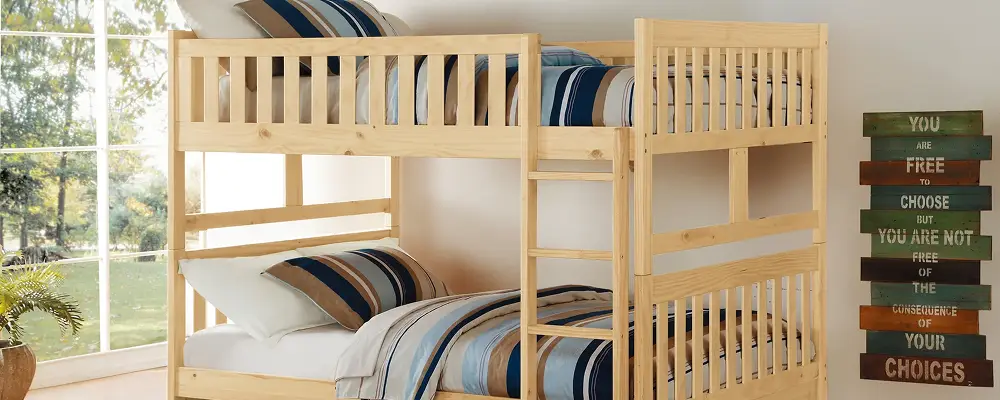
Twin-over-twin is the setup most people picture: two identical twin mattresses stacked directly on top of each other. It's the simplest configuration, generally the most affordable, and the easiest to fit into a standard kids' room. It works best when both children are close in age and similar in size.
Shop this bunk bed -
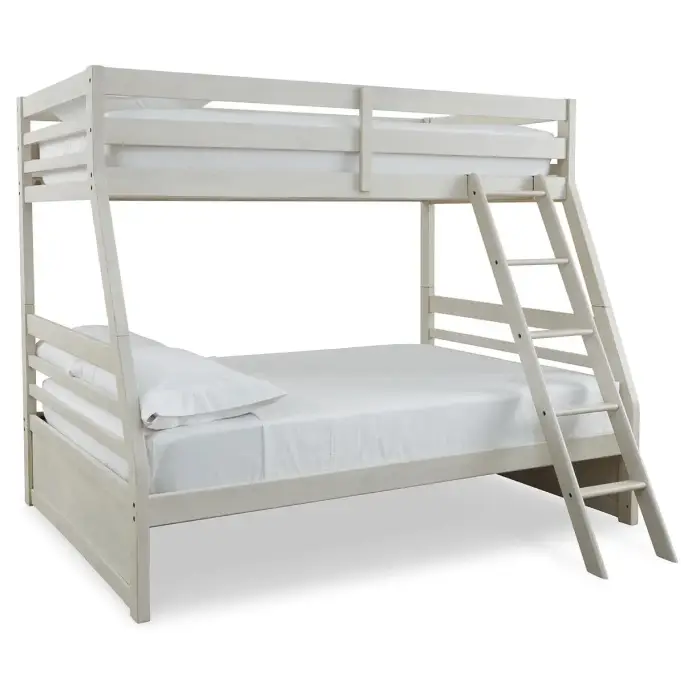
Twin-over-full pairs a twin mattress on top with a full-size mattress below, giving one side of the bunk noticeably more room. This is the configuration to reach for when there's an age gap between siblings—put the younger child on the twin above, once they're old enough for the top bunk, and let the older child stretch out on the full below. Coleman's twin over full bunk bed options make it easy to give an older sibling more sleeping room without sacrificing the floor space that two separate beds would require.
The Robbinsdale Antique White Twin Over Full Bunk Bed is a classic configuration in a versatile antique white finish—well suited to siblings with a few years between them.
-
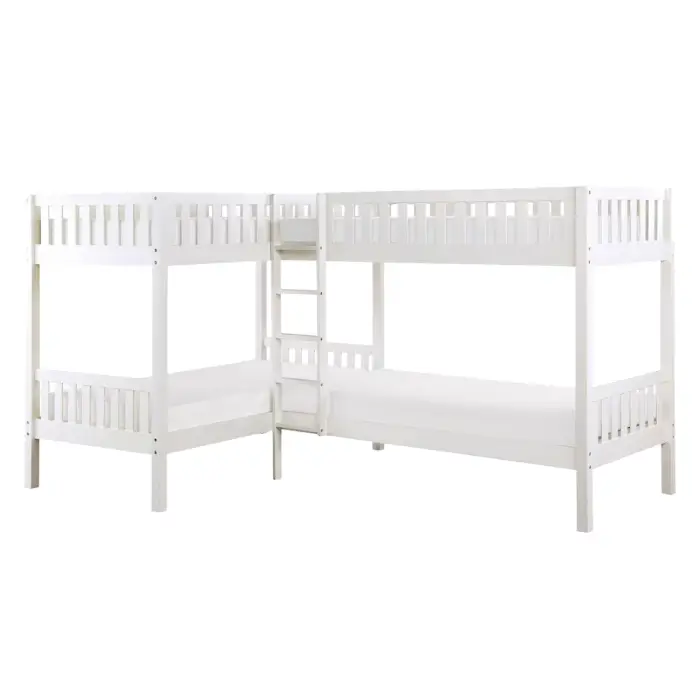
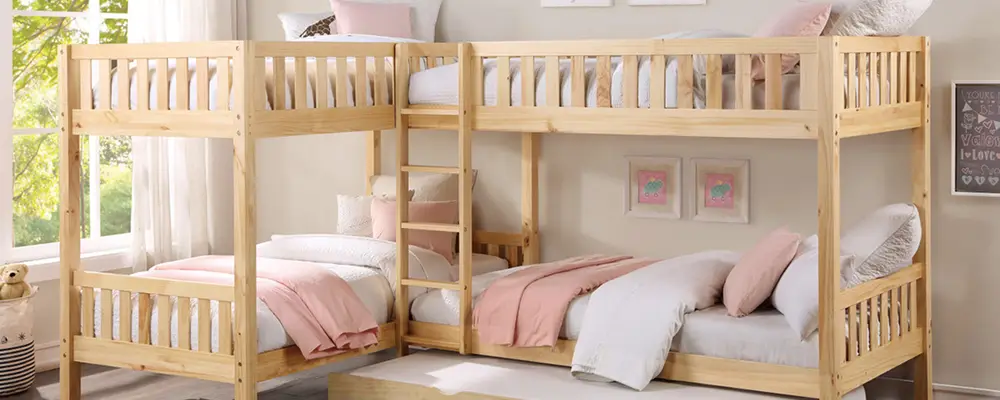
L-corner, sometimes called twin-corner, arranges two twin beds at a right angle instead of stacking them in a straight line. It's the best fit for square or oddly shaped rooms, and since the lower bed sits independently rather than directly underneath the top, it can work well even where ceiling height is limited. These bunk beds for small rooms tend to open up more usable floor space than a standard straight bunk.
Shop this bunk bed -
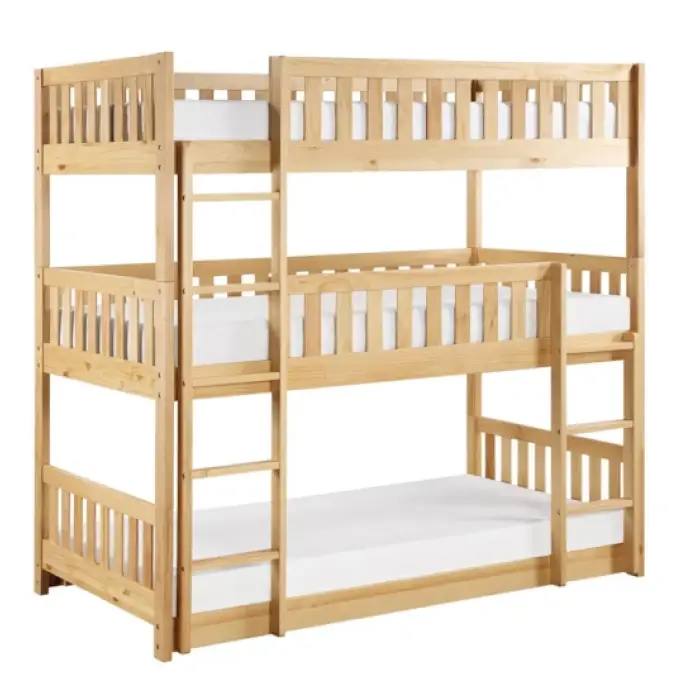
Triple bunks stack three full sleeping surfaces into one footprint, a meaningful space-saver for three siblings or a room that regularly hosts guests. The trade-off is ceiling height: give yourself at least 8 feet of clearance before ordering a triple bunk like the Bartly Natural Pine Triple Bunk Bed, since the top mattress ends up considerably higher off the ground than a standard two-level bunk.
-
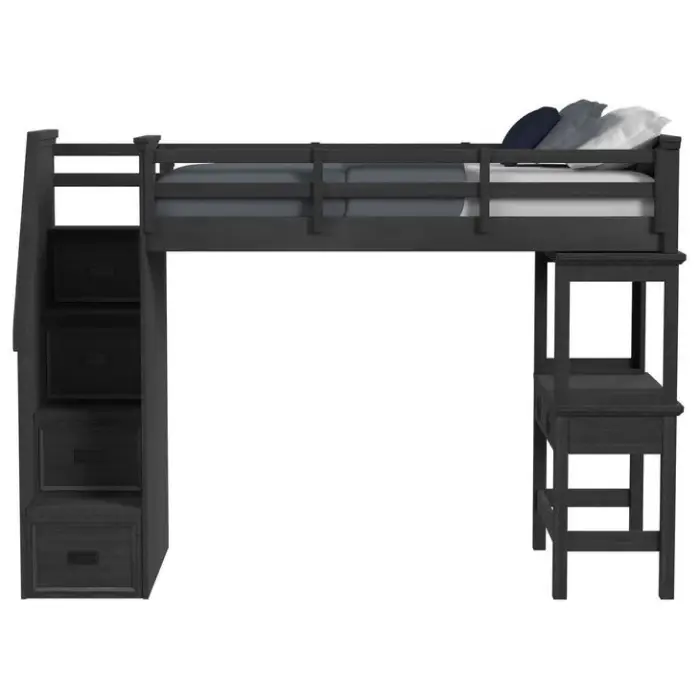
A loft bed is different from a bunk bed in one important way: it has only one sleeping surface, elevated above an open area used for a desk, storage, or seating rather than a second bed. If a loft bunk bed is closer to what you actually need—say, only one child needs a bed and the other wants a place to study—it's worth considering. The Brooklyn Charcoal Twin Storage Loft Bed with Staircase and Integrated Speaker Desk pairs a raised twin bed with a built-in desk and speaker below, a smart option for older kids or teens who need a dedicated workspace.
Full-over-full bunks stack two full-size mattresses, giving both sleepers more room than a standard twin-over-twin setup. It's a good option for older siblings, teens, or a guest room that occasionally needs to sleep two adults comfortably.
Storage bunks and staircase bunks build extra function into the structure itself—staircase steps with built-in drawers, side storage boxes, or an under-bed trundle. If you need a bunk bed with storage but don't have closet space to spare, these built-in options let the bed do double duty. A trundle is worth a look too, since it adds an occasional third sleeping surface, useful for sleepovers, without committing to a full triple bunk.
Matching Configuration to Your Room
Not sure which configuration fits your space? A few quick scenarios can narrow it down fast:
- Small room (under 10x10 feet): an L-corner or twin-over-twin bunk makes the most of a tight footprint.
- Shared room with an age gap: twin-over-full gives the older child more room without adding a second bed frame.
- Three kids, or a room that regularly hosts guests: a triple bunk or a bunk with a trundle covers the extra sleeper without extra furniture.
Whatever configuration you land on, measure your ceiling first. Aim for at least 33 to 36 inches of clearance above the top bunk mattress surface—enough room for a child to sit up without bumping their head.
Bunk Bed Safety: What to Check Before You Buy
Every bunk bed sold in the United States has to meet Consumer Product Safety Commission (CPSC) guidelines, and understanding what that actually covers will help you evaluate any bed, including the options in our catalog.
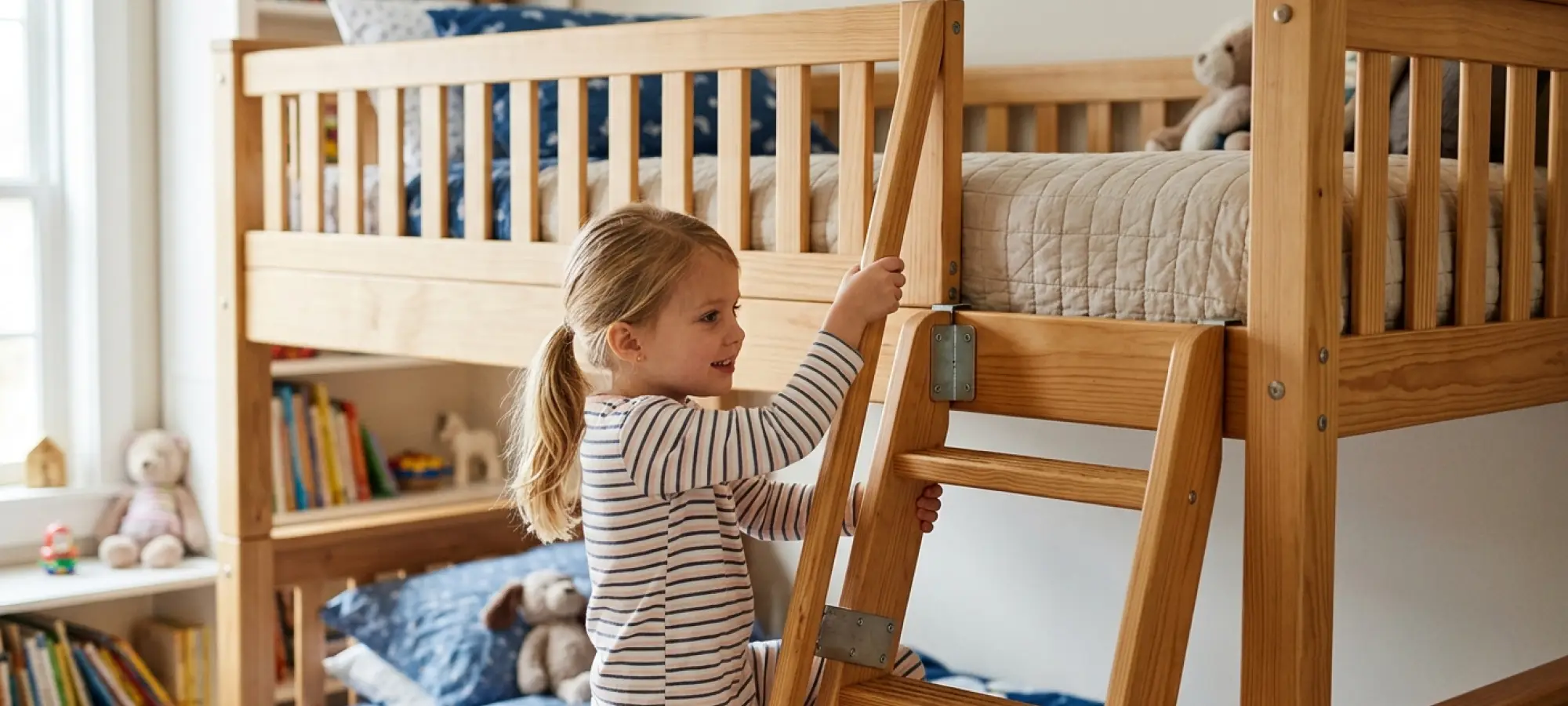
Guardrails are the first thing to check. The top bunk needs a full-length guardrail on both sides, not just the side away from the wall, and the gap between the guardrail and the mattress needs to stay under 3.5 inches. That gap matters more than people expect—it's sized specifically to keep a child from sliding through or getting caught between the rail and the mattress during the night.
Age matters too. CPSC recommends the top bunk for children age 6 and older, and the reasoning goes beyond a simple number: younger children are more prone to rolling in their sleep, and they're less coordinated on a ladder, especially half-asleep in the middle of the night. If you have a child younger than 6, plan on the bottom bunk until they're a bit older.
Weight capacity is specific to each level of the bed, not the bed as a whole. Top bunk weight ratings typically run between 150 and 200 pounds, and that number is separate from what the bottom bunk or the frame overall can hold. Always check the individual product specification page rather than assuming a bed's overall sturdiness applies evenly to both levels—the bunk bed weight limit is one detail worth verifying every time, even across similar-looking models.
Ladders deserve a look too. Rungs should be evenly spaced and wide enough for an adult foot, not just a child's, and the ladder itself should be fixed to the frame rather than a separate, removable piece that can slip out of place.
None of this is about any one brand meeting a special standard—it's simply what to look for when evaluating any bunk bed, including the options in our catalog. A few minutes checking guardrails, weight ratings, and ladder construction before you buy is worth far more than convenience or price alone.
Age and Weight Guidelines at a Glance
| Detail | Guidance |
|---|---|
| Top bunk | Children age 6 and older only (CPSC guidance) |
| Bottom bunk | Suitable for younger children with a standard guardrail |
| Weight limit | Check the rating for each level separately—top and bottom are different numbers |
| Mattress thickness | Generally shouldn't exceed the guardrail height, typically 6 to 8 inches for standard bunks |
Construction Materials: Wood, Metal, and Engineered Options
Every bunk bed buyer eventually runs into the same trade-off: durability versus price.
-
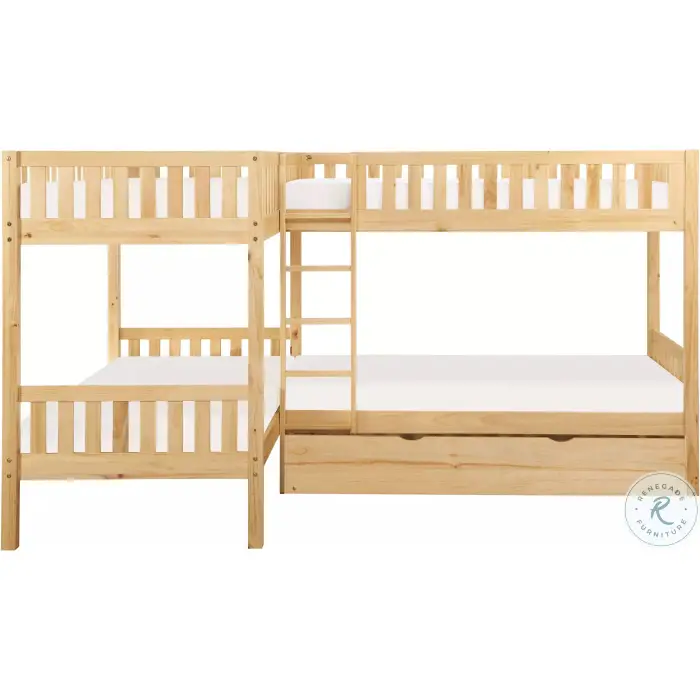
Solid wood—pine, oak, or beech—is the heaviest and most durable option, and it's usually the highest price point in the category. It's the material to choose for long-term family use, since it holds up to years of climbing, jumping, and general kid-related wear. Natural pine finishes, like the one used on the Bartly Natural Pine Twin Corner Bunk Bed, show grain character and tend to age well rather than looking worn out.
Engineered wood—MDF or plywood composite—is lighter and more affordable, and it holds a painted or stained finish just as well as solid wood. It's suitable for most family use cases, though it's somewhat less resistant to heavy daily impact than solid wood over the long run.
-
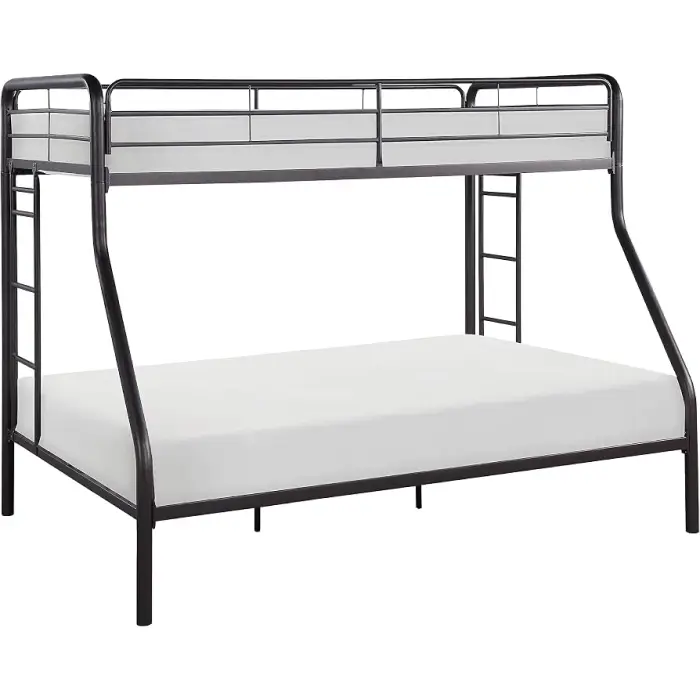
Metal frames are the lightest and most affordable option, and they work well for loft beds and teen rooms where a sleeker, more minimal look fits the space. Metal doesn't bring the same warmth as wood, but it's very stable when the joints are properly welded, and it tends to be easier to maneuver during setup.
Shop this bunk bed
For bunk beds specifically, solid wood or high-quality engineered wood is the safer bet over lightweight metal, particularly for the top bunk. Heavier construction is inherently more stable under the kind of movement a bunk bed sees every night—kids climbing up and down, shifting in their sleep, and occasionally treating the frame like a piece of playground equipment.
Coleman's product pages list the finish and style for each bed, but for specific material specs on an individual model, check the product detail page or reach out to our team directly before you buy.
Design and Style: Finding a Bunk That Fits Your Room
Once configuration and safety specs are settled, design is what makes a bunk bed feel like part of the room instead of just furniture that happens to be there.
-
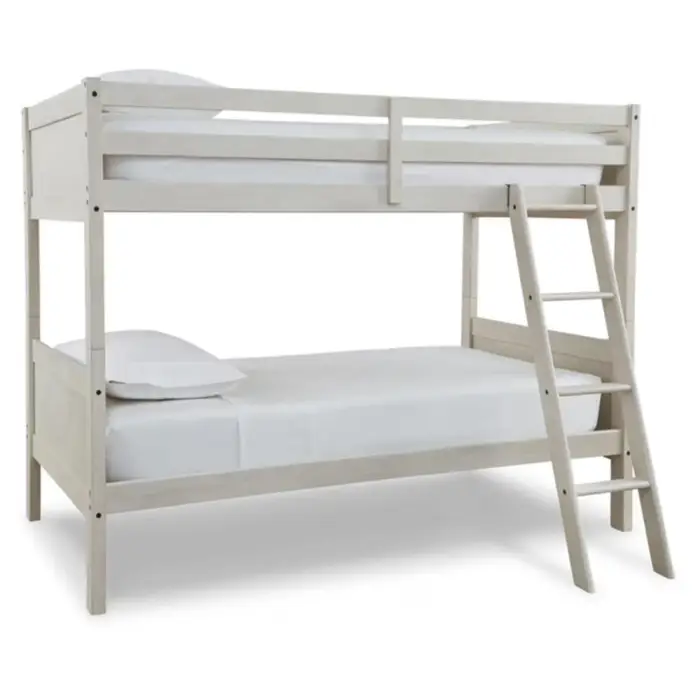
White and antique white finishes are the most versatile choice in Coleman's catalog, working with almost any existing room palette. The Robbinsdale Antique White Youth Bunk Bedroom Set with Ladder is a good example—a complete bedroom set in a classic finish that pairs easily with whatever else is already in the room.
-
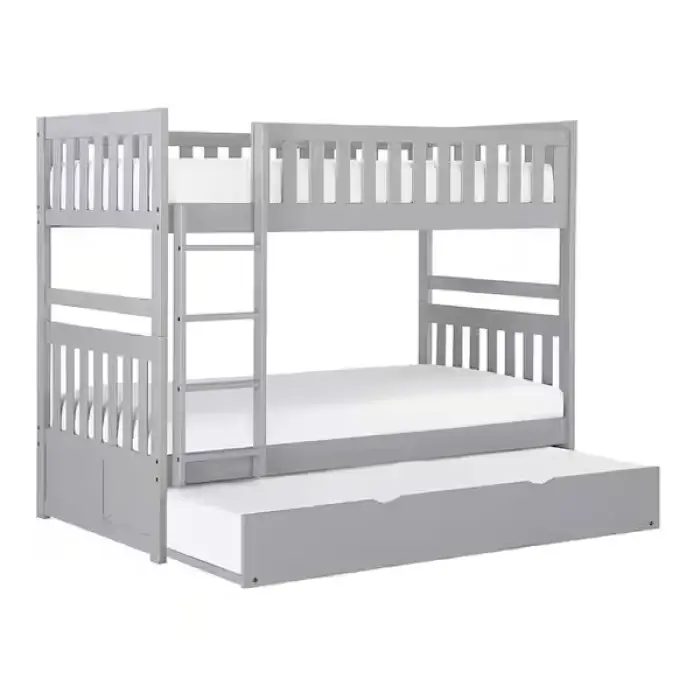
Gray finishes lean more modern and transitional, a solid choice if the rest of the room is trending toward a cooler, more current look. The Orion Gray Youth Bunk Bedroom Set with Youth Trundle brings that finish into a configuration that adds a trundle for extra sleeping flexibility.
Natural pine brings a warm, rustic character that suits farmhouse or cottage-style rooms particularly well, and charcoal finishes lean bolder and more teen-friendly, better suited to an older kid's room moving away from a younger, more traditional look.
-
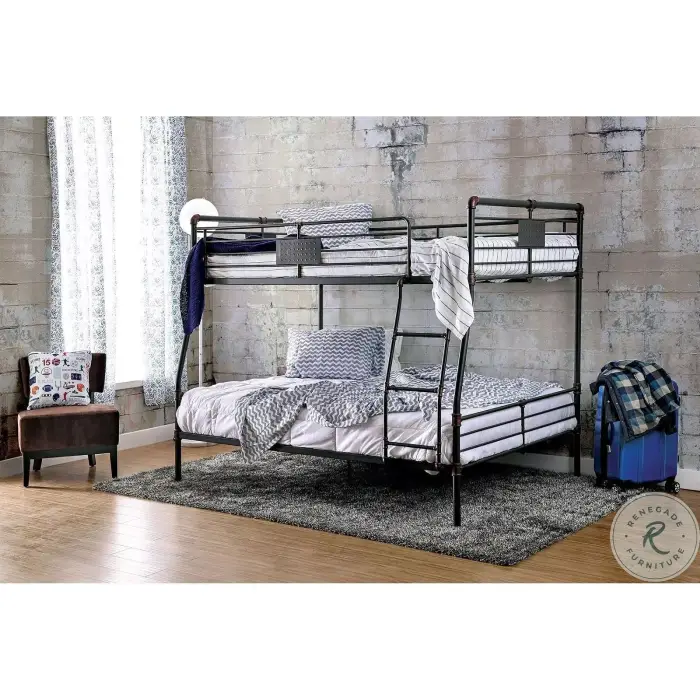
Antique black finishes go further still, delivering a dramatic, eclectic look for a room that wants to make a statement—the Olga Antique Black Full Over Queen Bunk Bed is one example built for exactly that kind of room.
Before choosing a finish, take stock of what's already in the room. White and gray bunks are close to foolproof, but natural pine and darker antique finishes work best when they echo a color or material already present elsewhere.
It's also worth considering bedroom sets over standalone beds. Several Coleman bunks are available as complete sets that include a matching dresser and nightstand, which takes the guesswork out of coordinating separate pieces and gives the whole room a finished look from day one.
Ladder vs. Stairs: Which Access Style Is Right?
Ladder or staircase isn't just an aesthetic choice—it's a practical safety and convenience decision.
-
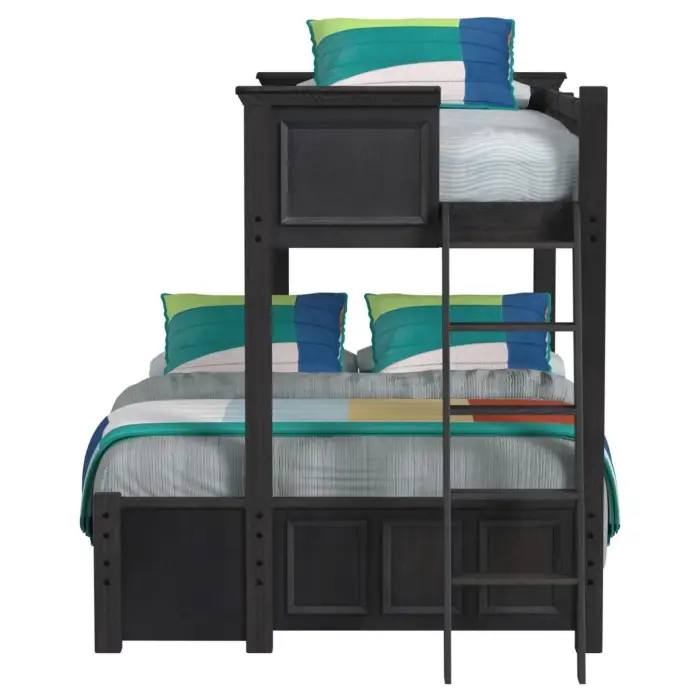
Ladder bunks have a smaller footprint and typically a lower price, which makes them the standard choice for most kids' rooms, especially when floor space is tight. Angled ladders are easier to climb than fully vertical ones, so look for that detail if a ladder is the direction you're headed.
Shop this bunk bed -
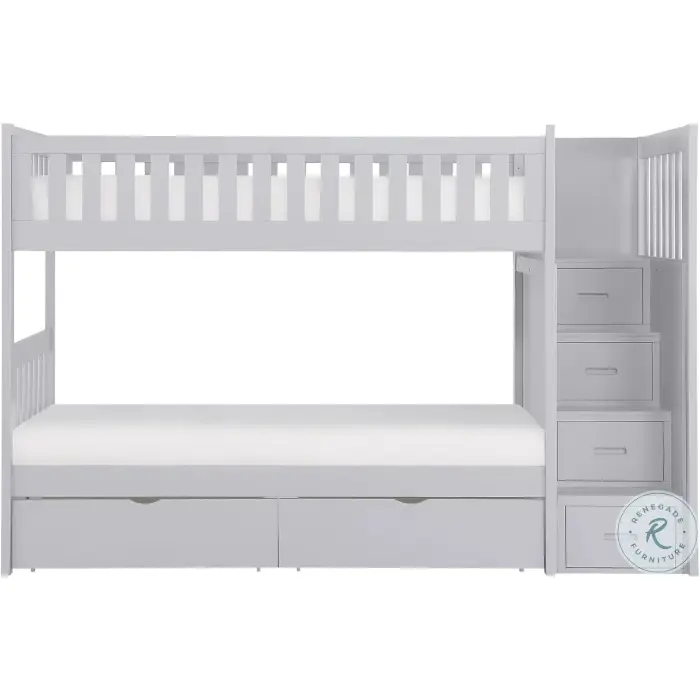
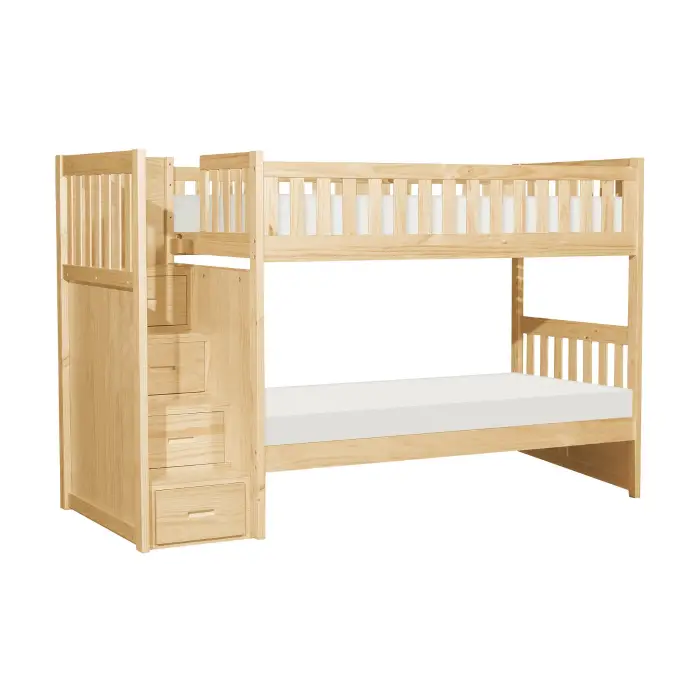
Staircase bunks need more floor space—generally 12 to 18 inches more than a ladder bunk requires—but they're noticeably safer for younger children and considerably easier for adults to use when tucking a child in or retrieving something from the top bunk. Many staircases double as storage, with built-in drawers in each step doing the work of a small dresser, worth factoring in if a bunk bed with storage is on your list.
See this bedroom set
As a general rule, children under 8, or households where adults regularly need to access the top bunk, are better served by the extra floor space a staircase requires. The Robbinsdale Antique White Youth Bunk Bedroom Set with Ladder shows the ladder approach at its best for a classic, space-conscious build, while the Orion Gray set above demonstrates how a staircase can fold in extra storage. For a loft configuration that goes a step further, the Brooklyn Charcoal Twin Storage Loft Bed with Staircase and Integrated Speaker Desk pairs staircase access with a built-in desk and speaker below.
Ready to find the right fit?
Browse our full bunk bed collection to shop by configuration, size, and style—with free white glove delivery on thousands of items.
Our Top Bunk Bed Picks from Coleman Furniture
Now that you know what to look for, here are 10 of the best bunk beds in our catalog, organized by configuration and use case so you can find the one that fits your room.
-
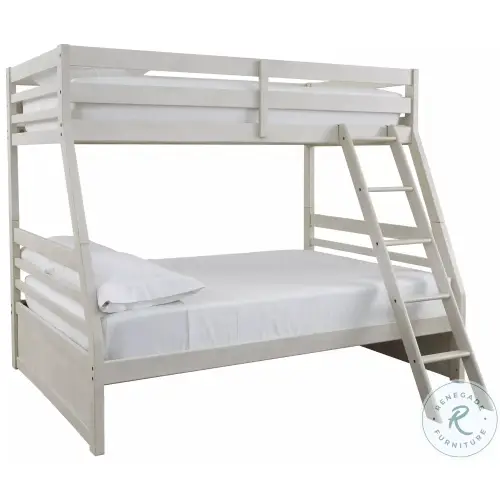
A clean antique white finish on a classic twin-over-full configuration, ideal for siblings with an age gap. Fits most standard kids' room sizes without crowding the space.
Shop this bunk bed -
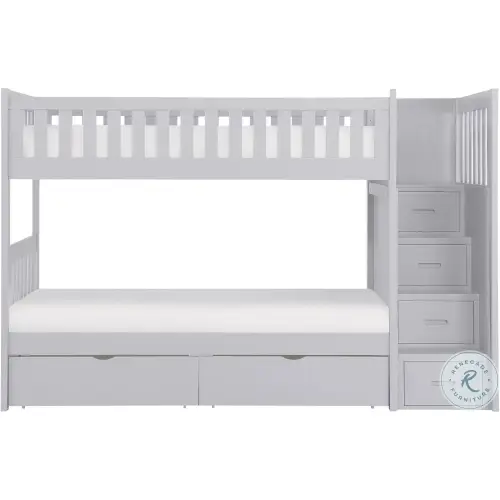
Staircase access with built-in reversible step drawers and storage boxes, plus a matching bedroom set.
See this bedroom set -
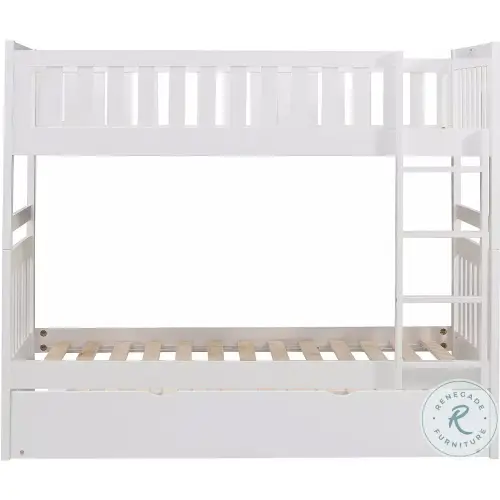
Adds a third sleeping surface without requiring a full triple bunk. Ideal for families with frequent sleepovers or occasional guests.
Shop this bedroom set -
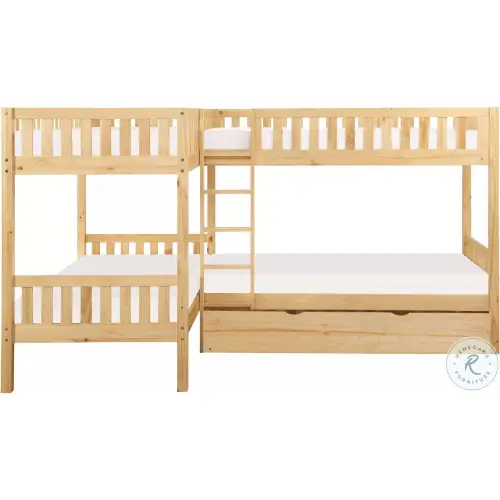
An L-corner configuration built for square rooms, in a natural pine finish that warms up a neutral space. Includes a trundle for extra sleeping flexibility.
Shop this bunk bed -
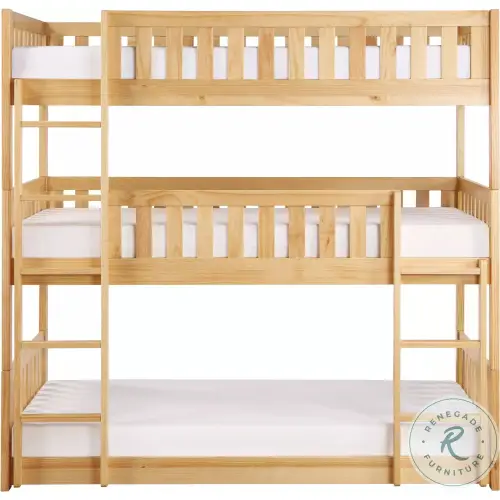
Three full sleeping surfaces in one footprint, built in natural pine. Requires at least 8 feet of ceiling height, so measure before ordering.
Shop this bunk bed -
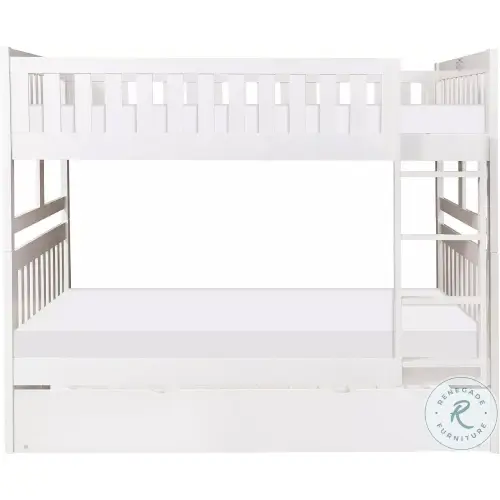
A generous sleeping surface on both levels, plus a pull-out twin trundle below. The white finish suits most room palettes without a lot of extra planning.
Shop this bunk bed -
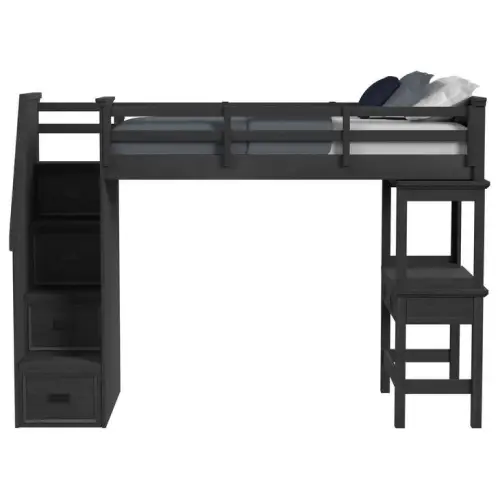
A single sleeping surface above a built-in desk and integrated speaker below. Best for older kids or teens who need a dedicated workspace.
Shop this loft bed -
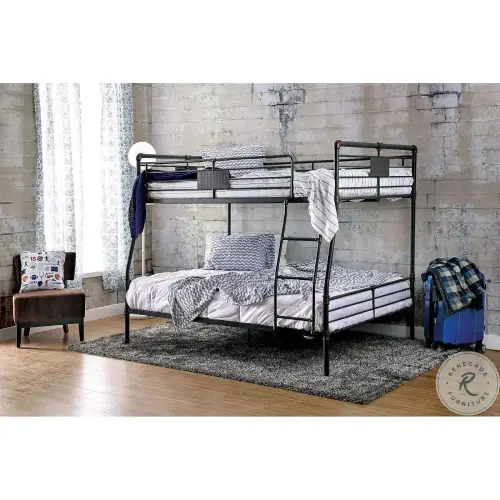
A full-over-queen configuration in a dramatic antique black finish, built for heavier loads. Check the product page for the per-level weight rating before buying.
Shop this bunk bed -
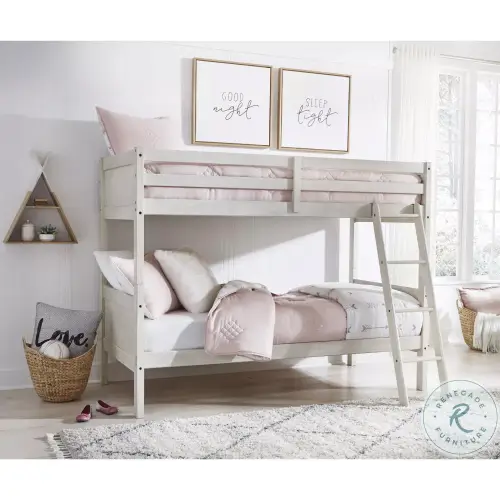
A complete bedroom set in a timeless antique white finish, with ladder access and classic styling that works with most kids' room aesthetics.
Shop this bedroom set -
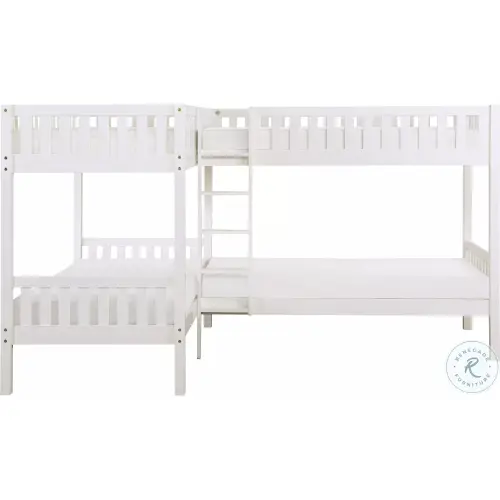
A space-efficient corner configuration with two twin sleeping surfaces in a clean white finish. Well suited to smaller or shared rooms.
Shop this bunk bed
For more ways to bring a bunk bed into a finished room, our bunk bed ideas gallery has room-by-room inspiration for every configuration on this list.
Finding the right bunk bed comes down to three decisions: the configuration that fits your room, safety specs you've confirmed rather than assumed, and a material and style that suits your household. Get those three right, and you'll land on one of the best bunk beds for your space, whether that's a classic twin-over-full, a space-saving L-corner, or a fully loaded storage bunk built to last through a decade of shared bedtime.
Browse our full bunk bed collection
Shop by configuration, size, and style—with free white glove delivery on thousands of items.
Frequently Asked Questions
The Consumer Product Safety Commission (CPSC) recommends the top bunk for children age 6 and older. Younger children are more prone to rolling in their sleep and less coordinated on ladders, especially at night. If your child is under 6, plan on using the bottom bunk until they're older. Even at 6, consider your child's specific coordination and sleep habits before moving them to the top.
Bunk beds don't require a special mattress, but they do require the right thickness. The mattress on the top bunk should be thin enough that the guardrail still extends at least 5 inches above the mattress surface. Most manufacturers specify a maximum mattress thickness—typically 6 to 8 inches for the top bunk. A standard twin or full mattress in the correct thickness works fine; you don't need a bunk-specific product, just the right dimensions.
You need at least 33 to 36 inches of clearance between the top of the top bunk mattress and the ceiling—enough for a child to sit up comfortably without hitting their head. For a standard two-level bunk bed, an 8-foot ceiling is usually sufficient. Triple bunks require more: plan on at least 9 feet. Measure from the floor to the ceiling, then subtract the bunk's total height plus the mattress thickness to check your clearance.
Yes, but check the weight rating for each level individually. Top bunk weight limits typically range from 150 to 200 pounds, while bottom bunks often support 200 to 400 pounds depending on the model and materials. Full-over-full and full-over-queen configurations are better suited for adult use than twin-over-twin setups. Always verify the per-level weight rating on the specific product page before purchasing for adult use.
A bunk bed has two (or more) stacked sleeping surfaces. A loft bed has only one sleeping surface, elevated above an open area used for a desk, storage, seating, or play space. Choose a bunk bed when two people need to sleep in the same footprint; choose a loft bed when one person sleeps and the space below serves another function entirely.