


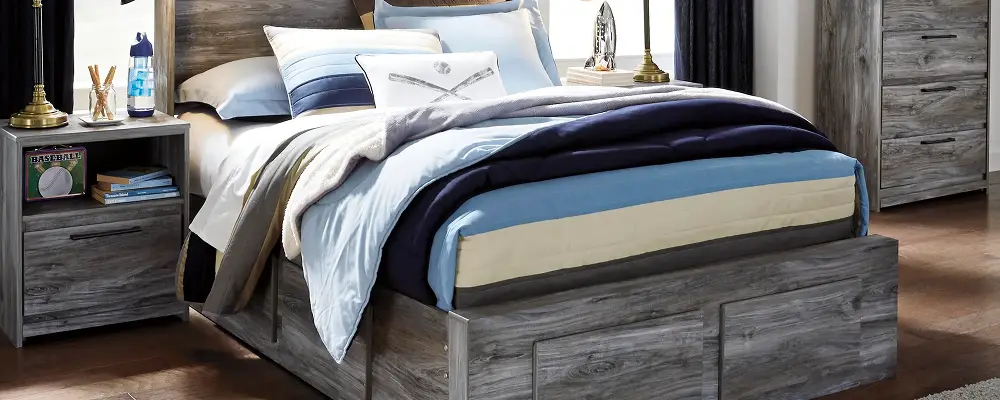
Best Storage Beds: Types, Features, and Top Picks
A storage bed turns the dead space under your mattress into real, usable organization—no dresser, no bins, no extra furniture crowding the room. Here's how to pick the right style, mechanism, and materials for your space. If your bedroom is short on closet space, a storage bed solves the problem without adding a single extra piece of furniture to the room. The best storage beds convert the empty space beneath your mattress into drawers, shelves, or lift-up compartments that hold everything from folded sweaters to spare bedding. Are storage beds worth it? For most bedrooms, yes—they consolidate two purchases (a bed and a dresser or set of underbed bins) into one, and they're especially valuable in smaller rooms where every square foot of floor space matters. This guide covers the main storage bed types on the market, how their lift and drawer mechanisms work, what to look for in materials and construction, and how to match a style to your room's layout and mattress. We'll close with eight in-stock storage beds from Coleman Furniture's current catalog, organized by style, so you can see what real options look like once you've narrowed down what you need.Key Takeaways
- Storage beds come in several styles, including drawer, panel, platform, and bookcase designs, each with different access and capacity tradeoffs.
- Check ceiling and floor clearance before buying, since drawers and lift mechanisms both need room to open fully.
- Most storage beds use a slatted foundation instead of a boxspring, so confirm mattress compatibility before you buy.
Types of Storage Beds
Storage beds generally fall into four categories, and the right one depends on how you plan to use the space underneath.
-
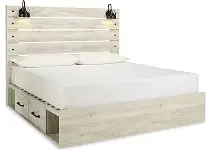
Drawer and panel beds build storage directly into the bed frame's rails or footboard, usually as one to six pull-out drawers running on glides. A storage bed with drawers like this is the most common configuration on the market and the easiest to use day to day—drawers slide open the same way a dresser drawer does, with no lifting involved.
-
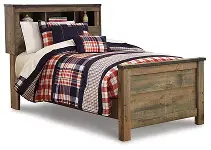
Bookcase beds pair underbed drawers or storage boxes with a headboard (and sometimes a footboard) built out into shelving. You get the same drawer-based access as a panel bed, plus open shelf space for books, décor, or a lamp and alarm clock, which makes a bookcase style a good fit for a room without a nightstand.
-
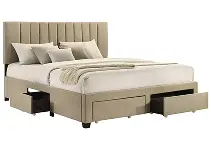
Upholstered storage platform beds build storage into a lower-profile frame, often within the footboard or side rails rather than as full-width drawers. These tend to read more like a standard platform bed from across the room, with the storage compartment functioning as a bonus rather than the headline feature.
A fourth category, hydraulic lift-up beds (sometimes called ottoman beds), use gas or piston-assisted hinges to raise the entire mattress platform, exposing one large storage cavity underneath rather than individual drawers. They hold more than drawer-based beds but require full ceiling clearance and a bit more effort to access.
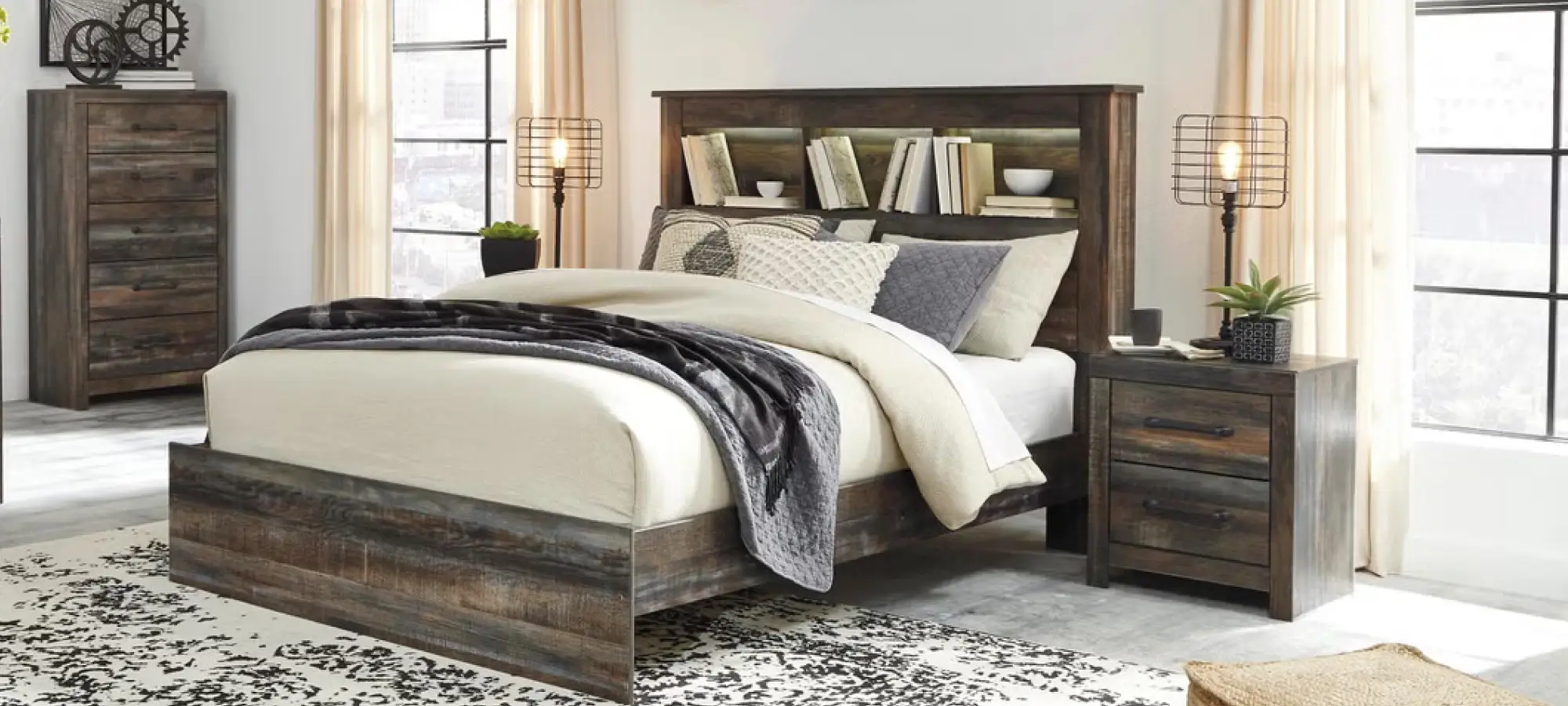
Storage Capacity and Organization
Not all underbed storage is built for the same job, and it's worth thinking about the difference before you shop. Bulky-item storage—out-of-season bedding, spare pillows, luggage—can live in a single large compartment you open a few times a year, which makes a bookcase bed's storage boxes or a hydraulic lift-up cavity a good match. Frequent-access storage—everyday clothing, folded linens, workout gear—works better in individual drawers you can open and close without disturbing everything else underneath.
What bed has the most storage underneath? It's rarely just about the bed's overall size. Drawer count and depth matter more than the mattress size printed on the label. A 6-drawer queen storage bed, for example, holds considerably more than a queen bed with a single underbed storage box, even though both are labeled "queen." Some bookcase configurations split storage between the headboard, footboard, and side rails—one bed in Coleman's current lineup packs 8 drawers across headboard, footboard, and rails, with a listed weight capacity of 800 lbs.
The most useful approach is to match the bed to your actual need rather than assuming more storage is automatically better. If you're mainly storing a few bins of seasonal items, a simpler two-drawer underbed storage bed will do the job without the added cost and weight of a fully loaded bookcase frame. If you're trying to replace a dresser entirely, look for a bed frame with storage that specifically lists drawer count and interior dimensions on the product page, not just "underbed storage" as a general feature.
Material and Build Quality
Storage bed frames are typically built from one of three materials, and each comes with a different tradeoff.
Solid wood frames, often built from rubberwood or mango veneers over solid substructure, tend to be the most durable option and can support heavier mattresses and daily drawer use without the frame flexing over time. They also carry a higher price point than engineered wood alternatives.
Engineered wood—typically MDF particleboard or plywood finished with a decorative laminate—is the most common material for storage beds in this price range. It replicates the look of stained wood grain convincingly and keeps the overall frame lighter, though it's generally less forgiving of moisture or repeated disassembly than solid wood.
Upholstered frames wrap the headboard, and sometimes the footboard, in fabric such as velvet or linen-look polyester over a wood or engineered wood substructure. These prioritize a softer, more furnished look for the bedroom, with storage typically built into the rails or footboard rather than a full drawer bank.
One concrete quality signal worth checking on any storage bed's product page is drawer joinery. Dovetail construction—where the drawer front and sides are joined with interlocking, wedge-shaped cuts rather than simple butt joints and staples—holds up to years of opening and closing far better than glued or stapled alternatives. Several storage beds in Coleman's current catalog list dovetail drawer construction specifically, which is worth looking for as a mark of longer-term durability.
Individual product pages don't always list a bed's complete material composition, so avoid assuming based on style alone—check each product's specifications for the exact construction before you buy, especially if you're comparing solid wood against engineered wood options at a similar price.
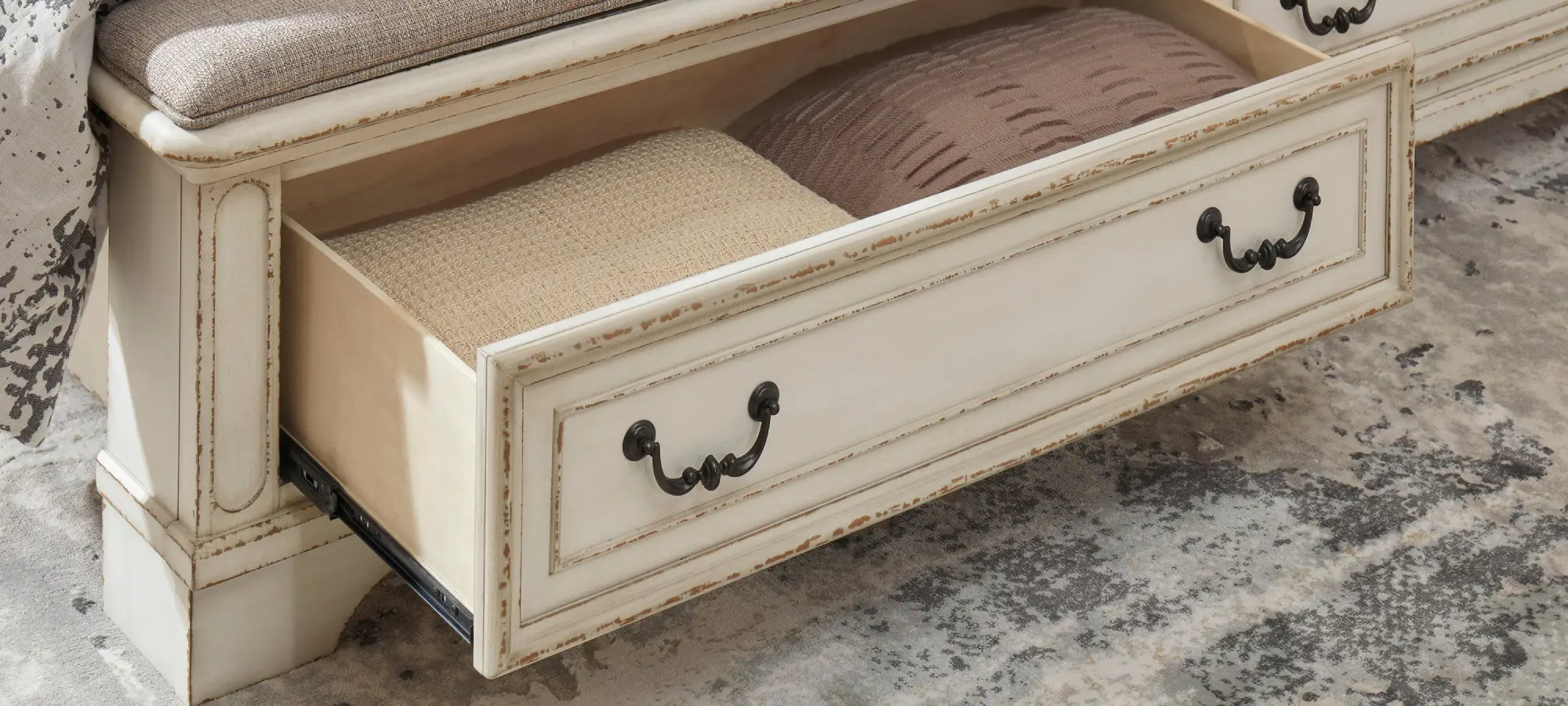
Lift and Drawer Mechanisms
The mechanism behind a storage bed's compartments affects both how much it holds and how easy it is to use day to day.
Drawer-based storage runs on ball-bearing glides, sometimes paired with soft-close hardware, that let a fully loaded drawer slide open and shut smoothly without jamming. Better-built beds also include a built-in stopper on the glide track, which keeps a drawer from being pulled all the way out by accident. This is the simplest mechanism to maintain over time, since there's no hydraulic component that can eventually wear out.
Hydraulic lift-up mechanisms use gas- or piston-assisted hinges to raise the entire mattress platform on a pivot, usually at the head or foot of the bed, exposing a single large storage cavity underneath. These hold more volume than a bank of drawers and work well for bulky, infrequently accessed items, but they require full ceiling clearance to lift the platform and enough room to swing it open, and they're typically a two-person job to load or unload comfortably.
For most bedrooms, drawer-based beds are the easier recommendation. They're simpler and cheaper to maintain long-term, don't require extra ceiling clearance, and let one person access storage without needing to move the mattress. Reserve a lift-up mechanism for situations where you specifically need to store bulkier items and have the room to accommodate it.
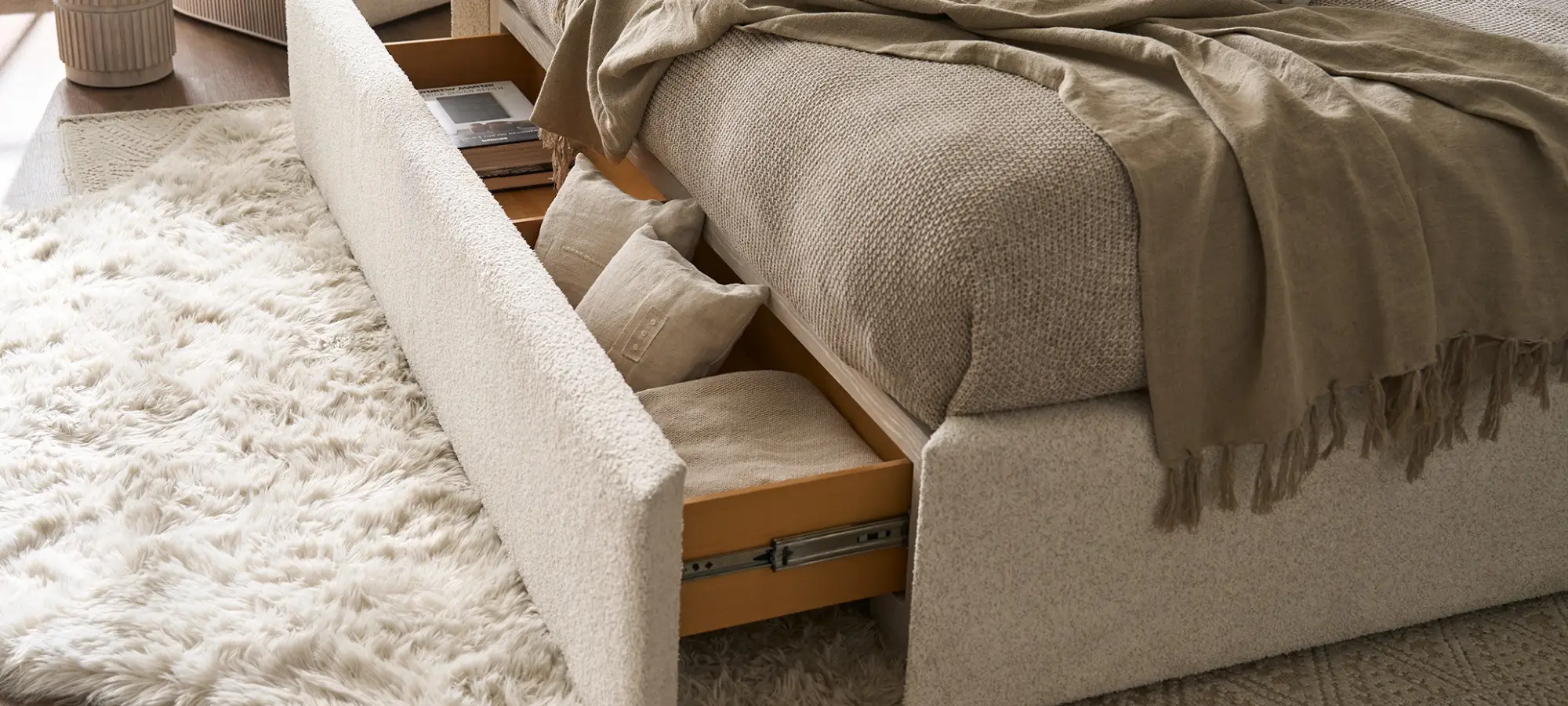
Room Size and Layout
Before buying any storage bed, there are two clearances worth measuring in your own room rather than assuming they'll work out.
First, check the full drawer extension length—how far a drawer needs to slide out to fully open, not just how wide the bed frame is. A queen storage bed's side-rail drawers, for example, can extend more than 17" beyond the frame when fully open, so you'll want that much clear floor space along the side of the bed you plan to access most often. Second, measure the doorway and hallway width the bed needs to travel through during delivery; fully assembled storage bed frames are considerably heavier and bulkier than a standard bed frame, so a tight hallway turn can be the difference between an easy delivery and a difficult one.
A quick self-check before you shop: measure the open floor space at the foot of the bed and along at least one side. If a hydraulic lift-up bed needs to swing the mattress platform open, confirm there's nothing—a bench, a low dresser, artwork on the wall above the headboard—in the way of that arc.
This is also where the value case for a storage bed is strongest. In smaller bedrooms, where a dresser or a set of underbed storage bins would otherwise eat into already-limited floor space, a bed frame with built-in storage lets you skip that extra furniture entirely and keep the room feeling more open.
Mattress Support and Ventilation
Most storage beds use a slatted foundation rather than a boxspring to support the mattress. Coleman's Sansom upholstered storage platform bed, for one, is built this way—its product specifications confirm it "incorporates a slatted foundation for mattress support, eliminating the need for a boxspring." This is standard across nearly every storage bed on the market, since a full boxspring would take up the exact space the storage compartments are built to use.
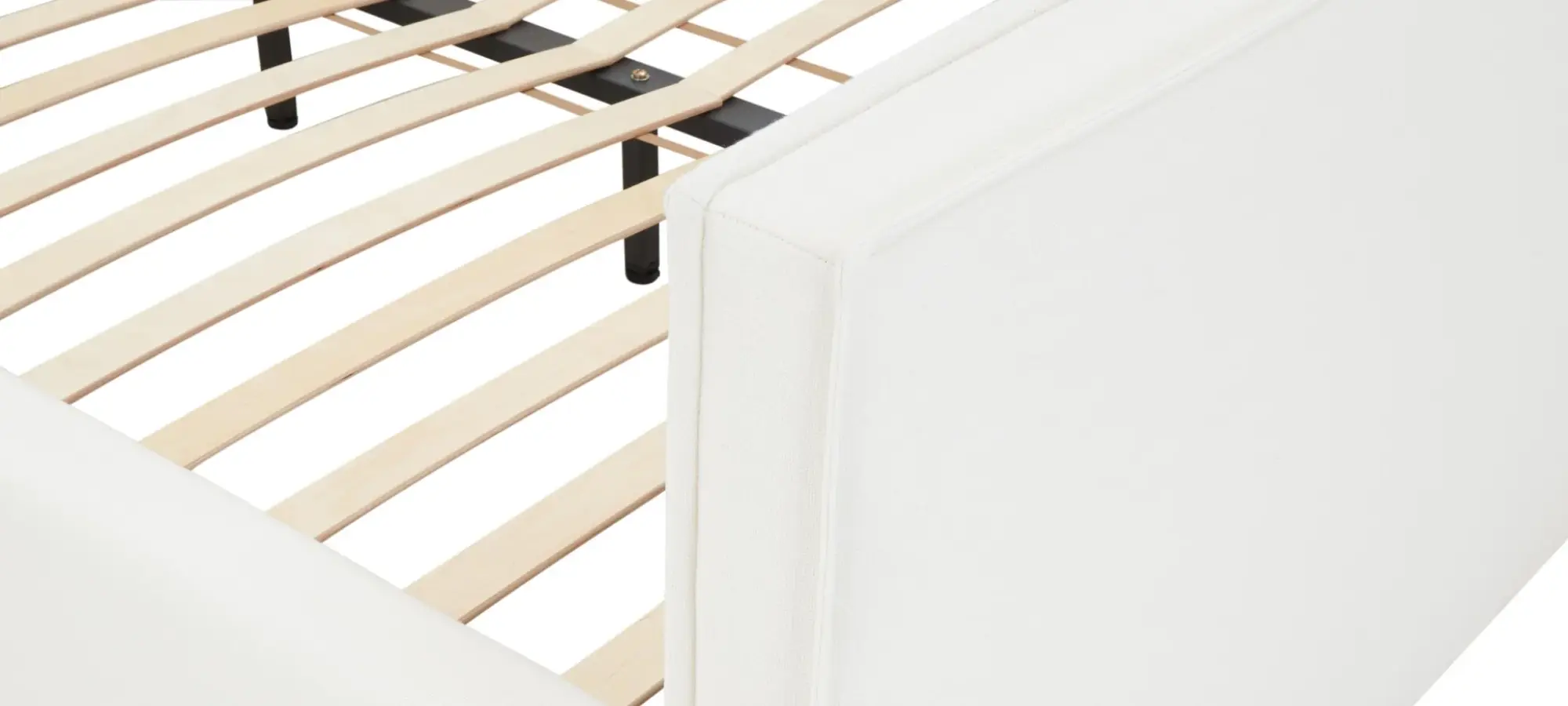
Slatted bases generally allow better airflow underneath the mattress than solid platform decking does, which matters more than it might seem for foam mattresses that can otherwise trap heat against a solid surface. If you're pairing a new mattress with a storage bed, confirm the bed's slat spacing and weight rating can support it—heavier mattresses need slats that are both closely spaced and sturdy enough not to bow under sustained weight. Product pages typically list the included slat roll's dimensions and the bed frame's overall weight capacity, so check both before finalizing a mattress purchase.
Assembly and Practical Concerns
Storage beds come with a few practical tradeoffs worth knowing about upfront. What are the disadvantages of storage beds? Mainly three things:
- They're heavier to move than a standard bed frame
- They involve more assembly steps because of the added drawers or lift hardware
- Assembly is typically a two-person job rather than something one person can comfortably handle solo
It's also worth checking adjustable base compatibility before you buy if you're using or planning to use one. Several storage beds are listed as incompatible with standard adjustable bases, since the drawer or storage rail structure occupies the space an adjustable base's motor and frame would need. Some models note they may work with select zero-clearance adjustable bases specifically—if that applies to you, check the individual product page or contact Coleman directly to confirm compatibility before ordering.
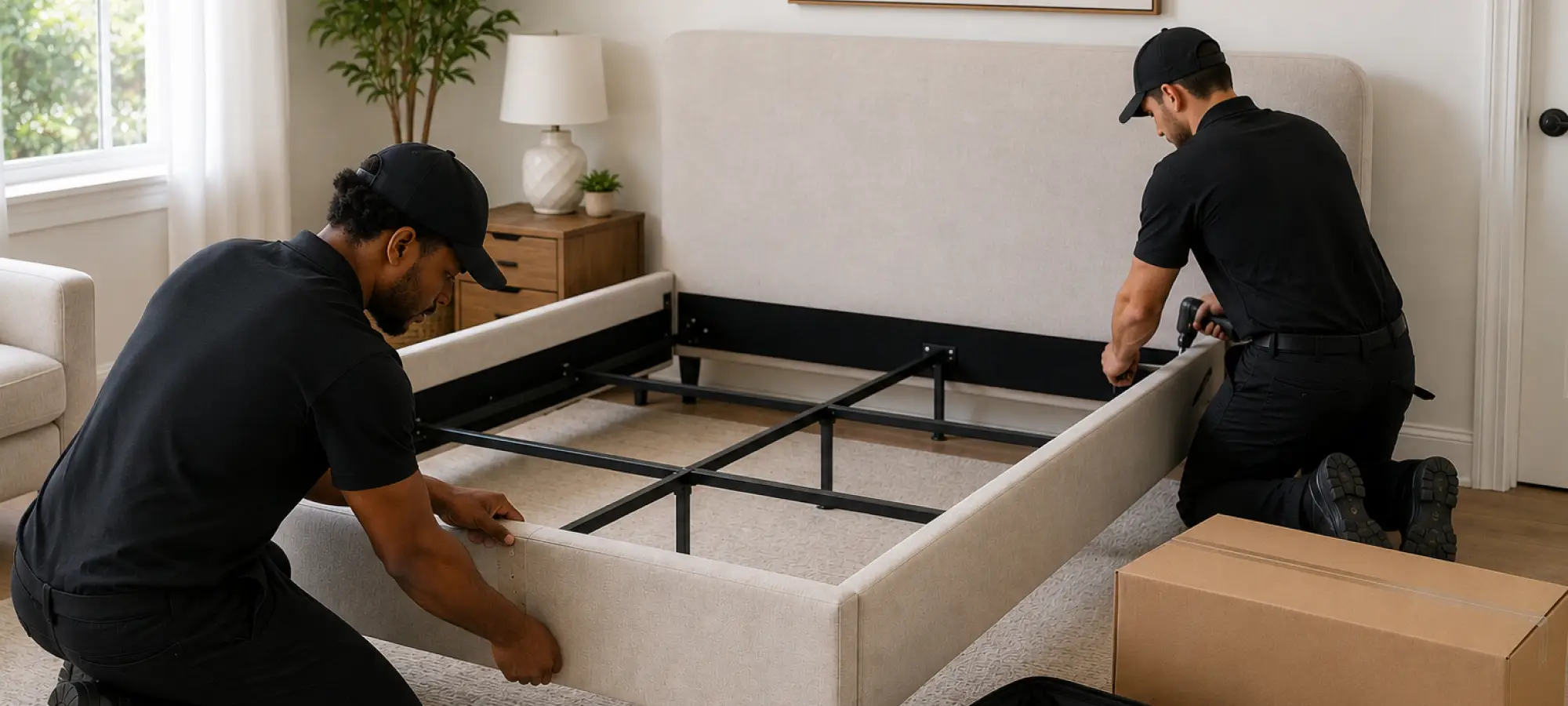
This is where Coleman's own delivery model removes what's otherwise the biggest practical downside of a storage bed. Free Premium White Glove Delivery on qualifying items includes professional assembly and full setup in the room of your choice, which means the heavier frame, the extra drawer hardware, and the two-person assembly job are handled for you rather than left as a weekend project.
Top Storage Bed Picks at Coleman Furniture
Once you've settled on a style, mechanism, and material, here's a look at eight in-stock storage beds from Coleman's current catalog, grouped by style. The selection spans five different manufacturers—Ashley Furniture, Homelegance, Picket House Furnishings, Furniture of America, and Liberty Furniture—so this is a genuine cross-section of what's available, not a single brand's lineup.
Bookcase Storage Beds
Underbed drawers or boxes paired with a headboard built out into shelving.
-
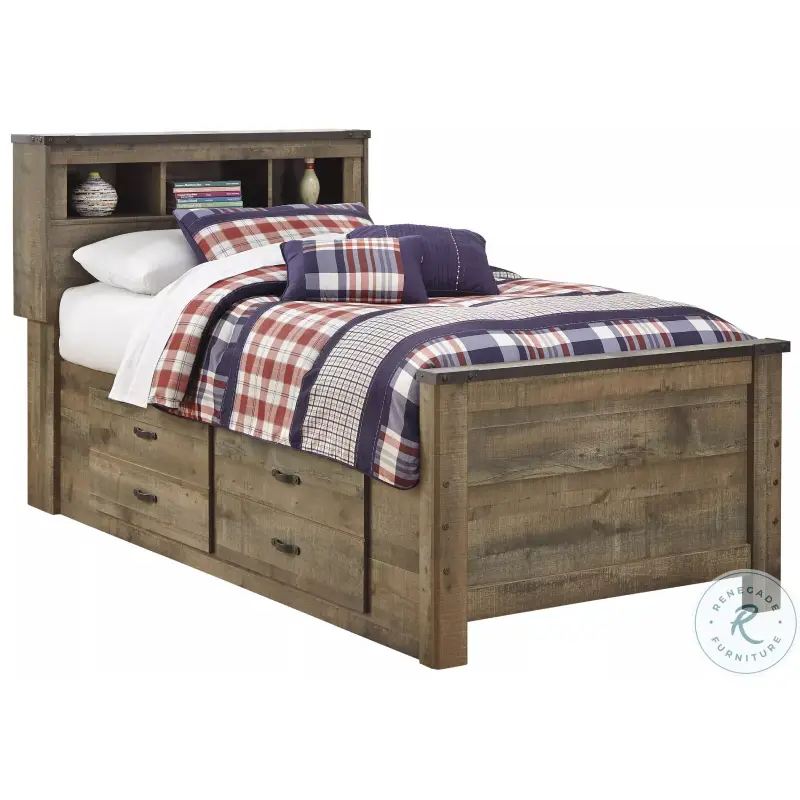
Trinell Bookcase Bed with 2 Storage Drawers
A rustic bookcase headboard over 2 large underbed storage drawers, built from engineered wood with a replicated oak grain finish. Includes a slat roll, so it's ready for a mattress with no boxspring needed.
View Trinell Bookcase Bed -
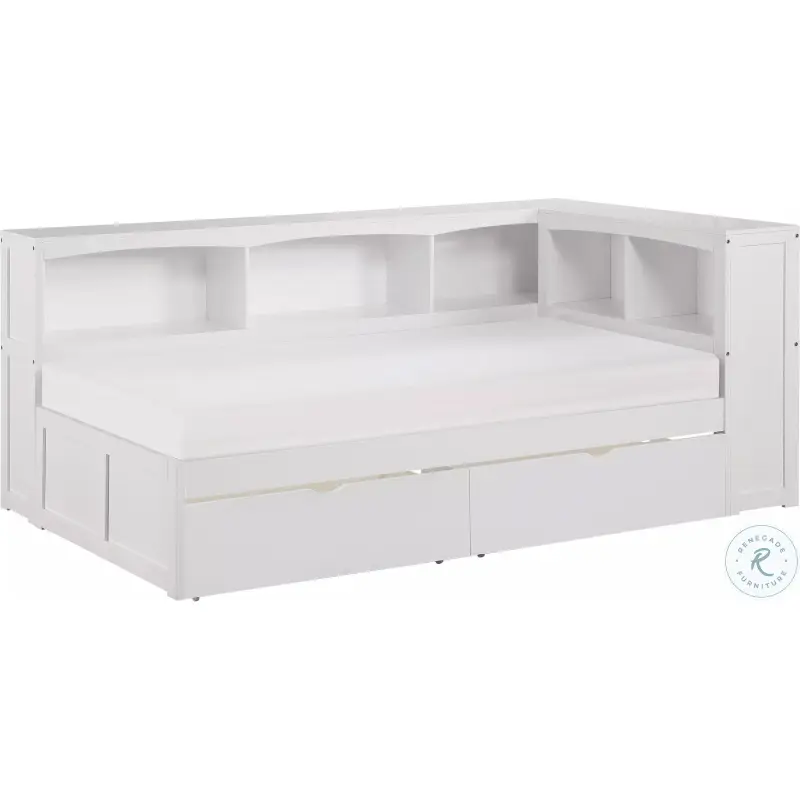
Galen Bookcase Corner Bed with Storage Boxes
An attached bookcase spans the back and side of this corner-style frame, paired with under-bed storage boxes mounted on casters for easy mobility—a distinctive option if you want storage you can roll out rather than a fixed drawer.
View Galen Bookcase Corner Bed -
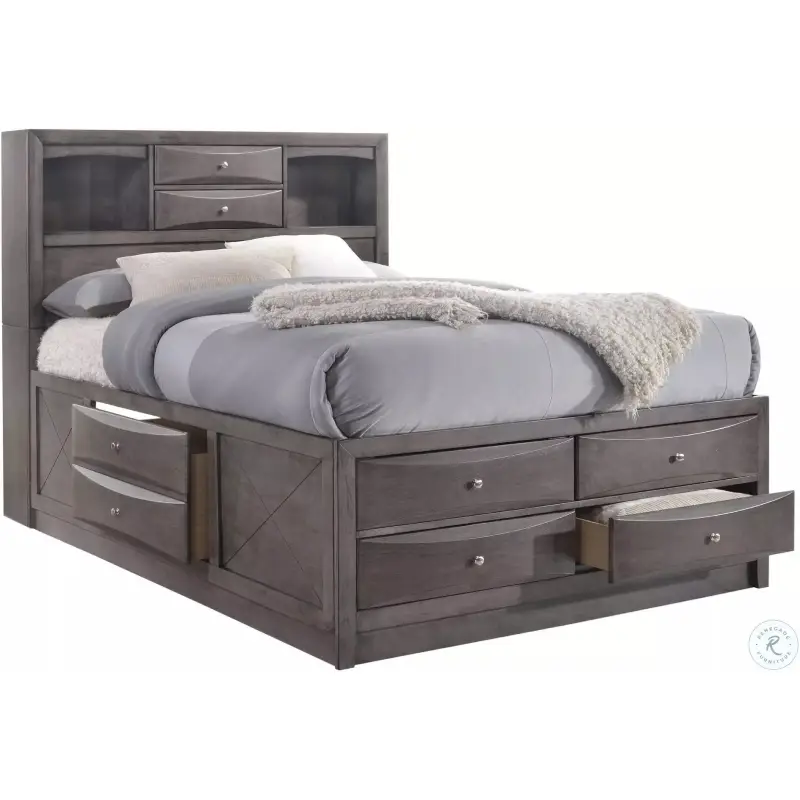
Madison Bookcase Storage Bed
The most storage-dense pick in this lineup: 8 drawers split across the headboard, footboard, and side rails, with dovetail joinery and a listed weight capacity of 800 lbs. Dust-proofing on the bottom drawers is a nice detail for long-term use.
View Madison Bookcase Bed -
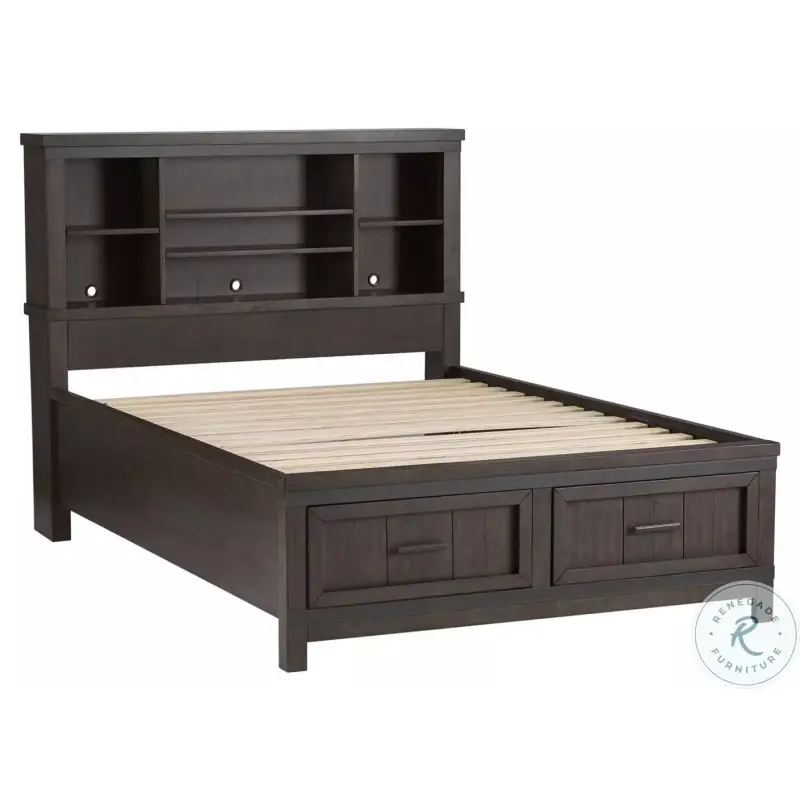
Thornwood Hills Bookcase Storage Bed
Built from rubberwood solids and mango veneers, with dovetail drawer construction, full-extension glides, and four adjustable shelves built into the bookcase headboard alongside a separate storage footboard.
View Thornwood Hills Bookcase Bed
Drawer & Panel Storage Beds
Storage built into the rails or footboard of a standard panel-style frame.
-
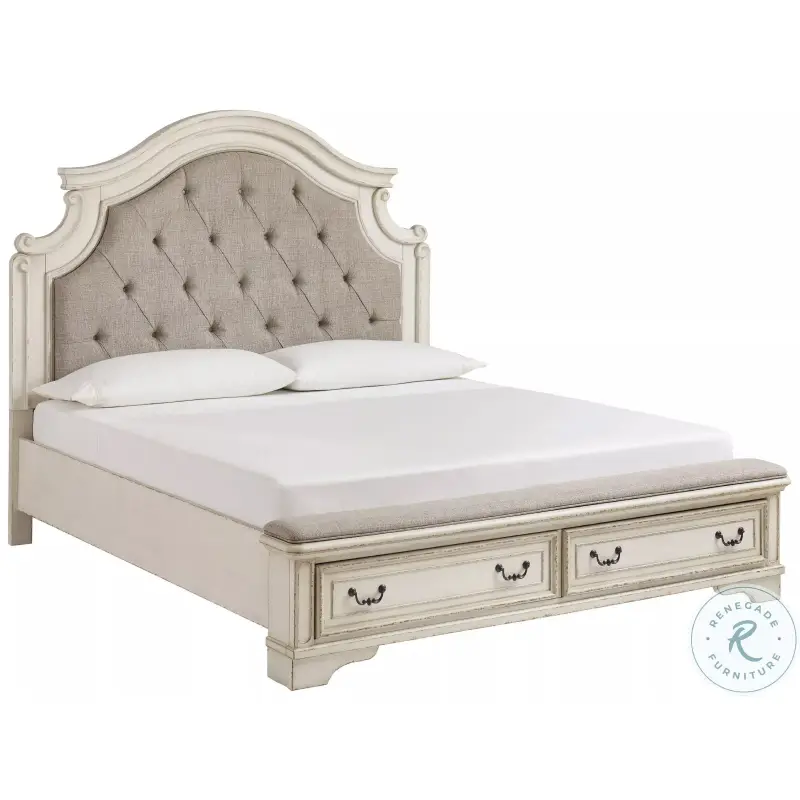
Realyn Upholstered Panel Bed with Storage Bench Footboard
A distressed two-tone finish pairs with an upholstered, cushion-topped headboard and a storage bench footboard holding 2 dovetail-jointed drawers on ball-bearing glides.
View Realyn Panel Bed -
Hyanna Panel Storage Bed
The highest drawer count in this roundup at 6 drawers, each on smooth-gliding hardware with faux linen-lined interiors for a clean, finished look inside every drawer.
View Hyanna Panel Storage Bed

Platform Storage Beds
A lower-profile frame with storage built in as a secondary feature.
-
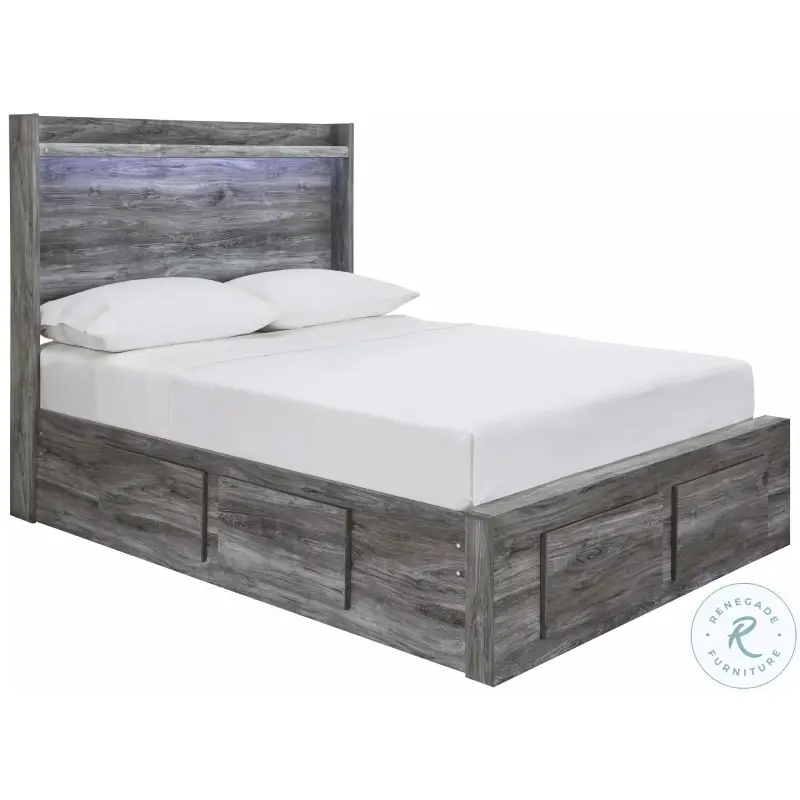
Baystorm Storage Platform Bed
A modern bookcase headboard includes a built-in dimming LED light shelf, paired with under-bed storage drawers finished in faux linen—a platform-style frame with bookcase-level features.
View Baystorm Storage Platform Bed -
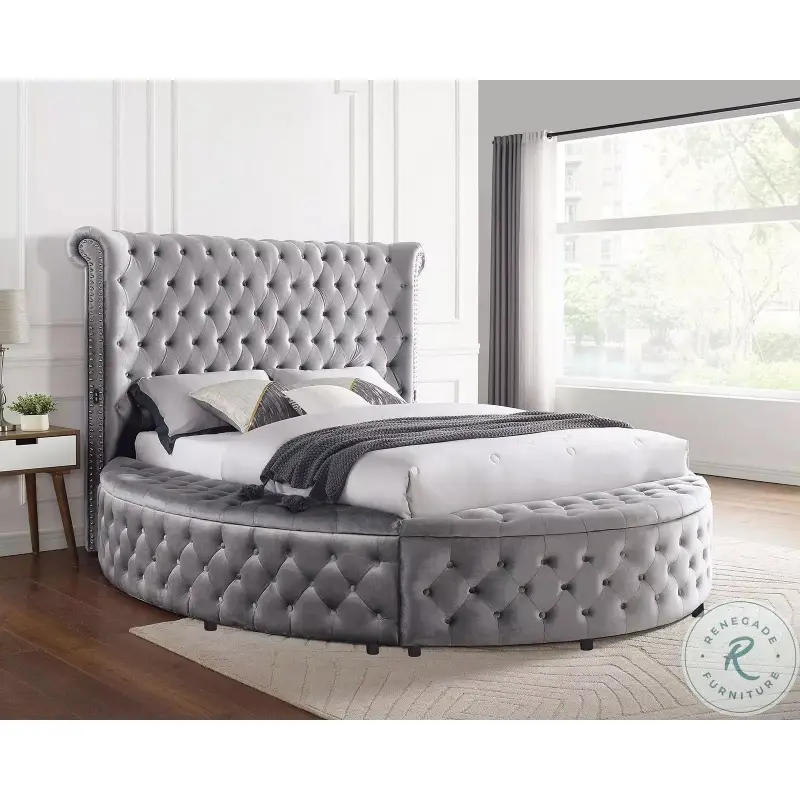
Sansom Upholstered Storage Platform Bed
A glam, button-tufted wingback headboard in velvet-like fabric with storage compartments built into the rail and footboard, plus a USB port on each side of the headboard. Runs on a slatted foundation with no boxspring required.
View Sansom Storage Platform Bed
Want to compare more than these eight? Browse Coleman's full bed collection to filter by size, style, and price.
Ready to shop storage beds?
Choosing among the best storage beds comes down to a short decision path: pick a style based on how you'll access your storage, check your room's clearance for drawers or a lift mechanism, confirm mattress compatibility, and then shop by the specific mechanism that fits your space. Get those four right, and the bed you choose will function as well as it looks.
Explore the full selection of beds at Coleman Furniture, with free White Glove Delivery and professional assembly on qualifying items.
Storage bed FAQs
No single manufacturer makes the best storage beds across the board—quality shows up within each brand's individual models. Ashley Furniture, Liberty Furniture, Homelegance, Picket House Furnishings, and Furniture of America all produce well-reviewed storage beds at Coleman, each with different style strengths, from Ashley's rustic bookcase frames to Furniture of America's upholstered platform designs.
For most bedrooms, yes. A storage bed consolidates the function of a bed frame and a dresser or set of underbed bins into a single piece of furniture, which is especially valuable in smaller rooms where floor space is limited.
Storage beds are heavier to move than standard bed frames, involve more assembly steps because of the added drawers or lift hardware, and typically require two people to assemble. Some models also aren't compatible with standard adjustable bases.
Drawer count and depth determine real storage capacity more than the bed's overall size. Bookcase beds with multiple drawers across the headboard, footboard, and rails—some Coleman models offer as many as 8 drawers—hold significantly more than a bed with a single underbed storage box, even at the same mattress size.
Most storage beds use a slatted foundation rather than a boxspring, which works with the vast majority of standard mattresses. Check the bed's slat spacing and weight capacity against your mattress type and weight before buying, particularly for heavier mattresses that need more closely spaced, sturdy slats.


