

Your Easy Guide to Couch Dimensions
Finding the right couch starts with the right size. A sofa that’s too small feels lost in the room. One that’s too large can overwhelm the space. Knowing standard couch dimensions makes the choice easier. With the right measurements, you can shop confidently and avoid delivery headaches.
This guide covers the most common sofa sizes, how to measure correctly, and which dimensions work best in different rooms. You’ll also get a few tips on planning your layout so your new couch looks and feels just right.
Key Takeaways
- Average couch dimensions range from 72–96 inches wide, 30–40 inches deep, and 30–36 inches high.
- Loveseats, sectionals, sleepers, and recliners each have their own size ranges.
- Always measure your room for width, depth, and height before buying.
- The best size really depends on your room, layout, and how you’ll use it every day.
Average Couch Dimensions
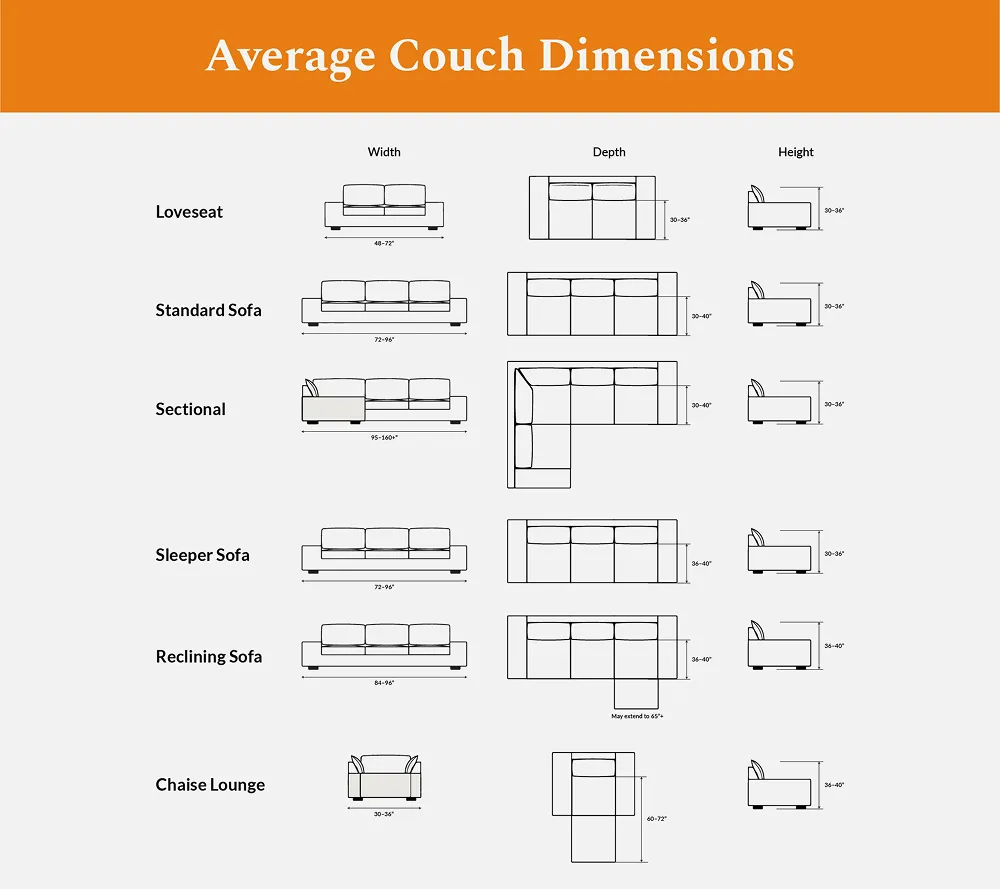
When you shop for a sofa, it helps to know the averages. These measurements give you a starting point so you can see if a piece feels too big, too small, or just right for your space.
| Couch Type | Width (Inches) | Depth (Inches) | Height (Inches) |
|---|---|---|---|
| Standard Sofa | 72-96 | 30-40 | 30-36 |
| Loveseat | 48-72 | 30–36 | 30-36 |
| Sectional | 95-160+ | 36-40 | 30-36 |
| Sleeper Sofa | 72-96 | 36-40 | 30-36 |
| Reclining Sofa | 84-96 | 36–40 (may extend to 65+) | 36-40 |
| Chaise Lounge | 30-36 | 60-72 | 30-36 |
-
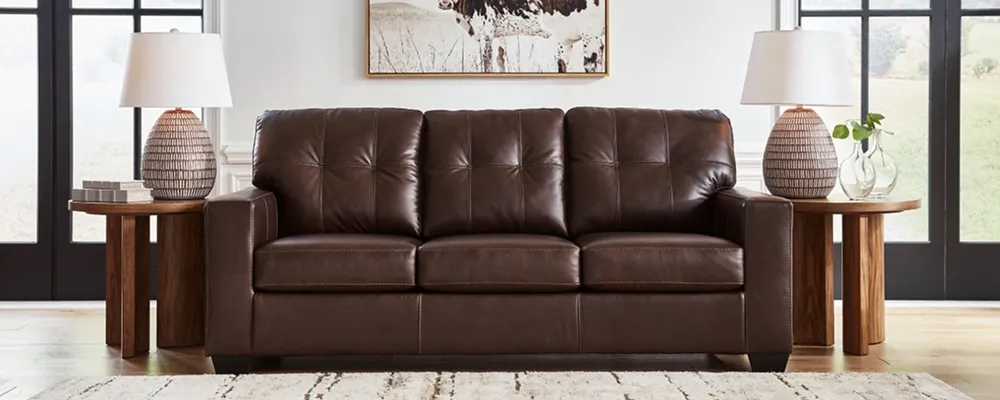
Standard Couch Dimensions
The classic three-seater sofa usually measures 84 to 90 inches wide, 35 to 38 inches deep, and 30 to 36 inches high. This is the most versatile size for medium and large living rooms.
-
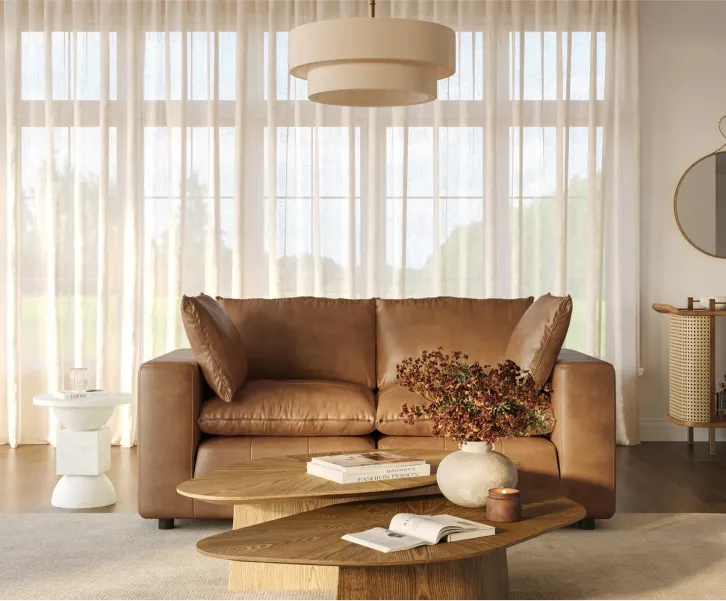
Loveseat Dimensions
A loveseat is smaller, with widths ranging from 52 to 72 inches. Depth and height are similar to a full sofa, making it a great fit for apartments, offices, or bedrooms.
-
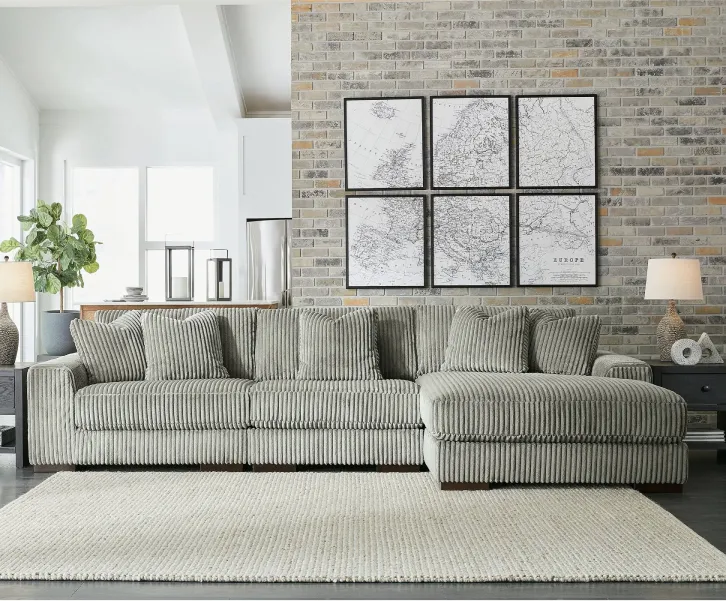
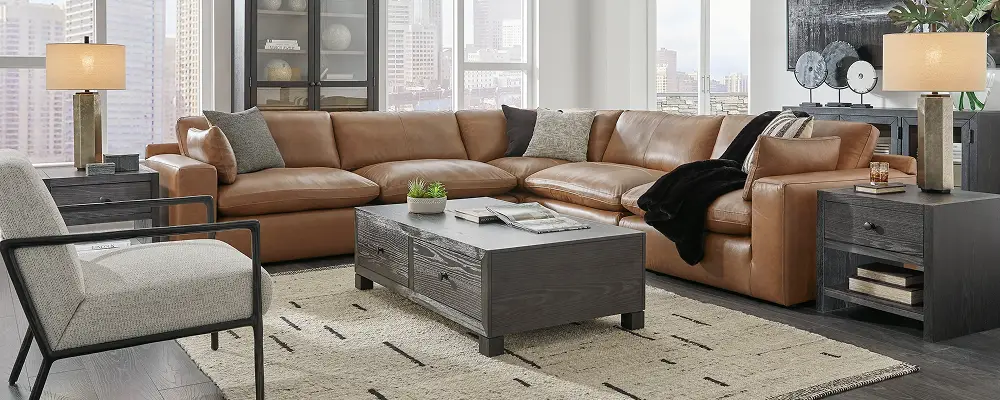
Sectional Sofa Dimensions
Sectional vary more than any other style. L-shaped sectionals typically measure 95 to 130 inches on each side, while U-shaped ones can stretch 120 to 160 inches or more. They’re ideal for big rooms and flexible seating arrangements.
-
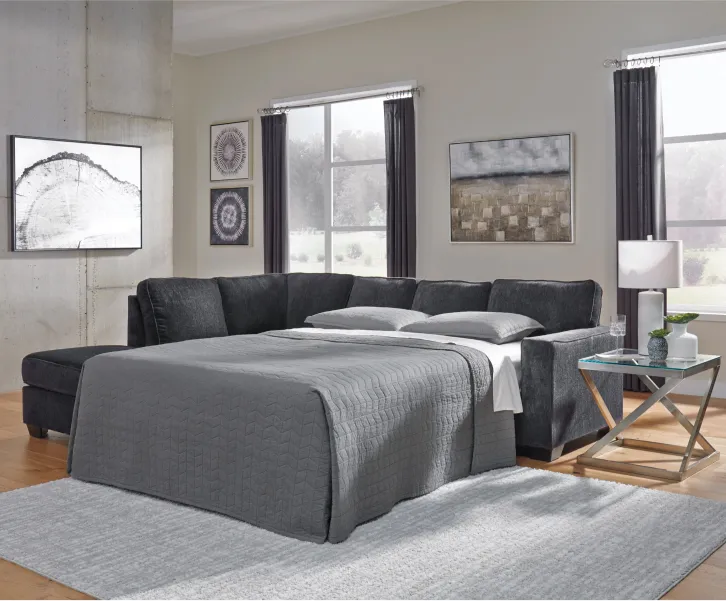
Sleeper Sofa Dimensions
A sleeper sofa is similar in size to a standard couch when closed, but the pull-out bed adds length. Extended, they can measure 75 to 90 inches front to back. Always measure for bed clearance before buying.
-
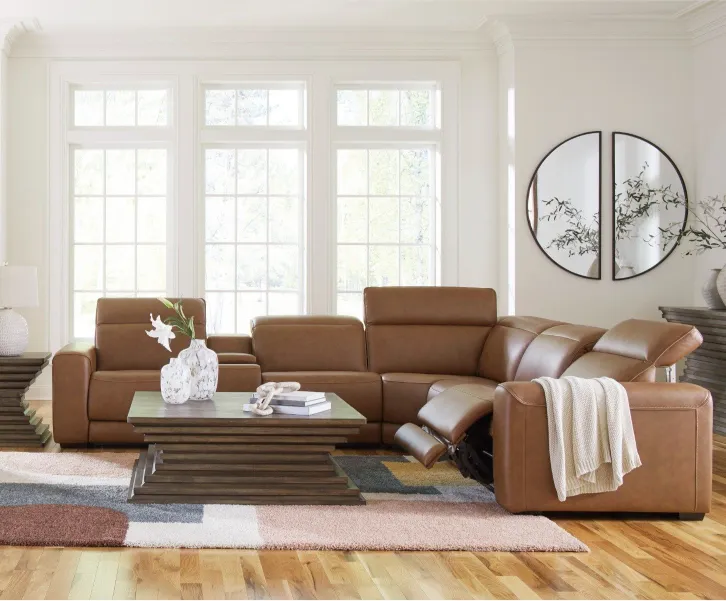
Reclining Sofa Dimensions
Recliners add comfort but also depth. Closed, they measure 36 to 40 inches deep, but extended they can reach 60 to 65 inches. Plan extra space behind them for full reclining.
-
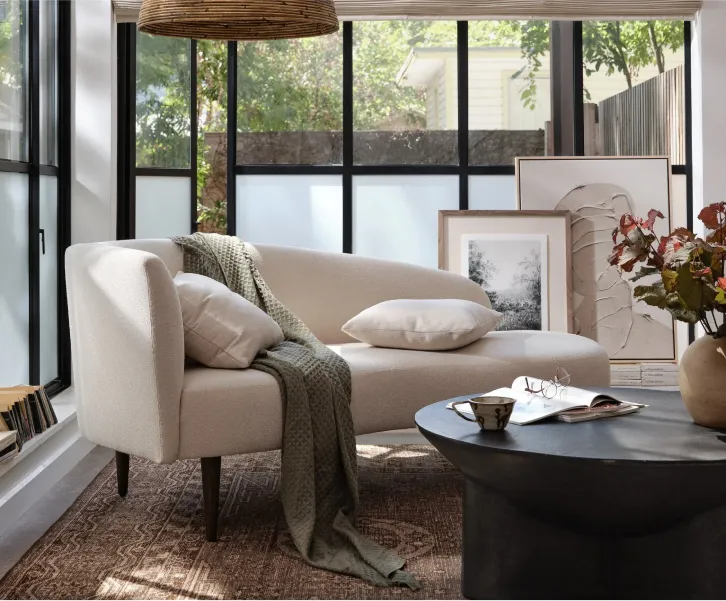
Chaise Lounge Dimensions
Chaise lounges are built for stretching out. They measure 30 to 36 inches wide, 60 to 72 inches long, and around 30 to 36 inches high. They work as standalone pieces or as part of a sectional.
How to Measure Your Couch Correctly
Before you buy a new sofa, it’s important to measure the one you have, or the space where the new one will go. A quick measuring session can save you from a couch that doesn’t fit through the door or leaves your room feeling cramped.
-
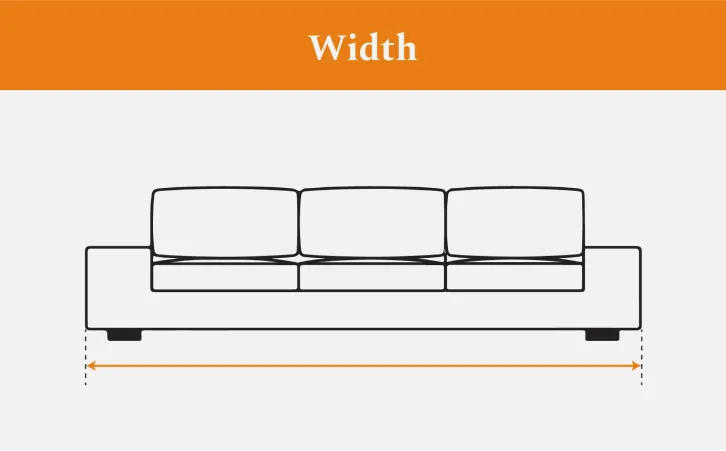
Width Measurements
Width is the total length of the sofa from arm to arm. Standard couches usually measure between 72 and 96 inches wide. For smaller spaces, a loveseat will come in closer to 52 to 72 inches. When measuring, always check the full width, not just the seat. Wide arms or rolled cushions can add several extra inches.
-
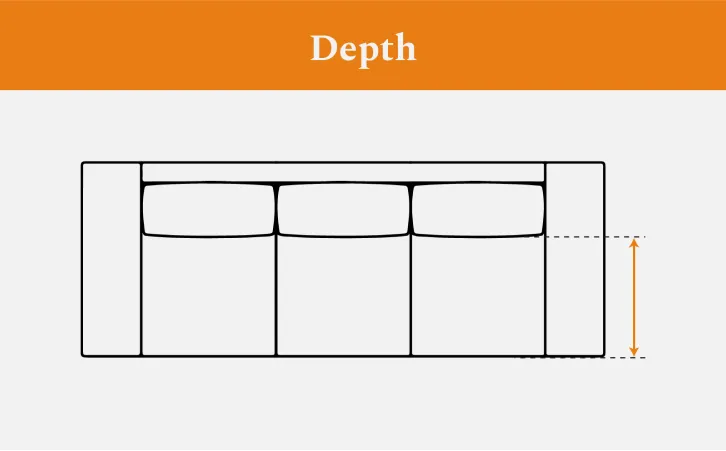
Depth Measurements
Chaise lounges are built for stretching out. They measure 30 to 36 inches wide, 60 to 72 inches long, and around 30 to 36 inches high. They work as standalone pieces or as part of a sectional.
-
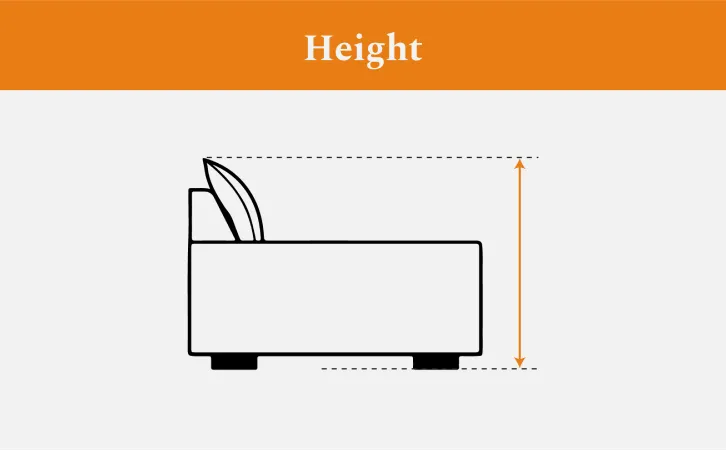
Height Measurements
Height is measured from the floor to the top of the sofa’s backrest. The average range is 30 to 36 inches. Taller backs offer more support, while lower profiles give a modern, open feel. If you have low windowsills or want to keep sightlines clear in an open space, pay attention to this measurement.
How to Choose the Right Couch Dimensions for Your Space
The right sofa size depends on how you use your room. In a small living room, a loveseat or compact sofa leaves room for other furniture. In a large family room, a sectional or full-size couch anchors the space.
Think about balance. A couch should feel proportional to the room and other pieces in it. Leave space for side tables, lamps, or a rug that ties the area together. A sofa that fills the entire wall without breathing room often feels oversized.
Also consider function. Do you host often? A sectional might make sense. Do you prefer a clean, open feel? A standard sofa paired with accent chairs could be a better choice.
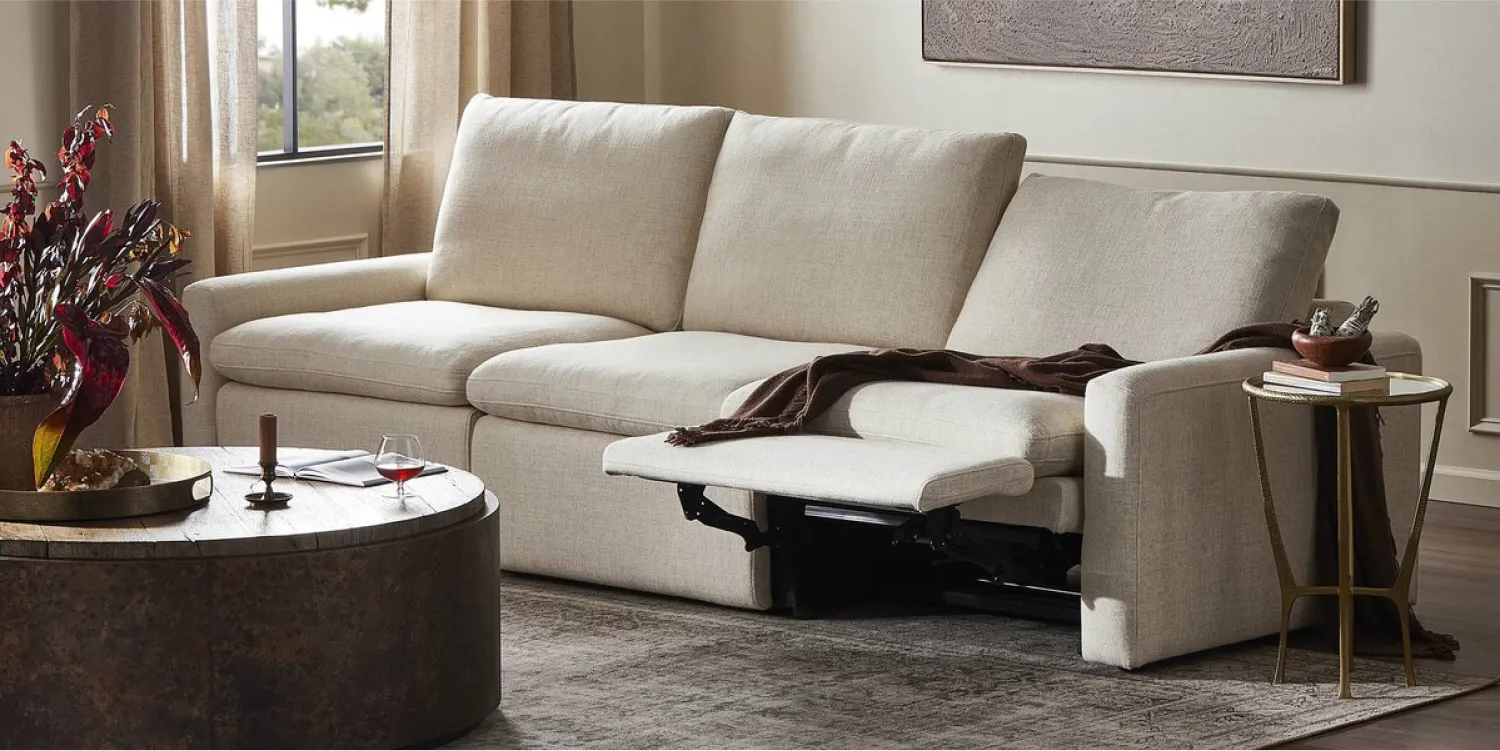
The Tillery Antigo reclining sofa is the perfect couch for a casual living room. Its elegant performance fabric is great for entertaining or for family gatherings.
Best Couch Dimensions by Room Type
-
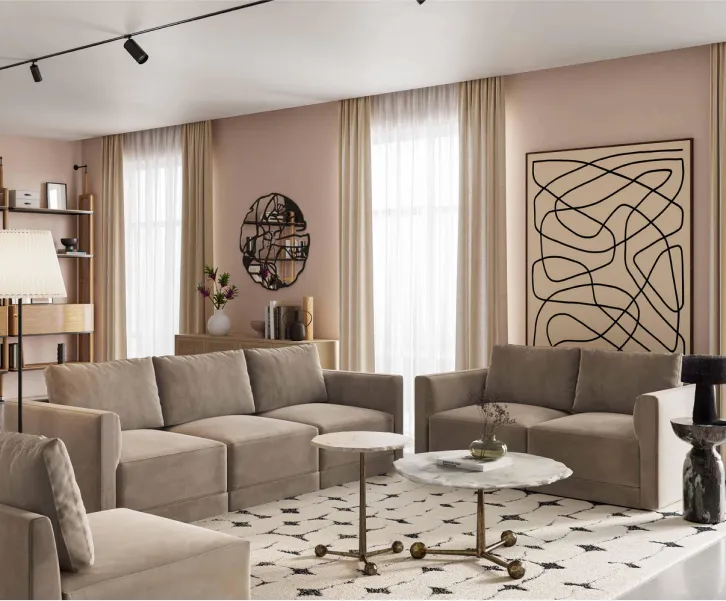
Living Room Couch Dimensions
In a typical living room, standard sofas between 84 and 90 inches wide work well. For larger rooms, sectionals in the 120-inch range provide extra seating.
-
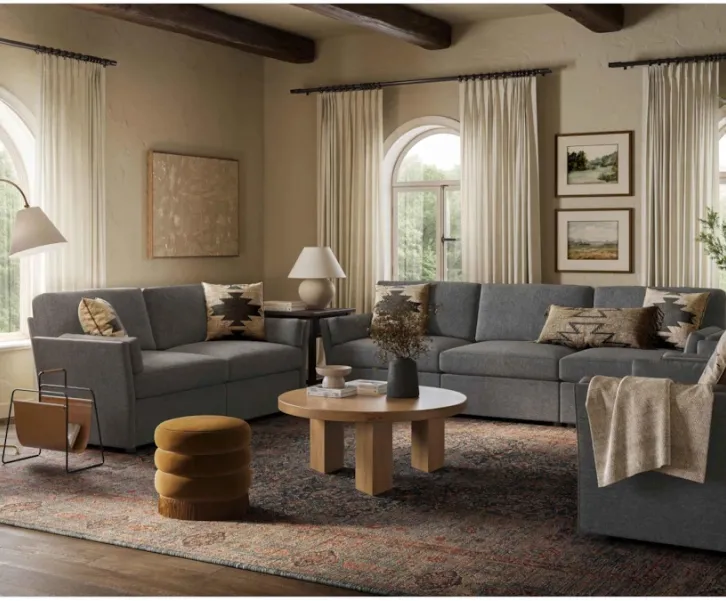
Den and Family Room Considerations
These rooms are usually about comfort. Deeper couches around 38 to 40 inches are great for lounging. Sectionals with a chaise are popular here too.
-
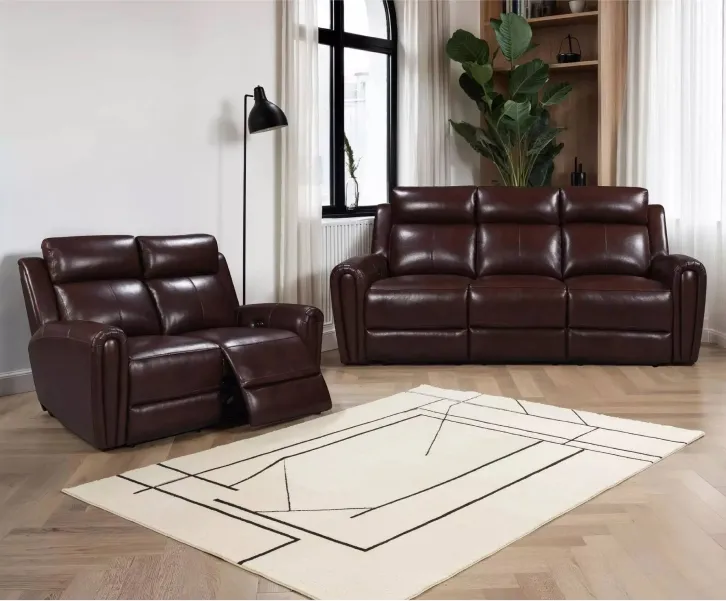
Home Office Couch Dimensions
Compact sofas or loveseats between 52 and 72 inches wide fit better in offices. They provide a comfortable spot without crowding the workspace.
-
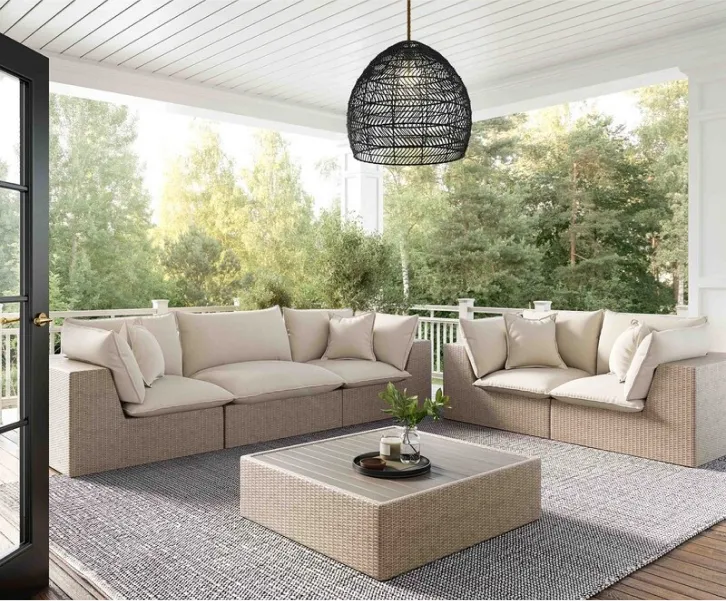
Outdoor Couch Dimensions
Outdoor sofas often run smaller than indoor versions. Look for pieces 70 to 84 inches wide, with weather-resistant cushions and lower backs that blend into the landscape.
-
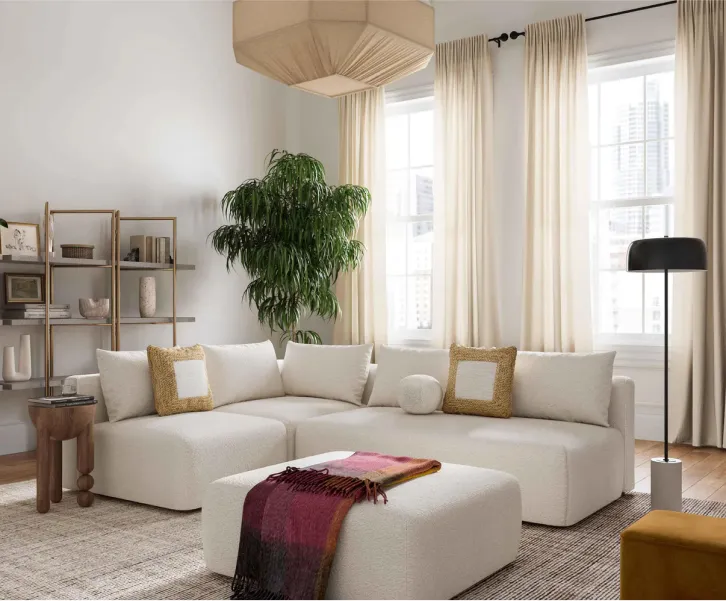
L-Shaped Sectional Dimensions
L-shaped sectionals dimensions have each side usually measuring 95 to 130 inches. This setup works well in corners or as a room divider.
-
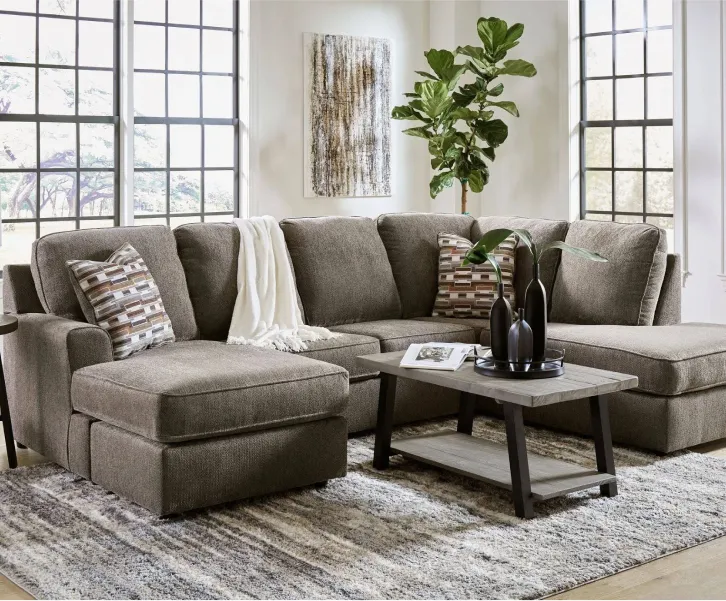
U-Shaped Sectional Dimensions
U-shaped sectional widths can reach 160 inches or more. These are best for large open rooms where you want maximum seating.
-
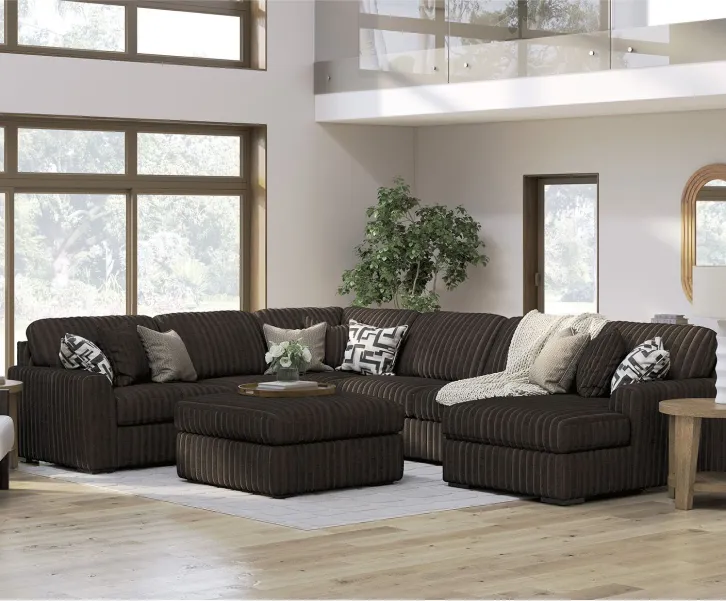
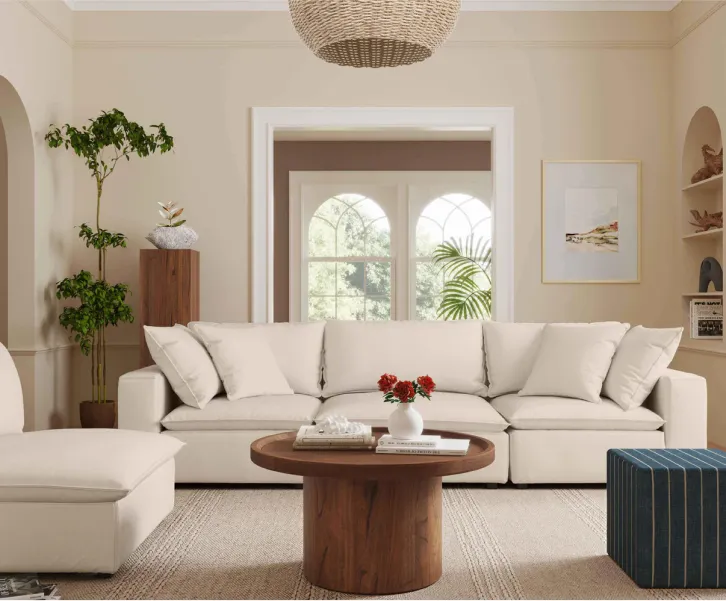
Modular Sectional Dimensions
Modular sectionals are built from individual pieces, often 30 to 40 inches wide each. They let you adjust the size over time.
-
Sofa Chaise Dimensions
A sofa chaise adds 60 to 72 inches of length. It’s great for stretching out while keeping the sectional footprint smaller than a full U-shape.
Sectional Sofa Configuration Guide

Complete Your Dining Room with Coleman Furniture
Getting the size of your couch right is only half the story. The other half is making sure it works with your room’s layout. A sofa that technically “fits” on paper can still feel awkward if there’s no room to walk around it or if it blocks the natural flow of the space.
One of the most important rules is to think about traffic flow. You’ll want to leave at least 30 to 36 inches of clearance in the main walkways. This keeps people from bumping into furniture when they’re moving through the room. In tighter spaces, you can get away with a little less, but it’s better to err on the side of comfort.
Next, consider how your sofa relates to other furniture, especially your coffee table. A good guideline is about 18 inches between the front of the couch and the table. That’s close enough to set down a drink but far enough that you can stretch out your legs. The same rule applies to side tables. Keep them within easy reach but not so close that they crowd the seating.
Room layout is another factor that shapes how your couch feels in the space. Sofas often work best when they’re oriented toward a focal point like a fireplace, TV, or window. From there, you can balance the room with chairs, accent tables, or even another sofa. A piece like the Dylan Sapphire Olive Sofa, for example, can anchor a living room beautifully when paired with a complementary accent chair or side table.
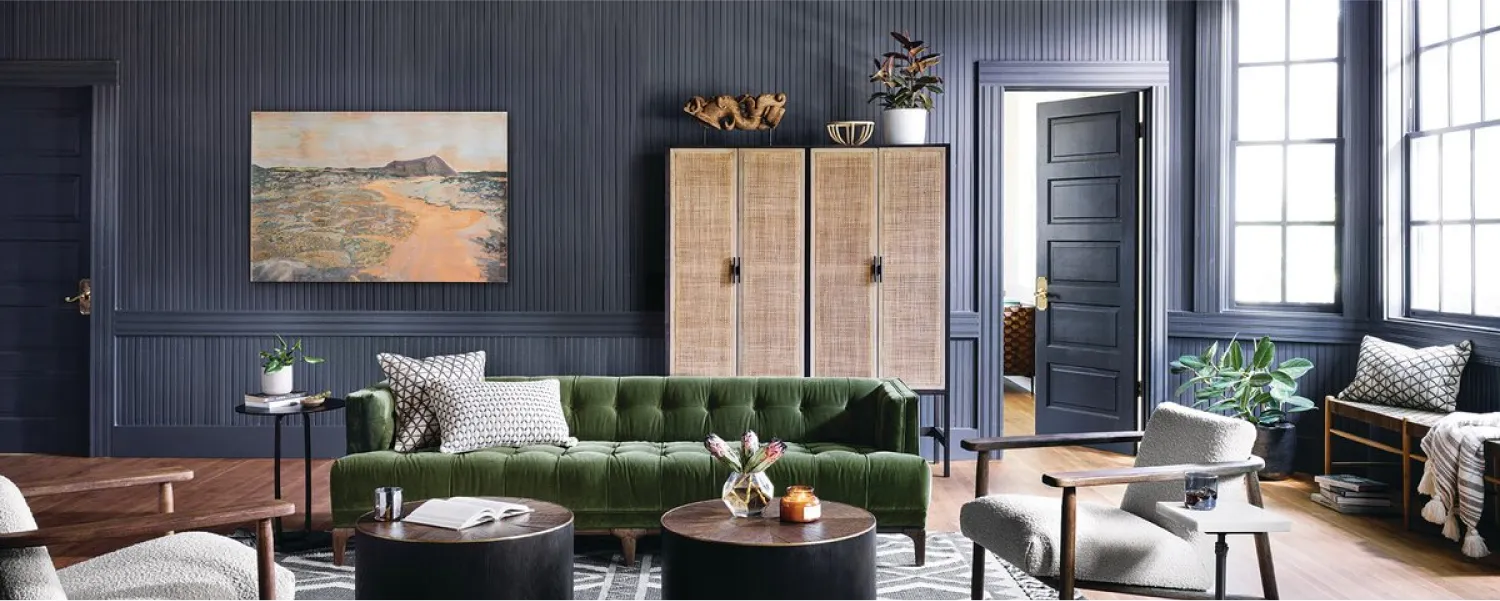
Couches can also help define conversation areas. If your room is large, try placing two sofas across from each other, or pair one with a set of chairs. Sectionals naturally create a corner that draws people together. Thinking in terms of zones can help you make even an open floor plan feel warm and connected.
Finally, don’t forget the delivery path. Measure doorways, hallways, stairwells, and elevators before you order. Compare those numbers to your sofa’s dimensions to make sure it can actually get into the room. Removing legs and cushions can help, but it’s better to confirm ahead of time than face a last-minute surprise on delivery day.
Find the Perfect Fit with Coleman Furniture
Ready to find the perfect sofa for your home? Coleman Furniture offers a wide selection of couches in every size and style, from compact loveseats to spacious sectionals, cozy recliners to versatile sleeper sofas. Whether you’re looking for something sleek and modern or classic and comfortable, you’ll find options that fit your space and your lifestyle.
Shop couches at Coleman Furniture and discover the right piece for your home.
Couch Dimensions FAQs
A standard couch usually measures between 72 and 96 inches wide, 30 to 40 inches deep, and 30 to 36 inches high. Within that range, the most common option is an 84-inch sofa, which comfortably seats three people. The size you choose depends on how much space you have and how you plan to use it. Smaller couches work well in apartments or tighter living rooms, while a longer one can anchor a family room or open-concept space.
A three-seater sofa typically runs between 84 and 90 inches wide. That gives each person around 24 to 30 inches of seating space, which feels comfortable without being cramped. If you want a more spacious feel, look for models at the higher end of the range, especially if you expect to stretch out or host guests often. For cozier rooms, a slightly shorter three-seater can still seat three but keeps the footprint more manageable.
The best way is to measure both the doorway and the sofa carefully. Start with the width and height of the doorway, then compare those numbers to the sofa’s height, depth, and diagonal measurement (from back corner to front arm). If the smallest side of the couch is narrower than your doorway, you’re in good shape. Also, check hallways, staircases, and turns along the delivery path. Removing sofa legs, cushions, or even doors from their hinges can create a few extra inches of clearance if needed.
The words “sofa” and “couch” are often used interchangeably, and the dimensions don’t change based on the name. What matters more is the style and type of seating. For example, a standard sofa and a standard couch will have nearly identical measurements. A sectional sofa, on the other hand, will usually be much larger than either, while a loveseat or chaise lounge is smaller.
Plan for at least 30 to 36 inches of clearance in the main walkways of a room so people can move comfortably. Between the couch and a coffee table, 18 inches is ideal, close enough to reach your drink but far enough to stretch out your legs. If you’re placing side tables, keep them within a few inches of the armrest so they feel functional. In larger rooms, you can leave extra breathing room around the sofa, but in smaller spaces, these guidelines help maintain good flow without crowding the layout.