


15 Small Dining Room Ideas to Make the Most of Every Inch
Key Takeaways- Small dining rooms can still feel open, stylish, and complete with the right layout.
- Furniture shape, finish, and scale all play a role in saving space.
- Visual tricks like lighting, mirrors, and color help expand the feel of your dining room.
- Flexible pieces like drop-leaf tables, slim storage, and bench seating can make the most of small dining rooms.
-
 1. Use a round or oval table
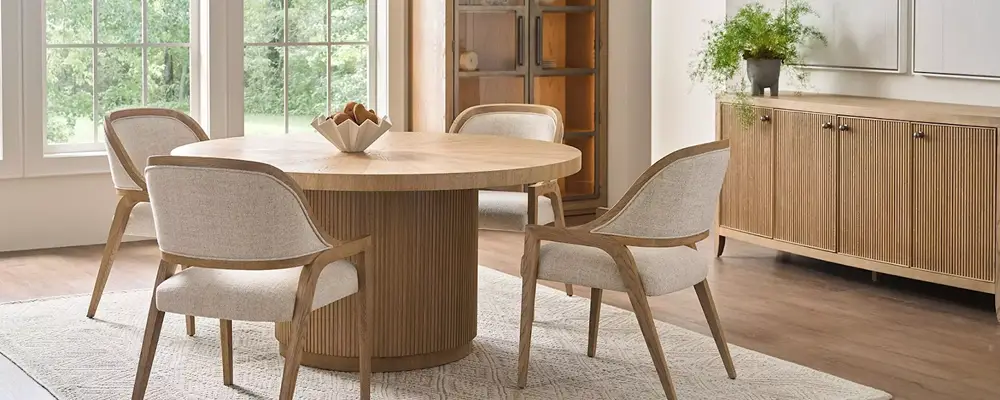
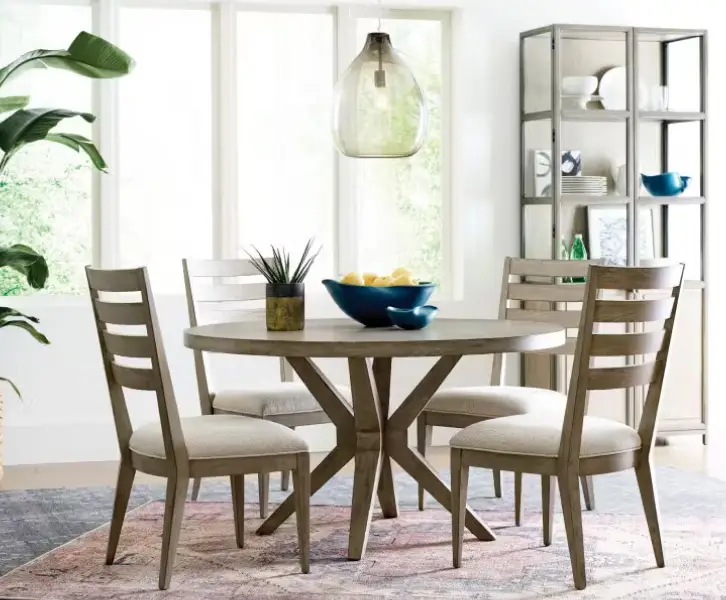
Rounded shapes take up less visual space and improve the flow of your dining room. Round and oval tables are easier to walk around and fit into smaller spaces. They can also often seat more people than traditional square or rectangular tables.
-
 2. Go with a drop‑leaf or foldable table
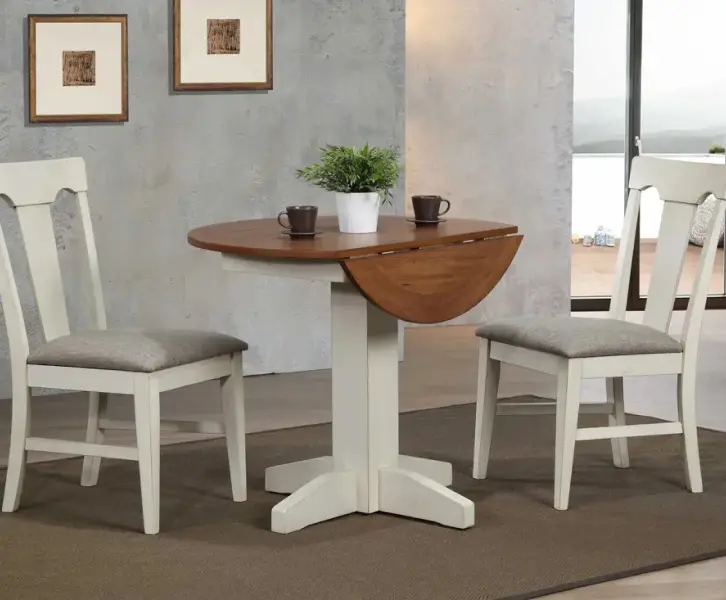
These space-savers expand when you need them and tuck away when you don’t. They’re ideal for small apartments or multifunctional spaces.
-
 3. Try a banquette or bench seating
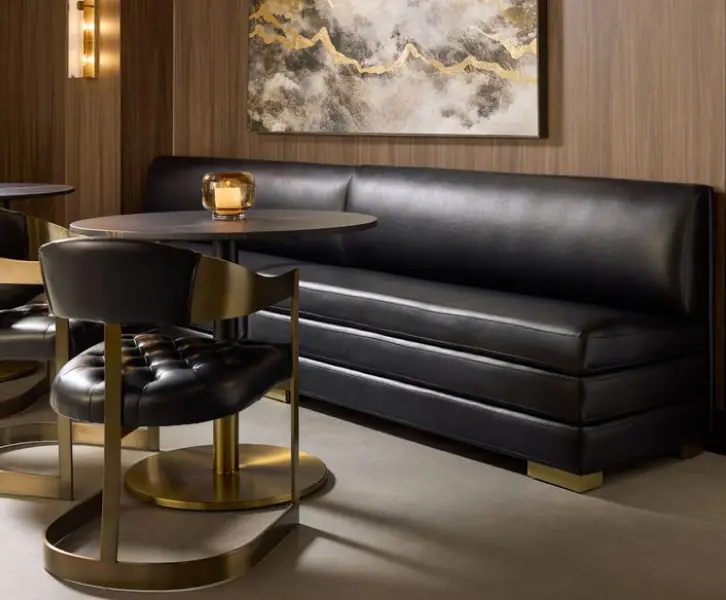
Built-in banquettes and dining benches make the most of unused walls and tight corners. They add extra seating (and style) without taking up a large footprint in the dining room.
-
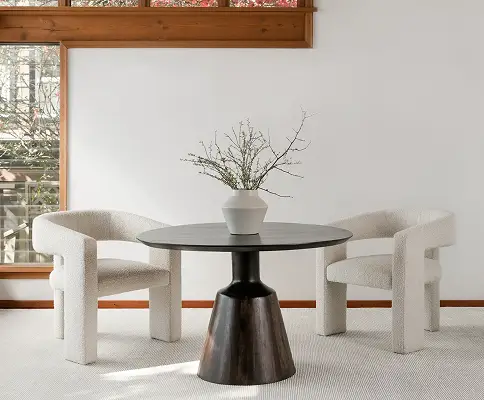 4. Slim profile chairs
Choose dining room chairs with narrow frames, open backs, or armless designs. They’re easier to fit around a small table and help the room feel more open.
-
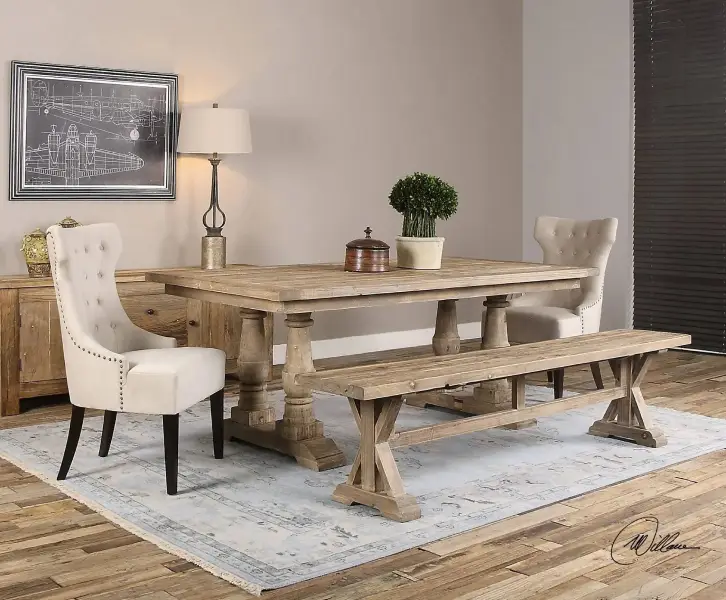 5. Floating furniture
Pull your table and other furniture a few inches away from the wall to create depth and better flow. This trick keeps the layout flexible and makes the room feel less boxed in.
-
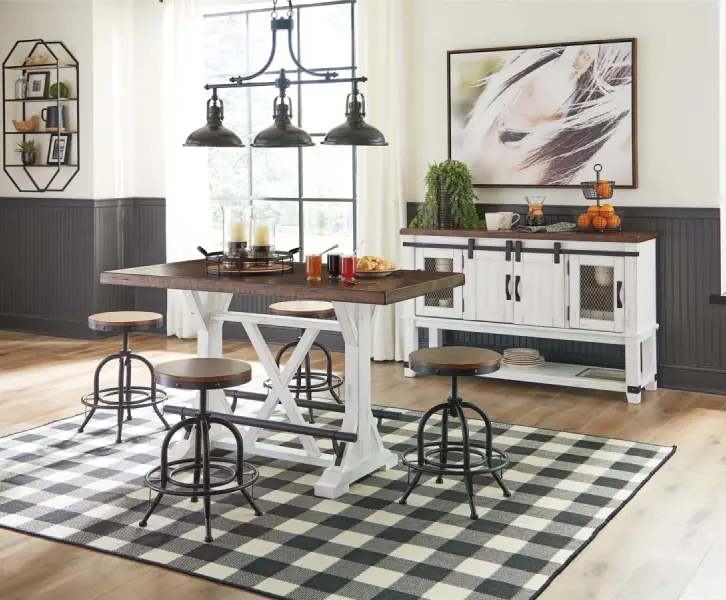 6. Layer with an area rug
In open or combo layouts, place a rug to anchor the dining area and set it apart from the rest of your space. Rugs are perfect for adding extra texture without clutter.
-
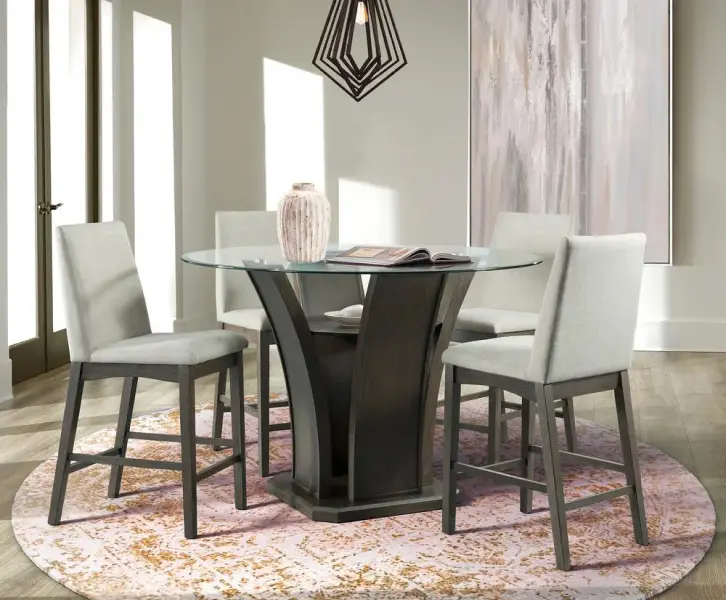 7. Try a glass or acrylic dining table
Clear surfaces let light pass through and keep sightlines open. It’s a simple way to make a small dining room feel brighter and bigger.
-
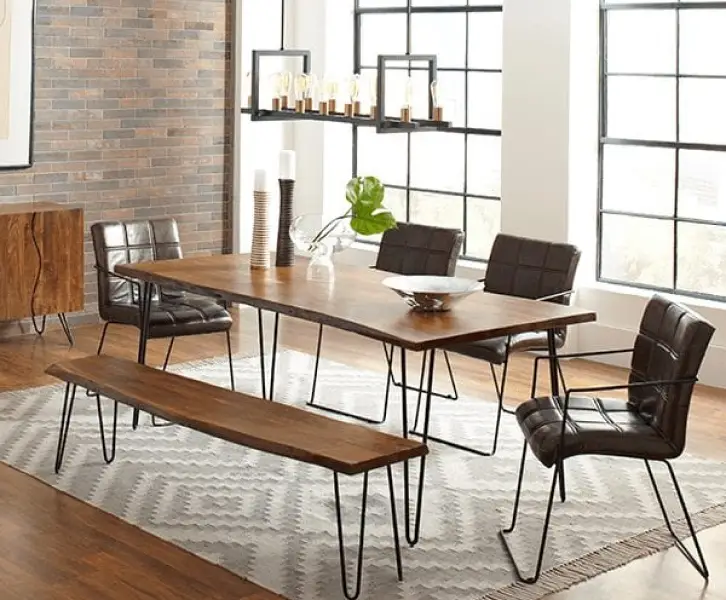 8. Mix seating styles to save space
Pair a bench on one side with chairs on the other. It’s more flexible than a full chair set and lets you push the bench in when not in use.
-
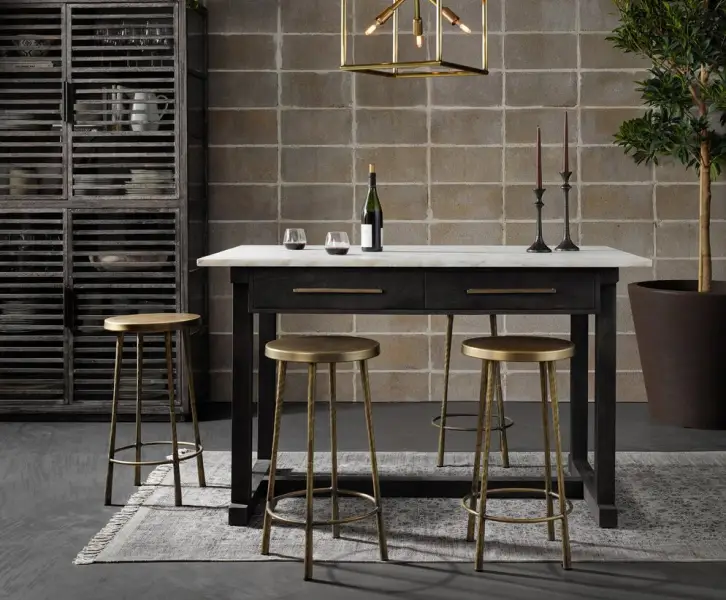 9. Use dark or glossy surfaces
Dark finishes and gold accents can dramatize your smaller dining room and add visual interest to the space.
-
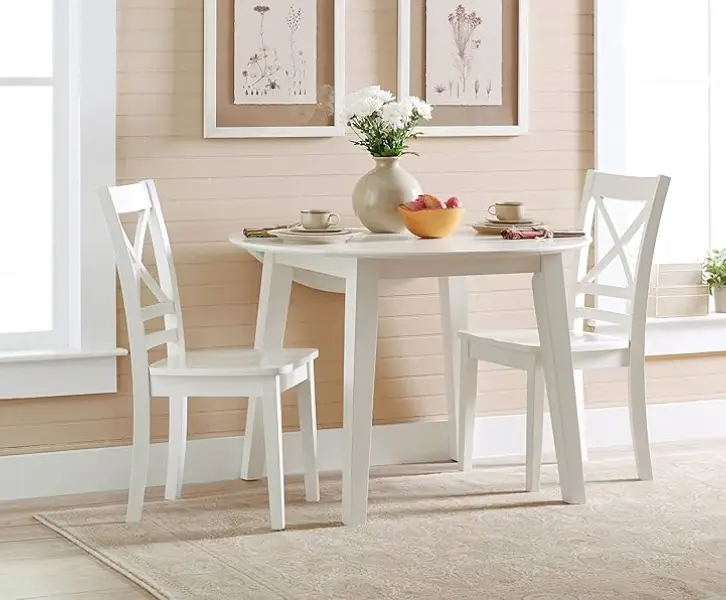 10. Keep a soft, light color palette
Lighter walls, floors, and furniture help dining rooms feel airy and less crowded. Try decor with neutral tones to create a calm and elegant atmosphere.
-
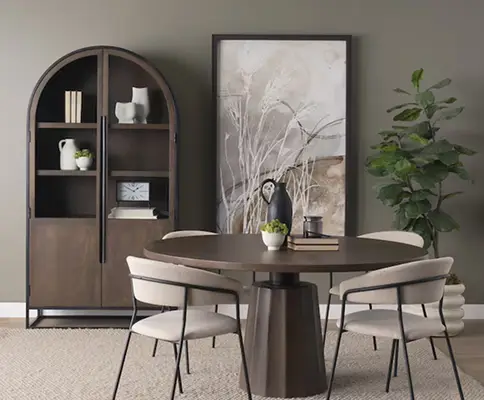 11. Add a cabinet or tall shelving
Use vertical storage to free up floor space and draw the eyes upward. A slim cabinet or open shelving is perfect for keeping dishes and decor elegantly organized.
-
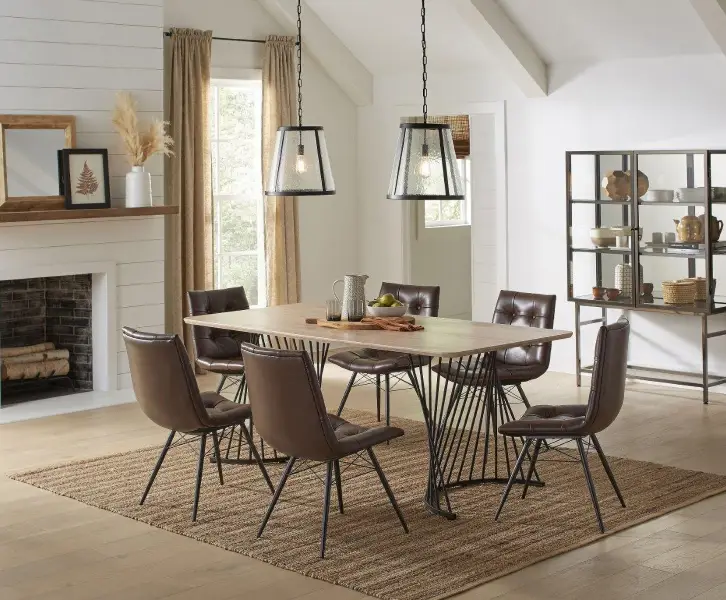 12. Pendant Lighting
A well-placed pendant adds style, draws the eyes upward, and defines the dining zone. Try hanging it low over the table for a sophisticated feel.
-
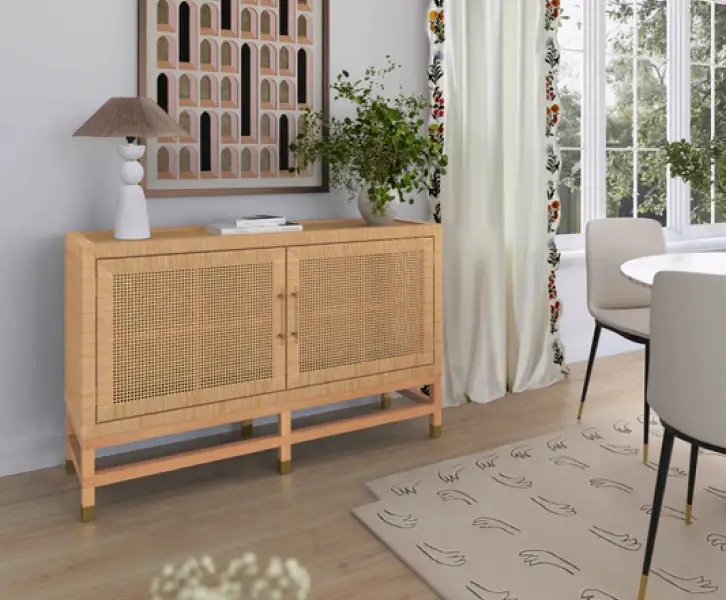 13. Slim buffets, consoles, or sideboards
Look for narrow storage pieces that hug the wall. They can provide extra surface area and storage without making the dining room feel too cramped.
-
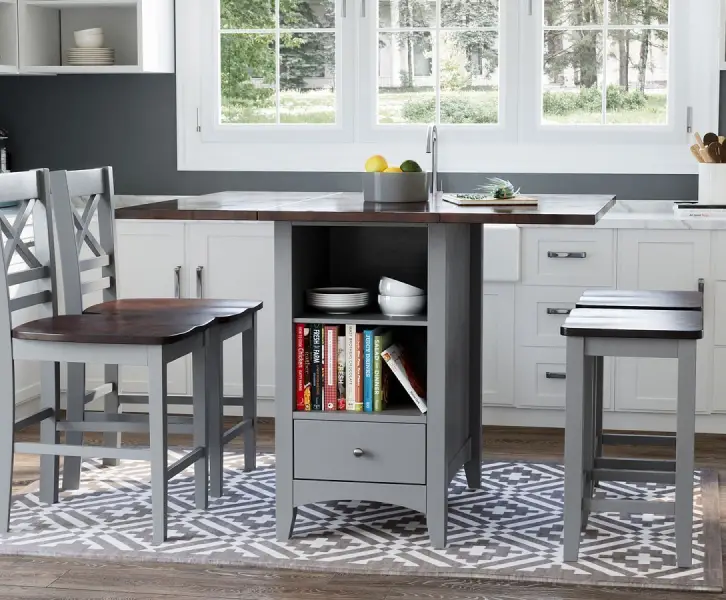 14. Built-in storage
Built-in storage in your dining table creates a perfect spot to display your favorite pieces of decor or store the essentials, freeing up space in the cabinets.
-
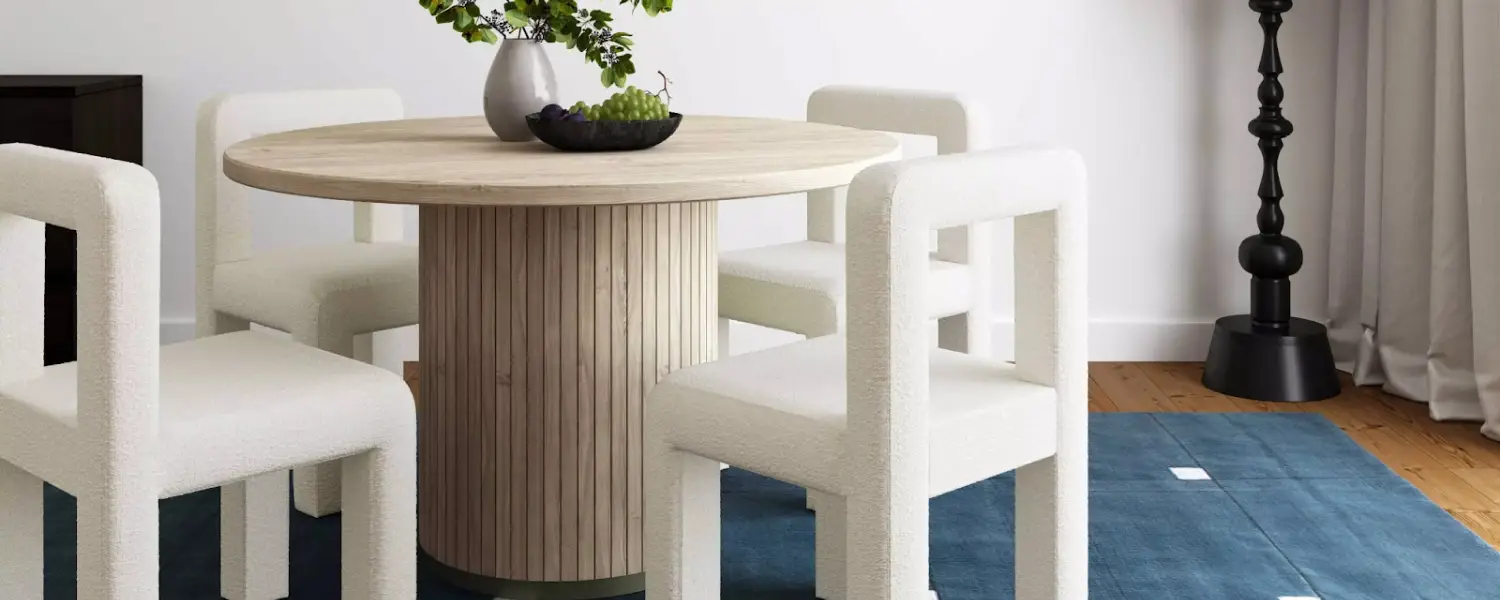
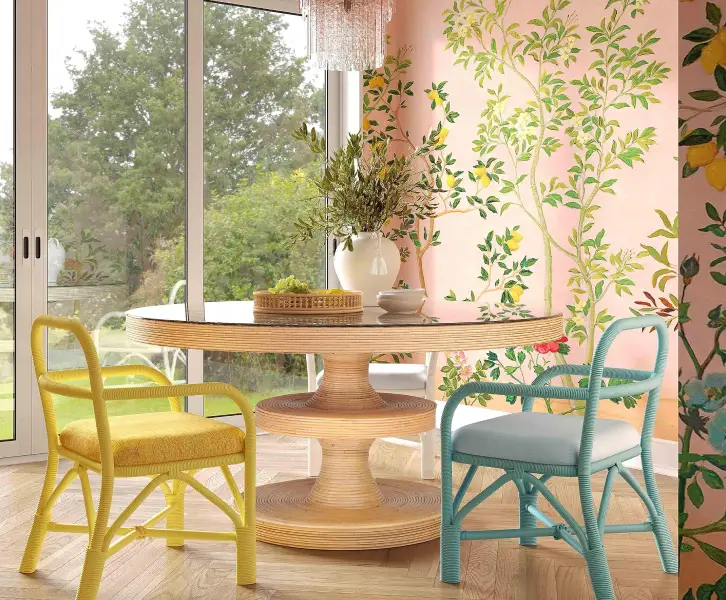 15. Pedestal table
A pedestal base opens up the area around the table, creating more legroom and making it easier to slide in chairs.
-
 Measure Your Space First
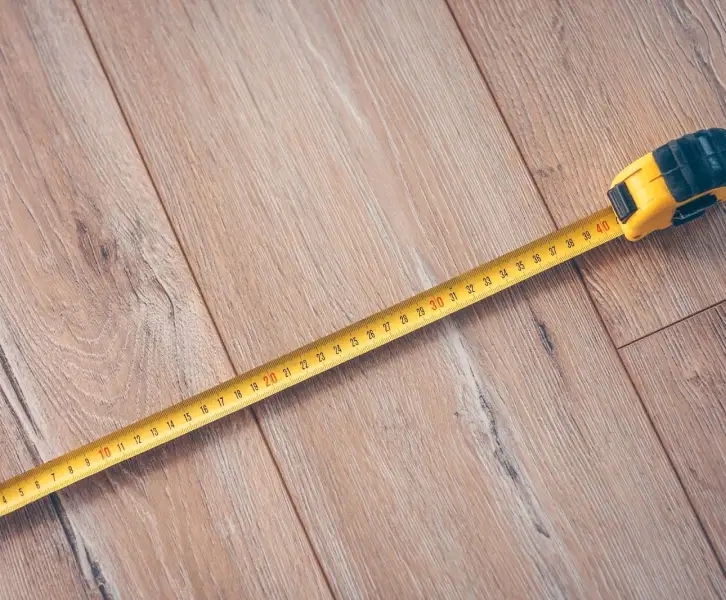
Start with a tape measure. Knowing the actual dimensions of your room helps you avoid common layout mistakes. Check how much space you have between walls, windows, and nearby furniture. It’s easier to make smart choices when you know exactly what you're working with.
Try to leave about three feet of space around your dining table. That gives you enough room to pull out chairs and walk through the area comfortably.
-
 Choose Light Furniture
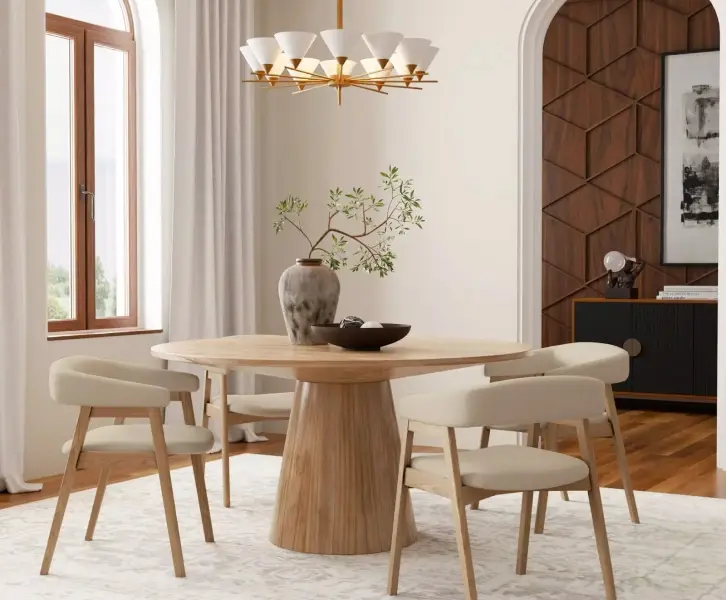
Chunky tables and oversized chairs can make a small room feel even smaller than it already is. Look for dining furniture pieces that have slim legs, simple shapes, and lower backs. These styles keep the room open and help the layout feel more relaxed.
-
 Choose Flexible Pieces
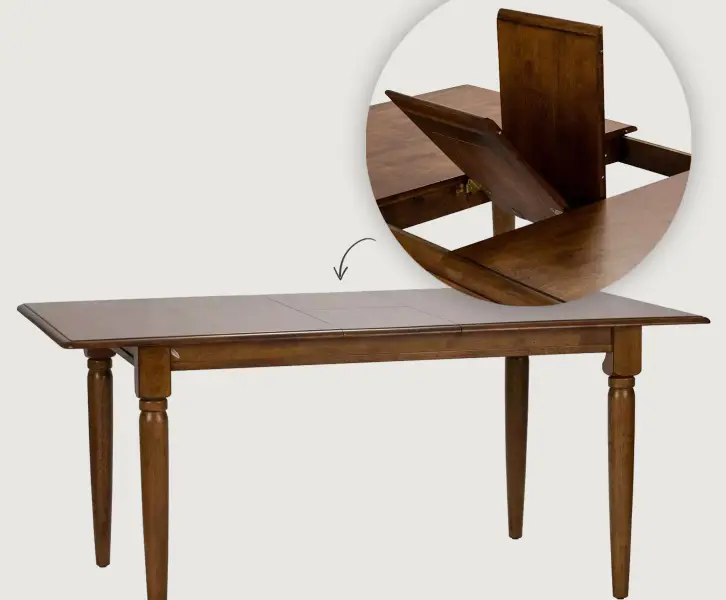
Furniture that adjusts to your needs is always a smart move in a small space. Tables with drop leaves, benches with storage, and chairs that tuck in fully are all solid options. These pieces make your layout more adaptable without crowding the room.
-
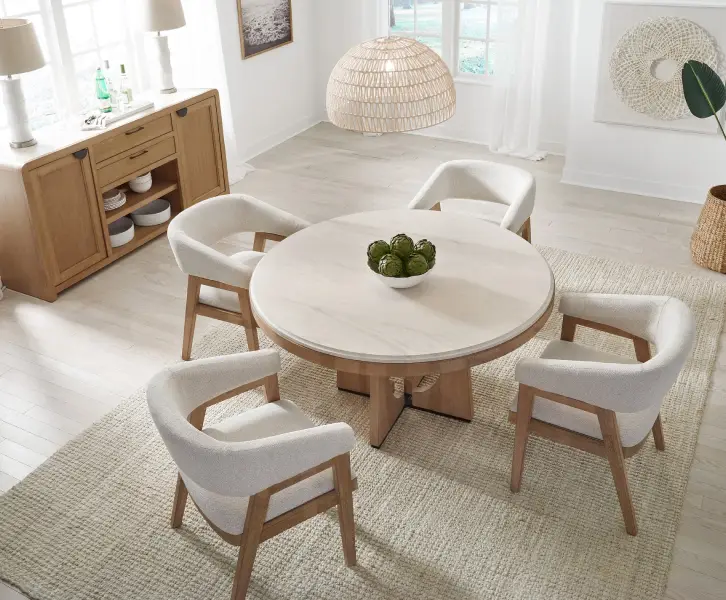 Plan for Easy Movement
Pay attention to how you move through the space. Make sure walkways feel natural and uninterrupted. Sometimes, even pulling your table away from the wall by a few inches can open up the room. The goal is to move comfortably without feeling boxed in.
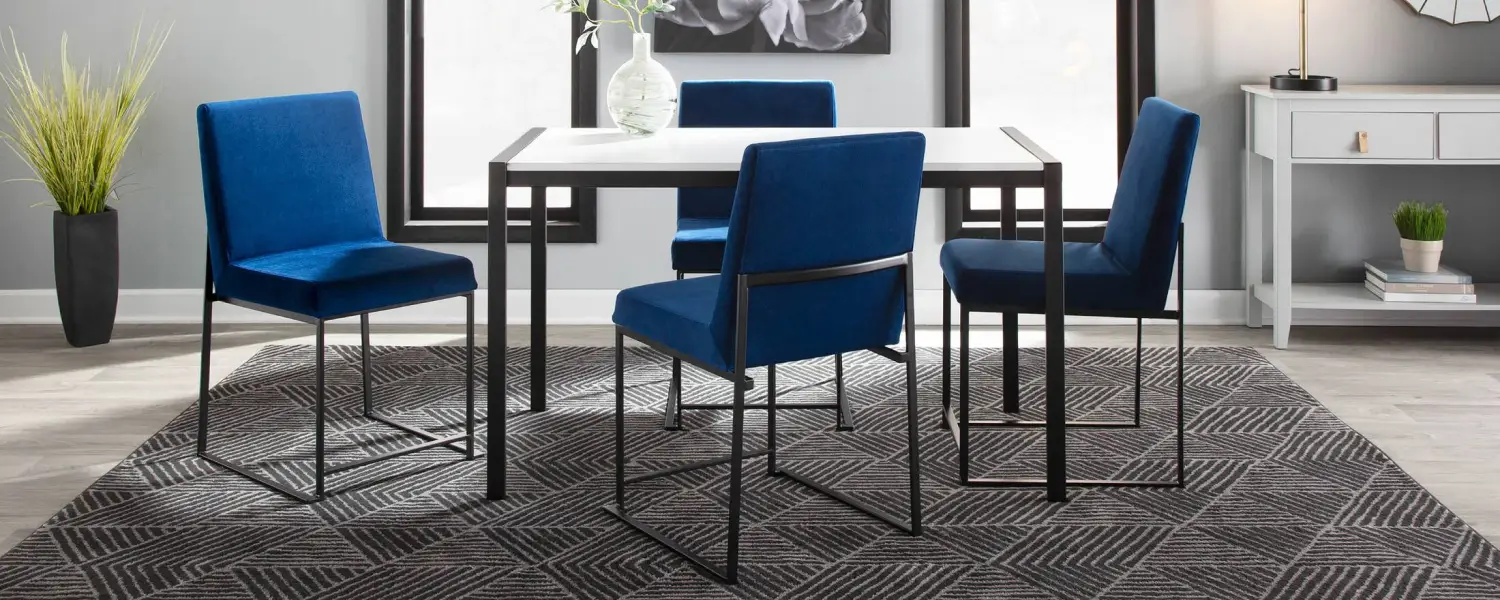
For most small dining rooms, a round or square table between 36 and 48 inches across offers enough surface area without overwhelming the space. Round tables are especially useful for tight layouts, since they allow for easier movement around the table.
Use visual tricks to expand the space. Light wall colors, minimal patterns, and plenty of natural light can all help the room feel more open. Mirrors reflect both light and space, especially when hung opposite a window or light fixture. Choose furniture with open bases or clear materials, like glass or acrylic, to avoid blocking sightlines.
When choosing furniture for a combined dining/living space, a dining table with a slim silhouette or rounded edges is a great option. Chairs that match the style or materials of your sofa can visually tie both zones together. Use an area rug to frame the dining area, and hang pendant lighting directly over the table to separate it from the living space.
Pendant lighting works well in small dining rooms because it creates a focal point without taking up table or floor space. Hang the fixture about 30 to 36 inches above the table for balanced lighting. Look for styles that suit your furniture, something airy and minimal for modern spaces, or warm and textured for traditional or farmhouse rooms. If you don’t have overhead wiring, consider plug-in pendants or wall-mounted sconces.
Look for narrow buffets, wall-mounted shelves, or storage benches that can double as seating. A cabinet tucked into a corner or a console table with drawers can keep essentials like napkins, serving ware, or table linens out of sight. Going vertical helps, too. Tall shelving units or upper wall-mounted cabinets provide storage without a large footprint.