Best Kids Beds: A Parent's Guide to Types, Safety, and Materials
A child's bed gets more use than almost anything else in your home. It's where they sleep, but it's also a fort, a reading nook, a stage, and eventually the place homework gets done. That's why the best kids beds start with safety and durability first, then earn their spot with style and smart use of space.
This guide covers every major bed type, what to check for safety before the first night, and how to match a frame to your child's age and room. One honest note up front: there's no single "best" bed for every family. The right pick for two siblings sharing a 10-by-12-foot room looks very different from the right pick for a three-year-old leaving the crib.
Key Takeaways
- The right kids' bed type depends on your child's age, room size, and whether they share a room, not just style preference.
- Safety features like sturdy guardrails and anti-tip anchoring for nearby furniture matter as much as the bed's material or design.
- Solid wood costs more upfront but typically outlasts engineered wood or metal through multiple growth stages.
- Top bunks and loft beds are for kids 6 and older, a Consumer Product Safety Commission (CPSC) guideline printed on most bunk bed listings.
Types of Kids Beds
The best kids beds fall into six broad categories, each suited to a different room and stage.
-
1. Standard Twin and Full Beds
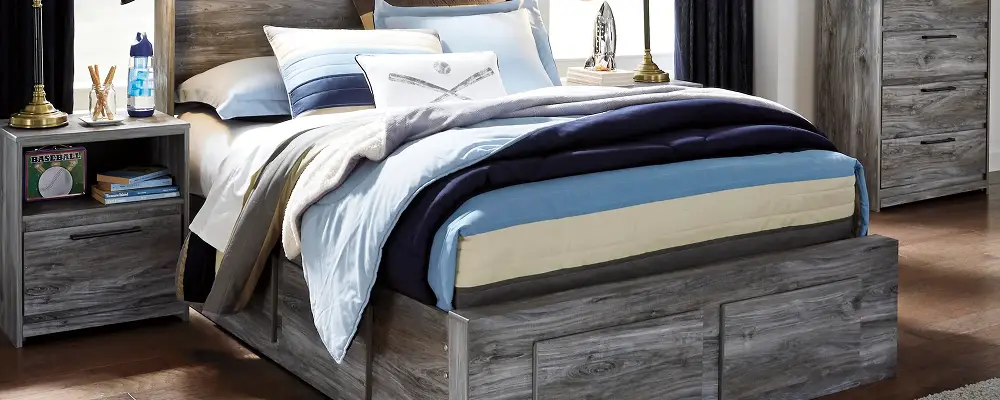
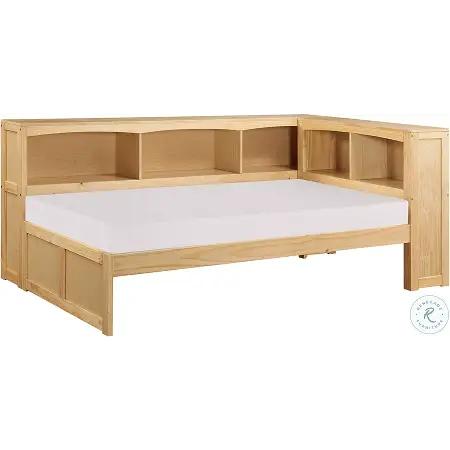
A standard twin fits a 38-by-75-inch mattress and suits most kids from preschool through the teen years. A full adds 16 inches of width (54 by 75 inches), giving a growing child room to sprawl. You can browse twin-size kids beds in panel, sleigh, and bookcase styles. For a space-saving option with built-in storage, the Bartly Natural Pine Twin Bookcase Corner Bed combines a twin-size sleeping space with a bookcase-style headboard and corner design that makes the most of a child's room. Best for: a single child with their own room.
-
2. Bunk Beds
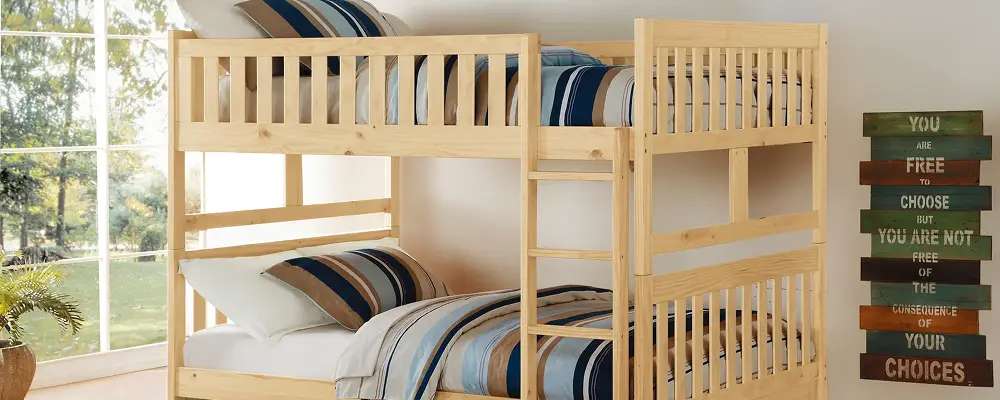
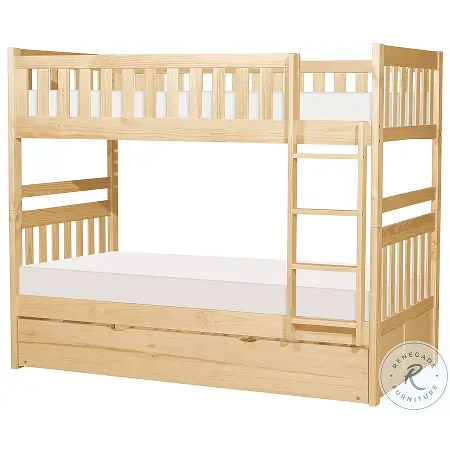
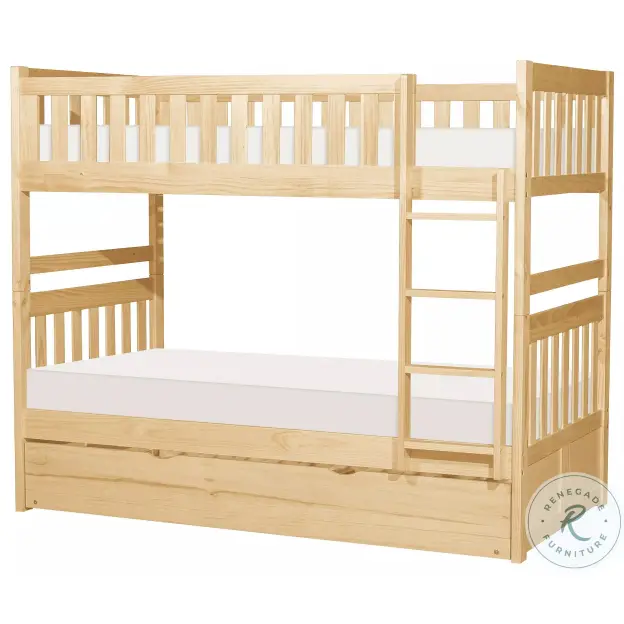
A bunk bed stacks two sleeping surfaces in the footprint of one, usually twin over twin or twin over full. The Bartly Natural Pine Twin Over Twin Bunk Bed with Trundle stands 65.5"H and adds a roll-out third bed underneath, so one frame can sleep three. Best for: siblings sharing a room. For a deeper comparison, see our guide to the best bunk beds for kids.
-
3. Loft Beds
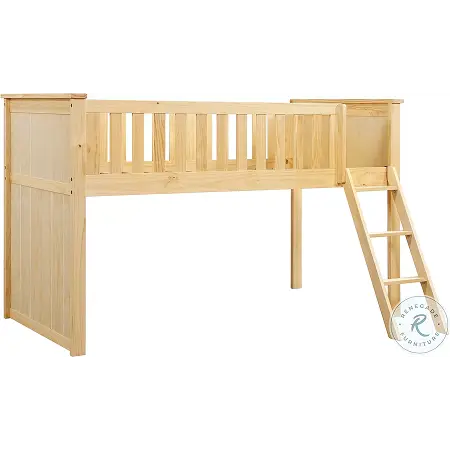
A loft bed raises a single mattress on a platform and frees up the floor below for a desk, low dresser, or play area. The Bartly Natural Pine Twin Loft Bed is a low-loft design at 51"H, reached by an angled ladder. Shop loft beds in a variety of styles to make the most of available space. Best for: a smaller room where floor space matters more than a second bed.
-
4. Trundle Beds
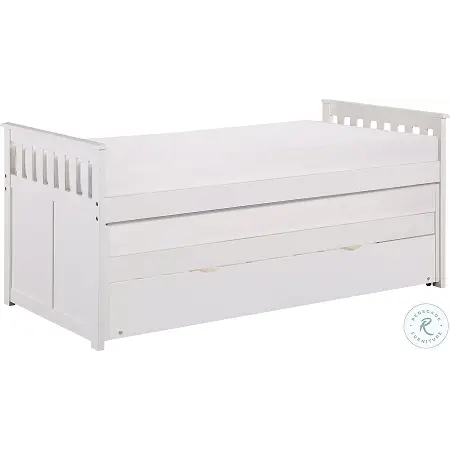
A trundle is a second mattress platform on casters that rolls out from under the main bed and tucks away during the day. Trundle units run about 10 inches tall, so they need a thinner mattress. For a classic option, the Galen White Twin-over-Twin Trundle Bed pairs a twin-size bed with a convenient pull-out twin trundle, providing an extra sleeping space when needed without taking up additional floor space when it's tucked away. Shop trundle beds in a variety of styles and configurations designed for flexible sleeping arrangements. Best for: sleepovers and visiting cousins without a permanent second bed.
-
5. Toddler Beds and Low-Profile Twins
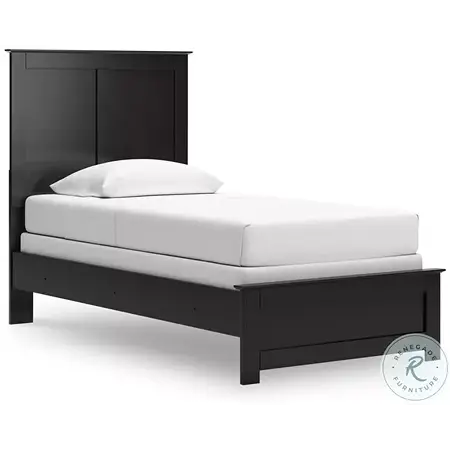
A toddler bed is low to the floor, side-railed, and sized for a crib mattress. Not every retailer carries true toddler beds, and Coleman Furniture is one that doesn't. A common substitute is a low-profile twin with an add-on guard rail, such as the Maribel Black Twin Panel Bed with Low Footboard, which sits just 7.12" from rail to floor. Shop low-profile beds for options that keep the mattress closer to the floor while giving growing kids room to transition into a larger bed. Best for: a child moving out of the crib who will grow into a full-size twin.
-
6. Themed and Novelty Beds
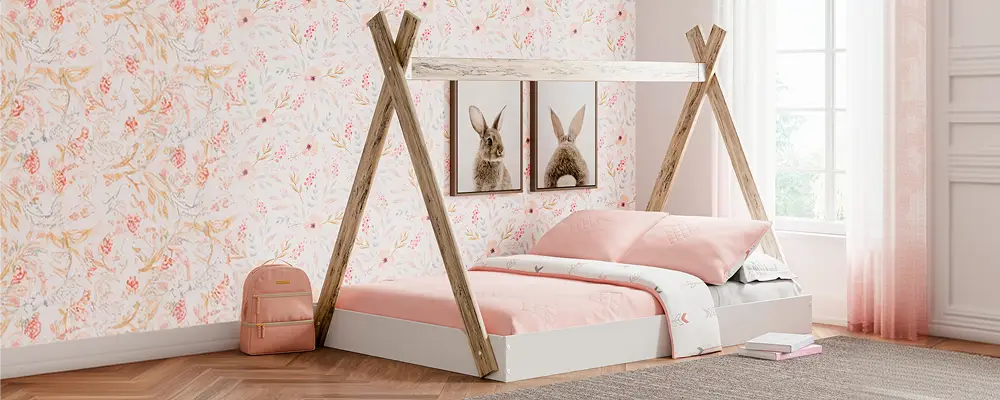
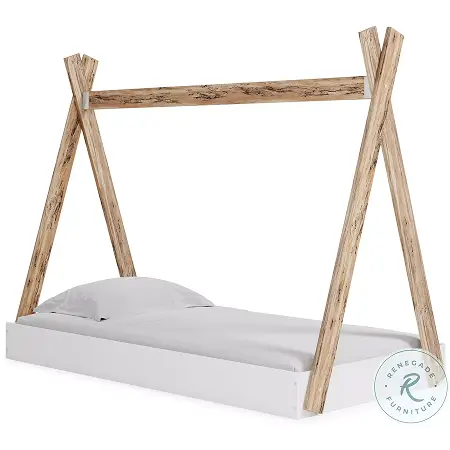
A themed bed makes the frame part of the fun, from canopies to playhouse shapes. The Piperton White and Natural Twin Tent Bed in Box wraps a standard twin in a 60"H house-shaped frame. Shop novelty beds in playful designs that turn a child's bed into a fun focal point for their room. Best for: younger kids who need a little extra motivation at bedtime.
Coleman's selection of loft and bunk beds, storage beds, and trundles covers most of these categories directly, so you can compare real options side by side.
Safety Features and Standards
Even the best kids beds are only as safe as their weakest joint. Before you think about finishes, confirm these three essentials:
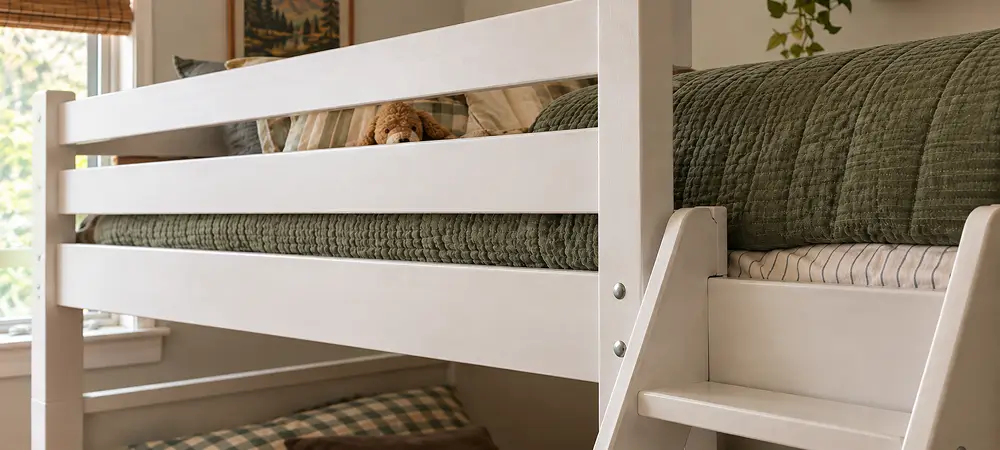
- Guardrails on both sides of any elevated bed. The federal bunk bed standard calls for guardrails on both long sides of a top bunk or loft, with the top of the rail at least 5 inches above the mattress surface.
- Gaps too small to trap a child. Openings in the frame, and between the guardrail and mattress, should be 3.5 inches or less so a child's head or limb can't slip through.
- Wobble-free connections. Every bolt, bracket, and ladder mount should be snug, with no rocking where the rails meet the posts.
Anchor any tall furniture in your child's room, including dressers, bookcases, and chests, to the wall with an anti-tip kit. This is standard practice no matter which bed you choose, since climbing kids treat open drawers like stairs.
You can run two quick checks yourself. First, give a corner post of the assembled frame a firm shake; if it sways or creaks, retighten the hardware, and repeat every 3 to 4 months. Second, confirm the top bunk's weight limit: the Jovie metal bunk is rated for 300 pounds per bed, while some storage-staircase bunks are rated for 200. If you're building out the whole room, kids bedroom sets help keep the bed, nightstand, and dresser coordinated and sized for each other.
Age-Appropriate Bed Selection
The safest bed is one that matches where your child is developmentally right now. The American Academy of Pediatrics suggests moving out of the crib once a child reaches about 35 inches tall or starts climbing out, which usually happens between 18 months and 3 years. At that stage, a bed close to the floor turns a nighttime tumble into a non-event.
| Age | Good fit | Why it works |
|---|---|---|
| 18 months–3 years | Low-profile twin with guard rail | Short distance to the floor during the crib transition |
| 3–5 years | Standard twin, bottom bunk, or trundle | Room to move without climbing |
| 6–9 years | Top bunk, loft, twin, or full | Old enough for ladders, per CPSC guidance |
| 10 years and up | Full bed, loft with desk space, or storage bed | Extra length, study space, and storage |
Elementary-age kids can typically handle a standard twin or the bottom bunk. Only children at least 6 years old should sleep on a top bunk or loft bed, per the CPSC guidance most manufacturers print on listings.
Sizing up too fast has a downside: a tall loft can feel unsafe or overwhelming to a four-year-old, even if it's a good long-term investment. If you'd rather buy once, look for extendable or convertible frames that lengthen or change configuration as your child grows, or a bunk bed that separates into two standalone twins later on.
Frame Materials and Durability
The frame material decides how a bed handles years of climbing, bouncing, and moving day. Coleman carries both ends of this spectrum, so you can compare real, in-stock options.
Solid wood offers the highest durability and holds up across multiple growth stages or hand-me-downs between siblings. It tolerates repeated disassembly because screws bite into real wood rather than compressed fibers. Engineered wood, including MDF and particleboard, costs less and offers reasonable durability for a single child's use; the Willowton Whitewash Youth Storage Panel Bedroom Set uses engineered wood with a decorative laminate. Many frames blend the two: the Bartly collection pairs pine veneer with wood and engineered wood.
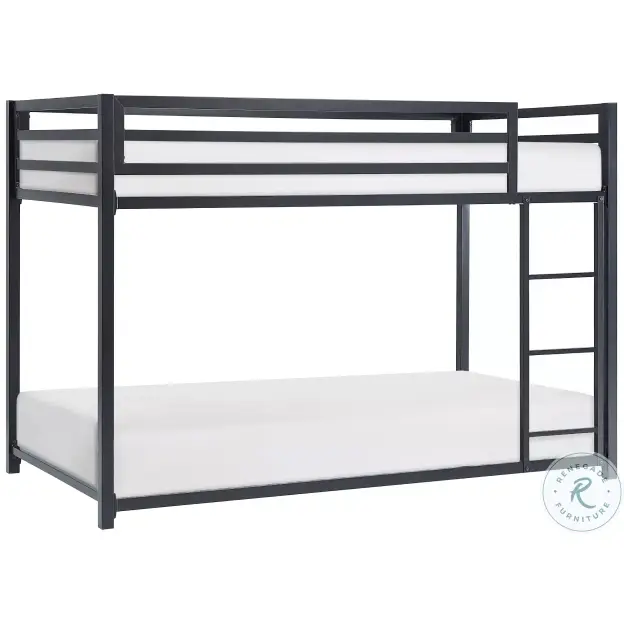
Metal is the most budget-friendly and keeps things simple, and it's especially sturdy for bunk frames. The Jovie Black Twin Over Twin Metal Bunk Bed weighs 78.75 pounds, while the Bartly wood bunk weighs 126.5 pounds without its trundle.
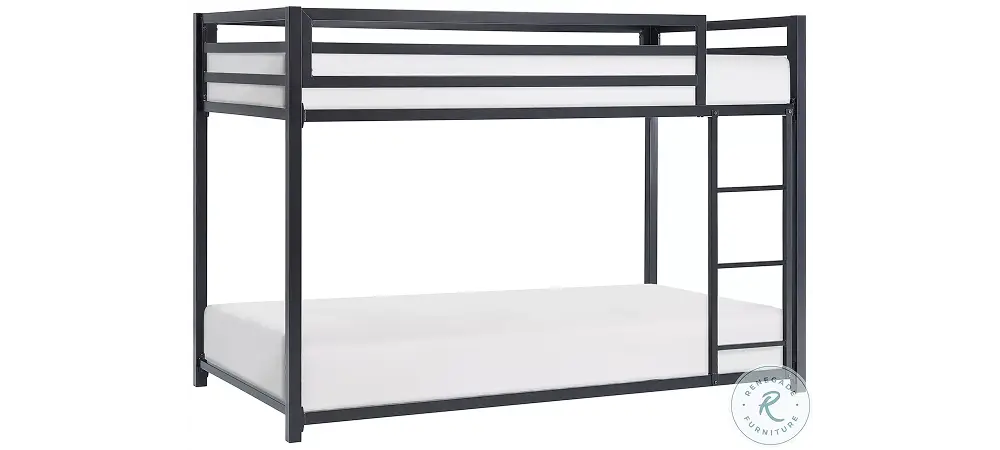
As a rule, a solid wood bunk bed costs more upfront than a comparable metal frame but typically outlasts it through years of daily use and reassembly after a move. Joint construction matters as much as the base material: metal bunk beds rely on bolted connections, while wood frames use a mix of hardware and interlocking joinery that spreads the load.
| Material | Upfront cost | Durability | Best for |
|---|---|---|---|
| Solid wood | Highest | Multiple children and moves | Families planning hand-me-downs |
| Wood and veneer blend | Mid-range | Years of daily use | A wood look at a moderate price |
| Engineered wood | Lower | One child, few moves | Coordinated sets and storage beds |
| Metal | Lowest | Sturdy, simple bolted frame | Bunk beds on a tighter budget |
Mattress Fit and Support
Always check the exact mattress size and thickness the frame is designed for. Bunk and loft beds are strict here, because a mattress that's too thick raises the sleeper above the guardrail and cancels out its protection. The Jovie bunk, the Bartly loft, and the Orion Gray Twin Loft Bed all list a maximum top mattress height of 6".
Choose a firm or medium-firm mattress for younger children. It supports proper spine alignment during growth years better than an overly soft one. The bunk and loft beds in this guide include slat rolls, so no box spring is needed; the Maribel and Piperton twins do call for one.
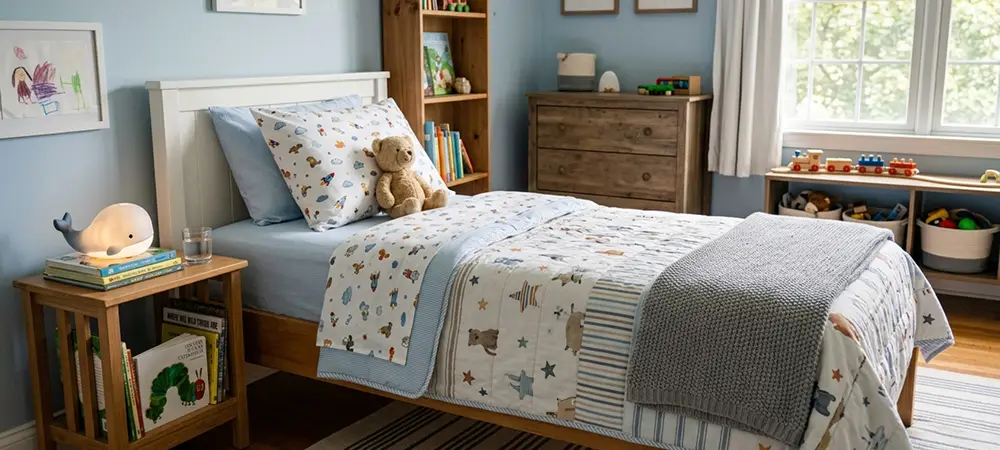
Hypoallergenic mattresses are worth considering for kids with allergies or sensitive skin, since kids' bedding sees frequent contact and washing. Look for natural latex or dust-mite-resistant covers, plus a machine-washable waterproof protector. Most mattresses last 7 to 10 years, and our guide to how long mattresses last covers the signs it's time to replace one.
Space and Storage Functionality
Kids' rooms tend to be the smallest bedrooms in the house, so a bed that stores things earns its footprint.
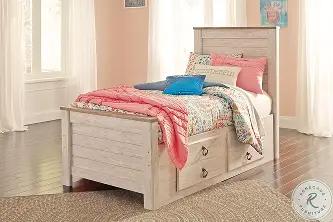
The Willowton set pairs a twin bed with two side drawers, each measuring 25.5"W x 14.75"D x 9.25"H, plus a matching nightstand with two USB charging ports. It includes free white glove delivery with in-room assembly. The Galen White Twin Over Twin Bunk Bed with Storage Staircase swaps the ladder for four reversible step drawers. The staircase widens the footprint to 97 inches, versus 78 for a ladder bunk.
A loft bed makes the most sense in a smaller room where floor space matters more than having a second sleeping surface. Measure ceiling height along with the floor footprint, because headroom on the top bunk is easy to overlook. The Bartly bunk's top platform sits 48 inches off the floor; under an 8-foot ceiling, a 6-inch mattress leaves about 42 inches for a child to sit up, before accounting for ceiling fans or light fixtures. Our guide to the best storage beds covers more ways to reclaim space.
Non-Toxic Finishes and Certifications
Kids spend 10 or more hours a day in their bedrooms, so what a bed releases into the air matters. Low-VOC finishes and formaldehyde-free construction reduce off-gassing, the slow release of chemicals from paints, glues, and composite wood.
GREENGUARD Gold certification, or a similar third-party low-emission certification, is the clearest way to verify these claims, far more reliable than marketing language like "eco-friendly" alone. The program tests products for emissions of more than 360 volatile organic compounds and sets limits suited to schools and healthcare spaces. Composite wood sold in the U.S. must also meet federal formaldehyde emission limits under TSCA Title VI. If a listing doesn't mention certification, our customer care team can check with the manufacturer for you.
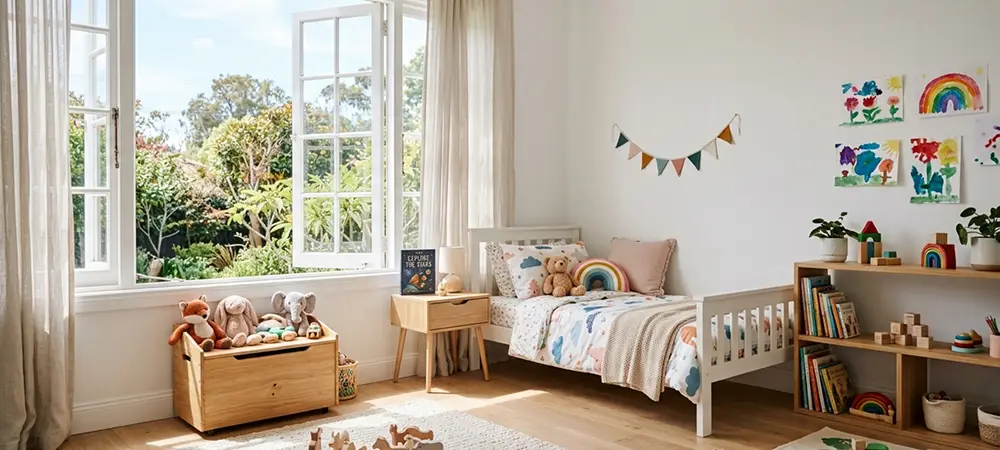
Regardless of certification, air out a newly assembled bed in a ventilated room for a day or two before regular use. Unpack it in a garage if you can, and keep a window open.
Best Kids Beds to Consider at Coleman
These six are among the best kids beds in our lineup, covering every category above.
Bunk + Trundle
Bartly Natural Pine Twin Over Twin Bunk Bed with Trundle
Sleeps three in one footprint, with 16.5-inch top-bunk side rails and a sturdy ladder.
Metal Bunk
Jovie Black Twin Over Twin Metal Bunk Bed
A 54-inch-tall metal frame rated for 300 pounds per bed. Also available in twin over full.
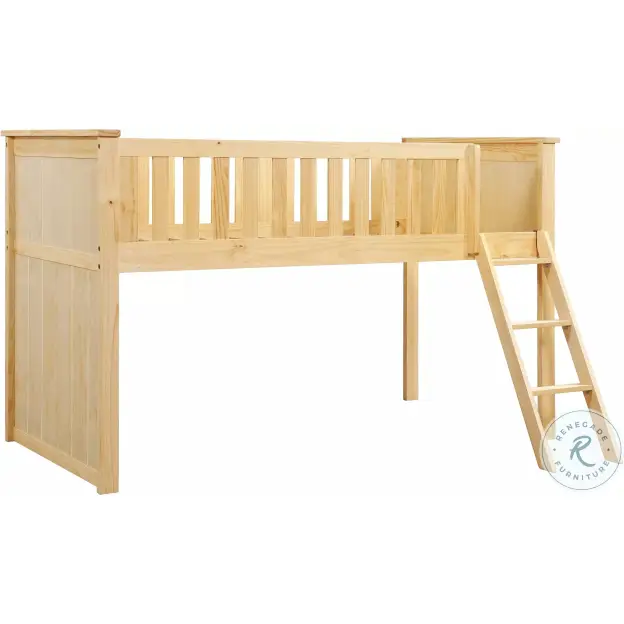
Low loft
Bartly Natural Pine Twin Loft Bed
A 51-inch low loft with guardrails and an angled ladder that frees floor space below.
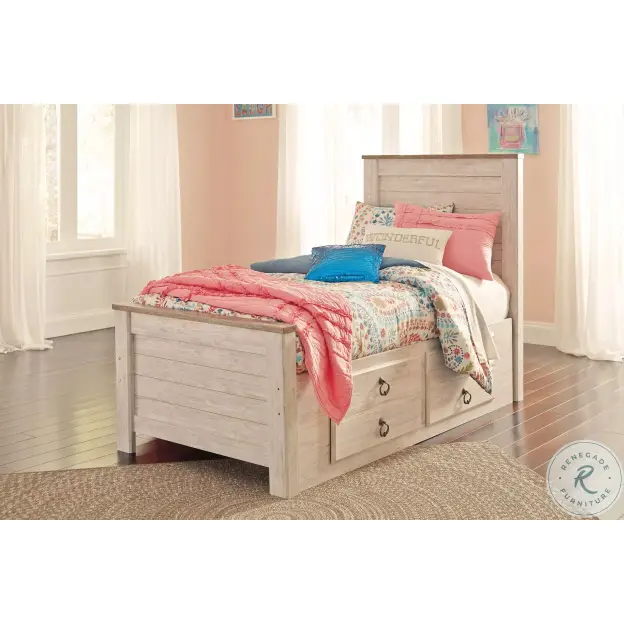
Storage set
Willowton Whitewash Youth Storage Panel Bedroom Set
Twin storage bed and USB nightstand, with free white glove delivery and setup.
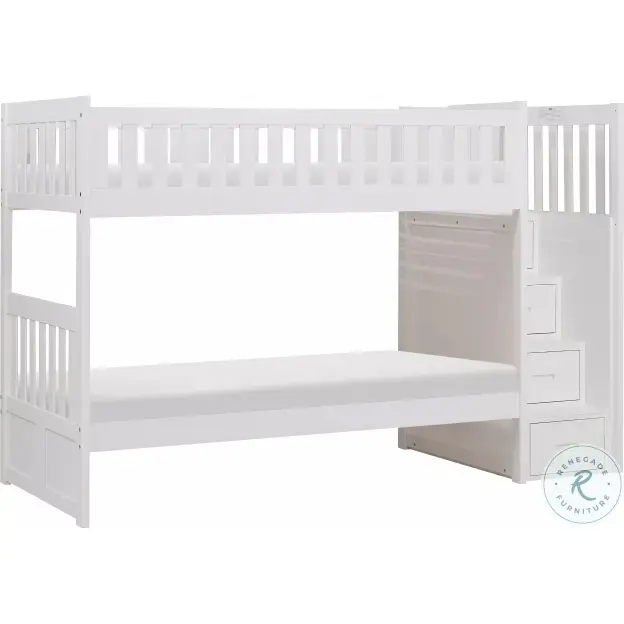
Staircase bunk
Galen White Twin Over Twin Bunk Bed with Storage Staircase
Four reversible step drawers replace the ladder for easier, steadier climbing.
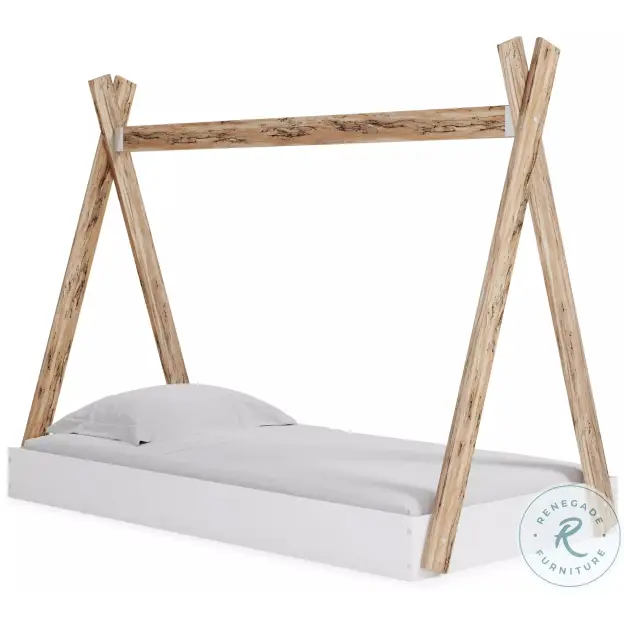
Themed Twin
Piperton White and Natural Twin Tent Bed in Box
A 60-inch house-shaped frame that turns bedtime into a campout.
Choose a Bed They'll Love (and You'll Trust)
The best kids beds balance three things: safety features you can verify, a design that fits your child's current age and room, and a material that matches your budget and how long you want the bed to last. Start with guardrails, weight limits, and mattress fit, then let your child pick the fun part.
Coleman Furniture offers bunk, loft, trundle, and storage beds from trusted brands to help you build a room your child will grow into. When you're ready, shop kids beds today, or explore bunk bed ideas for layout inspiration.
Best Kids Beds FAQs
Most manufacturers and the CPSC recommend children be at least 6 years old before sleeping on the top bunk. The bottom bunk can suit a younger child, typically from about age 3, since it sits close to the floor like a standard twin.
Both can be safe when properly assembled and used with the right mattress thickness. Solid wood tends to last longer under daily wear, while metal frames are often more budget-friendly and simpler in construction, relying on bolted connections you should retighten every few months.
GREENGUARD Gold or a similar third-party low-emission certification is the clearest verification. General marketing claims like "eco-friendly" or "natural" aren't standardized, so look for the certification itself or ask the retailer to confirm with the manufacturer.
Most bunk beds take a standard twin mattress (38 by 75 inches) or a full (54 by 75 inches) on the bottom of a twin-over-full model. Check the listing's maximum mattress height for the top bunk; many cap it at 6 inches so the guardrail stays at least 5 inches above the sleeping surface.