

What Are the Disadvantages of a Recliner Sofa?
Recliner sofas trade some practicality for comfort, and knowing exactly what you're trading is worth ten minutes before you buy—not ten months after delivery. If you're asking what are the disadvantages of a recliner sofa, you're already asking the right question before you buy, not after. Recliners are genuinely more comfortable for a lot of people, and there's a reason they're a fixture in living rooms built around movie nights, long weekends, and after-work decompressing. But that comfort comes from a mechanism, and a mechanism brings real trade-offs: more space required, more moving parts to maintain, and more upkeep than a stationary sofa asks for. None of this means a recliner is the wrong choice for your living room. It means these are trade-offs worth weighing against your specific room and household, not reasons to avoid recliners on principle. Every recliner sofa on the market makes some version of this trade: comfort and adjustability in exchange for space, cost, or upkeep. Each disadvantage below comes with a specific way to minimize it, or a different sofa that sidesteps it entirely, so you can decide with your eyes open rather than finding out the hard way after delivery day.Key Takeaways
- Recliner sofas need more clearance and floor space than standard sofas, both upright and fully reclined.
- Moving parts mean more potential points of failure and higher long-term maintenance than a stationary sofa.
- Many of these drawbacks can be minimized with the right design choice, like a wall-hugger or manual mechanism, or avoided entirely with a non-reclining sofa.
Is a Recliner Sofa Right for You?
A recliner sofa and a standard sofa are optimized for different things. A recliner maximizes relaxation—footrests, adjustable backs, and on power models, one-touch controls—while a standard sofa maximizes flexibility: more silhouettes to choose from, easier upkeep, and no mechanism that can eventually wear out.
The right choice usually comes down to how the room gets used day to day, not how comfortable the recliner feels during a five-minute test sit. A recliner earns its keep in a room built around solo lounging and long TV nights. A standard sofa tends to work better in rooms that see more guests, more kids sprawled across the cushions, or more rearranging over the years—think seasonal layout changes, a move to a new apartment, or simply a household that likes to swap furniture around every so often.
Neither option is objectively better. A household that reclines every evening will get real, daily value out of the mechanism, while a household that mostly sits upright for conversation, meals, or hosting will rarely miss it. The seven disadvantages below cover what to weigh before choosing a recliner sofa, along with a practical way to address or avoid each one. Coleman's full sofa collection spans both categories, so you can compare options side by side once you know what matters most in your space.
1. Space and Placement Demands
A recliner needs clearance behind it to fully extend—space a standard sofa never requires, and space that's easy to underestimate when you're picturing the sofa in an open showroom rather than against your actual wall.
Before ordering, measure three things in both the upright and fully reclined position: distance from the wall behind the recliner, distance to the nearest coffee table, and the width of the walkway you'd still need once it's reclined. A recliner that extends beautifully in the showroom can end up blocking a doorway or pinning a side table against the wall once it's in your actual living room.
This disadvantage is largely design-dependent, though. A wall-hugging or zero-clearance recliner needs only a few inches of space behind it instead of a foot or more, because the seat slides forward as the back reclines rather than swinging the whole chair outward. That difference alone can be the deciding factor for anyone furnishing a smaller living room or apartment.
Coleman carries genuine wall-hugger recliners built specifically to solve this problem, so you don't have to give up the recline just because your room can't spare a foot of clearance.
-
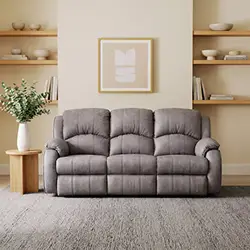
Cagney Nickel Power Reclining Sofa
Southern Motion · Transitional
Combines power reclining and adjustable power headrests for personalized comfort, with a 67" fully reclined length for stretching out. Durable Duralux upholstery, pillow-top arm pads, USB charging, and a zero-wall design that keeps the sofa close to the wall while reclining, at 254 lbs.
View Cagney Nickel Power Reclining Sofa →
2. Mechanical and Durability Concerns
A recliner has moving parts—springs, gears, and on power models, motors and wiring—that a stationary sofa simply doesn't have. Every one of those mechanisms is a potential point of failure down the road, even on a well-built recliner.
Power and manual mechanisms carry different trade-offs here. Power recliners add real convenience, a one-touch button instead of a handle to pull, but they also add electrical components that can short out or eventually need replacing. Manual recliners are mechanically simpler: fewer parts, no motor, and generally fewer things that can break over years of daily use.
Whichever mechanism you choose, check the warranty coverage on the mechanism and motor specifically before buying, not just the frame and upholstery. A frame warranty doesn't help much if the recline mechanism fails in year three, and manufacturers often cover the two separately.
For buyers who want the reclining motion without the added electrical complexity, a manual recliner is a simpler, more durable middle ground—one less system in the household that can eventually need a repair technician.
-
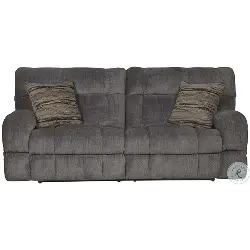
Ashland Granite Lay Flat Reclining Sofa
Catnapper · Casual
Reclines all the way flat to a generous 70" fully reclined depth, making it ideal for stretching out, lounging, or napping, with Cool Gel-infused memory foam for added comfort. Soft polyester upholstery, channeled cushioning, and a sturdy steel seat box, at 218 lbs.
View Ashland Granite Lay Flat Reclining Sofa →
3. Higher Cost and Repair Expenses
Recliners typically cost more upfront than a comparable stationary sofa, since you're paying for the reclining mechanism in addition to the frame and upholstery a standard sofa already needs.
Repairs tend to follow the same pattern. A motor replacement or mechanism realignment on a recliner is a more specialized—and more expensive—repair than reupholstering or patching a stationary sofa, and it often calls for a technician rather than a DIY fix.
A stationary sofa avoids this cost entirely while still delivering comfortable, supportive seating for everyday use. Among the pieces in this research, recliners ran $839–$949, while a well-built stationary sofa started well under that—with no mechanism to eventually repair, service, or replace down the road.
-
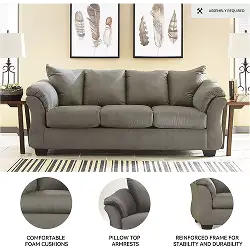
Darcy Gray Cobblestone Sofa
Ashley Furniture · Transitional
An 87"W x 37"D x 37"H stationary sofa with a flared frame and comfy pillow-top armrests—fashion-forward comfort with no motor, gears, or mechanism to eventually need repair.
View Darcy Sofa →
4. Bulky Aesthetic and Style Limitations
The mechanism inside a recliner requires a deeper, thicker frame than a stationary sofa, which limits how sleek or low-profile the overall design can be. That extra depth has to go somewhere, and it usually shows up as a heavier, more overstuffed-looking silhouette.
This shows up most in smaller or more minimalist-styled rooms, where a recliner's proportions can read as heavier than the rest of the furniture around it. A tailored, low-profile look is harder to achieve once a reclining mechanism is built into the frame, no matter how the upholstery is styled around it.
A stationary sofa offers far more range in silhouette, from low-profile modern to tailored mid-century shapes, without the bulk a reclining mechanism requires. That range matters most if you're furnishing around an existing design style rather than starting a room from scratch.
-
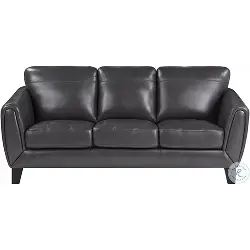
Spivey Dark Gray Sofa
Homelegance · Mid Century Modern
A mid-century modern silhouette in 100% leather, measuring 83"W x 37"D x 36.5"H, with a tapered profile and burgundy-finished wood legs—a clean shape a reclining mechanism's added depth simply doesn't allow.
View Spivey Sofa →
5. Cleaning and Maintenance Difficulties
The seams, footrest gaps, and mechanical crevices in a recliner collect crumbs, dust, and pet hair in spots a stationary sofa simply doesn't have. Anyone who's tried to vacuum around a footrest hinge knows the difference.
Fixed, non-removable upholstery around the mechanism also makes deep cleaning harder than a sofa with a fully removable cover you can pull off and wash or spot-treat on its own.
Upholstery type makes a real difference here. Performance fabric and leather wipe clean easily, while unprotected fabric traps more debris around the moving parts and shows wear faster. Before buying, check which material category your recliner falls into—Coleman's couch materials guide breaks down how each common upholstery type holds up to daily life.
A performance-fabric or leather recliner meaningfully reduces this specific downside compared to an unprotected fabric option, which is worth factoring in if you're shopping with pets or young kids in the house.
6. Weight and Mobility Challenges
The added frame and mechanism make a recliner meaningfully heavier than a comparable stationary sofa, which makes it harder to move, rearrange, or carry through a narrow doorway or stairwell.
This matters most if you rent, move frequently, or just like to rearrange a room every season or two. A recliner that took four people to carry in the first time will take just as many to carry back out, and tight stairwells or apartment hallways only make the job harder.
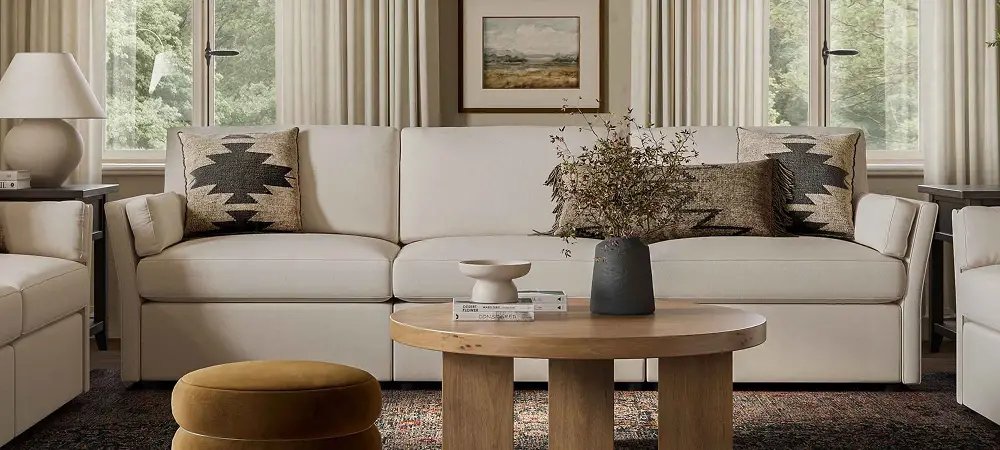
Modular seating sidesteps this problem entirely, since each section is lighter and easier to move individually than one large reclining unit. Coleman's modular sectional collection lets a household get comfortable, flexible seating without the single heavy, hard-to-move footprint of a full-size recliner.
7. Safety and Functionality Drawbacks
The moving sections under a recliner can create pinch points, which matters most for households with young children or pets who might get a hand, paw, or tail caught between the footrest and the frame.
There's a functionality trade-off too. A fully reclined recliner isn't always a comfortable seat for sitting upright, unlike a stationary sofa that's equally usable in every position—whether you're eating dinner on the couch or hosting guests for the evening.
If kids or pets are part of your household, keep hands and paws clear of moving mechanisms and check the space underneath the footrest periodically for anything that might have wandered in there. A quick habit like this costs nothing and heads off most of the risk before it becomes a problem.
A manual, non-powered recliner like the Bennett Gray Rocker Manual Recliner has fewer moving components—no motor or wiring—than a power model, which reduces some of this risk while still delivering the reclining function households want.
Finding the Right Fit for Your Home
None of these disadvantages make a recliner sofa the wrong choice by default. They're trade-offs to weigh against how your room and household actually work day to day—not reasons to rule out a sofa that might genuinely be the most comfortable seat you own.
If space, upkeep, or mobility matter more to you than reclining comfort, a stationary or modular sofa solves most of these trade-offs outright. If comfort wins, a wall-hugging or manual design addresses the biggest downsides without giving up the recline. Either way, the right answer comes from being honest about how your household actually uses the room, not from picking whichever sofa felt best during a quick showroom visit.
Browse Coleman's full sofa collection, with free White Glove delivery and setup on qualifying items.
Recliner Sofa FAQs
It depends on how often the reclining features actually get used day to day. Frequent users—anyone who reclines daily for TV time or naps—often find the comfort worth the added upfront cost, while occasional use may not justify the extra price and long-term maintenance.
No. Wall-hugging or zero-clearance recliners, like the Tosh Pewter Wall Hugger Power Recliner, are built specifically to recline with only a few inches of space behind them, unlike traditional recliner designs that need a foot or more.
They can be, with basic precautions. Keep hands and paws away from moving mechanisms, and check underneath the footrest area periodically. A manual recliner also has fewer moving parts than a power model, which reduces some of the risk.