


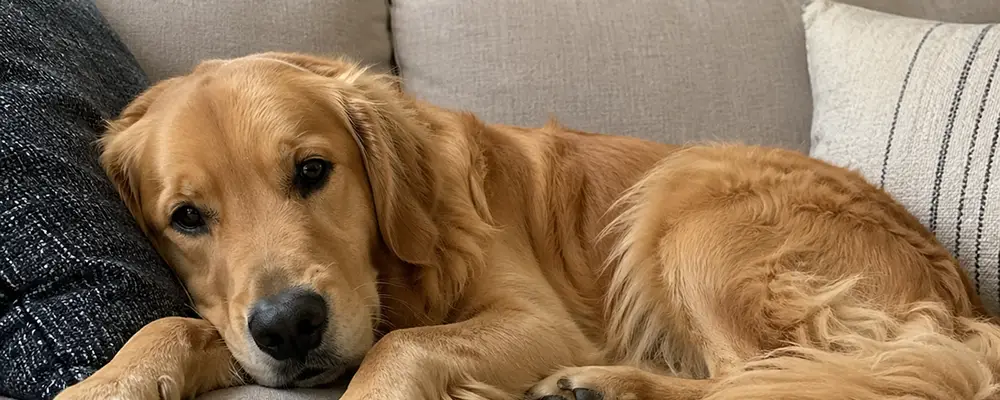
How to Remove Pet Hair from Couch: Tips That Actually Work
If you share your home with a dog or cat, you already know the ritual: you settle onto the sofa, and within moments you're covered in fur. Pet hair has a way of embedding itself into upholstery so thoroughly that a quick brush-off barely makes a dent. The good news is that with the right tools and a method matched to your specific fabric, removing pet hair from a couch is far more manageable than it might seem.
Key Takeaways
- Pet hair removal is most effective when the method matches the couch fabric — what works on velvet won't work the same way on microfiber.
- A combination of the right tools, a consistent cleaning routine, and smart preventive habits makes managing pet hair far more manageable.
- Choosing the right furniture from the start reduces how much effort removal takes in the first place.
Why Pet Hair Sticks to Upholstery — and Why Fabric Type Changes Everything
Not all pet hair situations are equal, and the biggest variable isn't your pet — it's your couch fabric. Hair embeds differently depending on the weave, texture, and material of your upholstery. Loose weave fabrics like linen or open-knit chenille allow hair to work its way deep into the fibers, making it far harder to pull out than hair sitting on a tight, smooth surface. Tightly woven microfiber, by contrast, keeps most hair near the surface where tools can reach it easily.
Understanding your fabric type before choosing a removal method saves time and prevents accidental damage. Aggressive tools like pumice stones are perfectly safe on durable woven upholstery but can pull or pill delicate fabrics. If you're not sure what your couch is made of, check the care label on the underside of your cushions — it will typically list the fabric type along with the manufacturer's recommended cleaning codes. For a full overview of couch care by fabric type, our guide on how to clean a couch is a useful reference before you start.
| Fabric Type | How Hair Embeds | Best Tools | Difficulty |
|---|---|---|---|
| Microfiber | Stays near surface | Rubber glove, lint roller, damp cloth | Easy |
| Leather / Faux Leather | Does not embed | Damp microfiber cloth | Easiest |
| Tightly woven fabric | Light embedding | ChomChom roller, squeegee, vacuum | Moderate |
| Velvet / Chenille | Moderate embedding | Soft fabric brush (one direction only) | Moderate |
| Linen / Bouclé / Open weave | Deep embedding | Motorized vacuum, fabric brush, pumice stone | Most Difficult |
How to Remove Pet Hair from a Couch: 5 Methods That Work
Cleaning leather furniture is as much about prevention as it is about maintenance. With a few key steps, you can remove stains, refresh the surface, and keep your leather looking like new. Here's how to clean leather furniture with care:
Most leather furniture comes with a care tag or manufacturer instructions. These labels often use codes like "W" for water-based cleaners or "WS" for water- and solvent-safe materials. You'll also see "S" for when you should only use solvent-based cleaners and "X" when it's a vacuum or brush only—no water or solvent works.
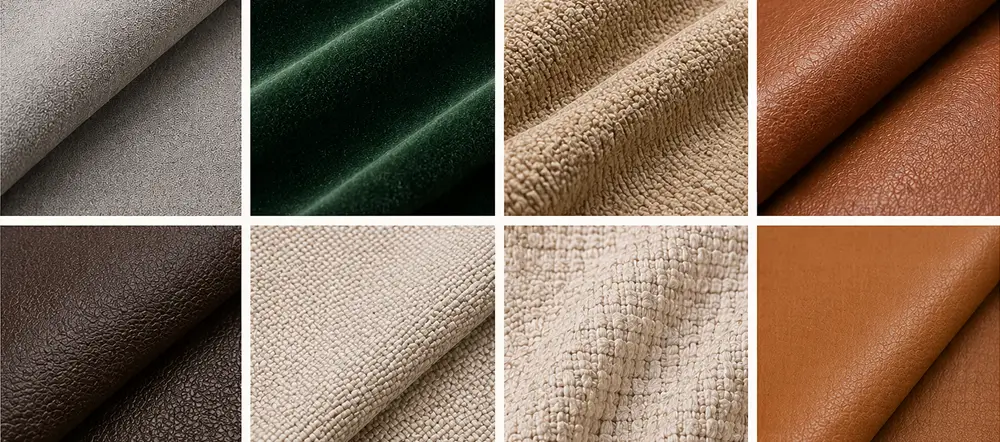
1. Identify Your Fabric Type Before Choosing a Removal Method
Before reaching for any tool, take 60 seconds to identify your upholstery material. Microfiber, velvet, leather, and woven fabrics each respond differently to the same techniques, and using the wrong approach can leave you with pilling, surface damage, or a couch that looks worse than when you started.
As a general rule: microfiber responds well to rubber gloves, lint rollers, and lightly dampened cloths; velvet and chenille require gentler tools like soft fabric brushes used in a single direction; leather and faux leather can be wiped down easily and don't trap hair the way fabric does; and tightly woven or textured fabrics can handle more aggressive tools like squeegees or pumice stones designed for upholstery. When in doubt, test any new tool in an inconspicuous area first — such as the back or underside of a cushion.
Pro Tip: Check the care label on the underside of your cushions before cleaning. The codes W (water-safe), S (solvent only), WS (both), and X (vacuum only) tell you exactly what your fabric can handle. Our full couch cleaning guide explains each code in detail.
2. Lift Surface Hair with a Dampened Rubber Glove
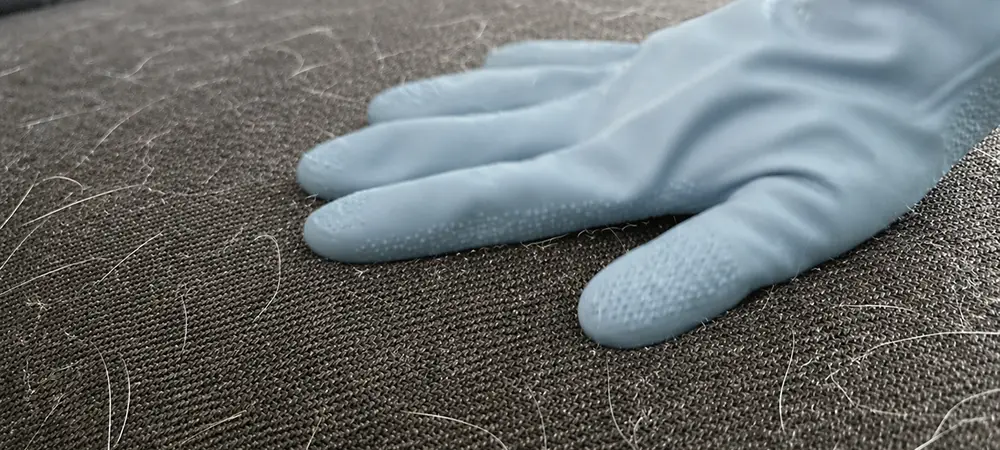
A rubber dishwashing glove is one of the most effective — and most overlooked — tools for removing pet hair from upholstery. When slightly dampened, the rubber creates friction that grips hair and pulls it off the fabric, rolling it into clumps you can then collect by hand or with a vacuum.
Run your gloved hand across the couch surface in long, firm strokes in one direction. The hair will ball up as you go, making it easy to gather and dispose of. Rinse the glove occasionally as hair accumulates. This method works on most fabric types and is especially effective on microfiber, where other tools can push hair around rather than picking it up. It's best suited for regular light-maintenance sessions rather than tackling a months-long buildup of deeply embedded fur.
3. Vacuum Thoroughly Using a Motorized Brush or Pet Attachment
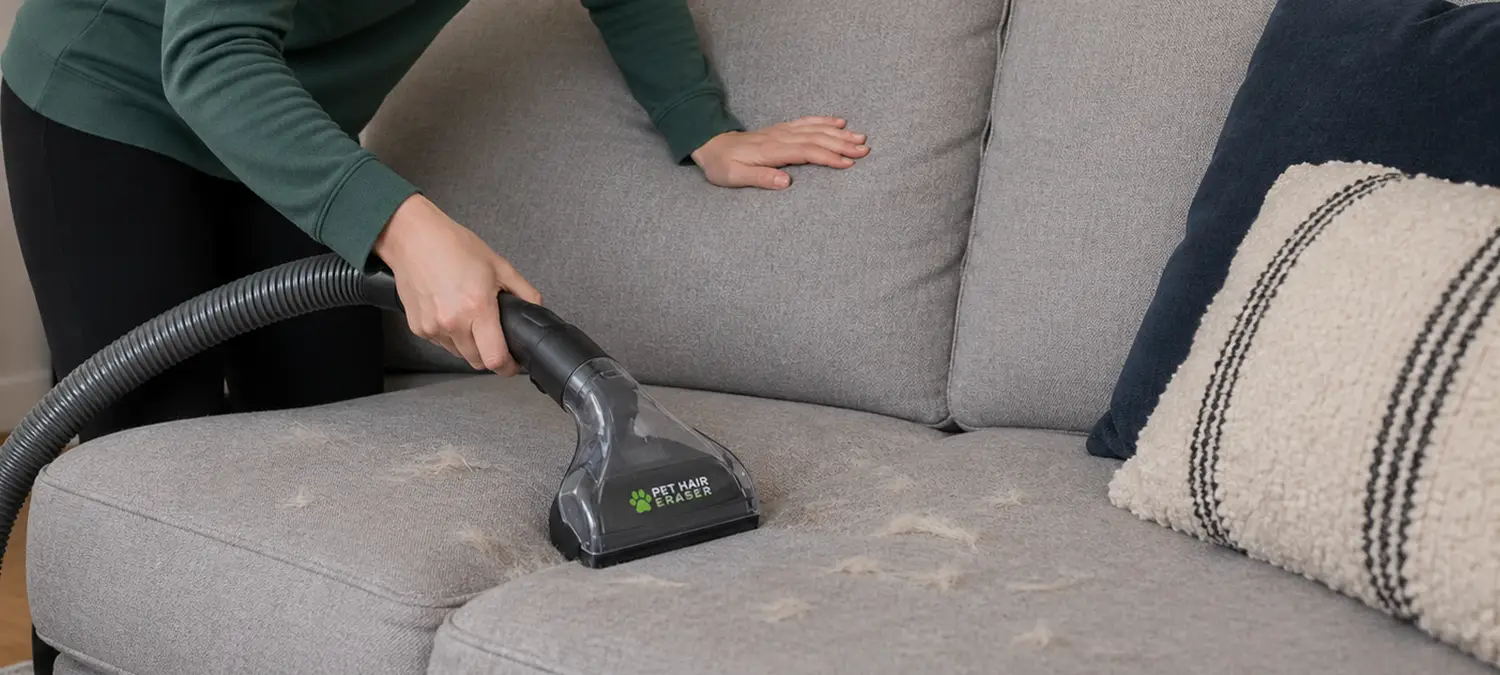
For any serious amount of pet hair — and especially for embedded fur — vacuuming should be your first step before using any other tool. A standard vacuum nozzle alone often lacks the power to pull hair out of fabric fibers, but a motorized brush head or a pet-specific upholstery attachment changes that equation significantly.
Motorized brush attachments work by agitating the fabric fibers as they pass over the surface, which loosens hair that has worked its way into the weave and brings it within reach of the suction. Pet-specific attachments are designed to prevent hair from clogging the intake. For the most thorough result, remove cushions and vacuum both sides, including the crevices along the frame where hair collects heavily. Vacuuming first also makes every subsequent method — rubber gloves, rollers, brushes — more effective.
4. Use a Lint Roller, ChomChom Roller, or Squeegee for Targeted Removal
Once you've vacuumed, targeted tools can pick up what the vacuum leaves behind. Lint rollers are convenient for light surface hair and quick touch-ups, though they burn through adhesive sheets quickly on heavily shedding breeds. For heavier buildup, a ChomChom roller is a significantly more effective reusable option — its back-and-forth rolling motion creates a static effect that draws hair off the fabric efficiently without any disposable sheets.
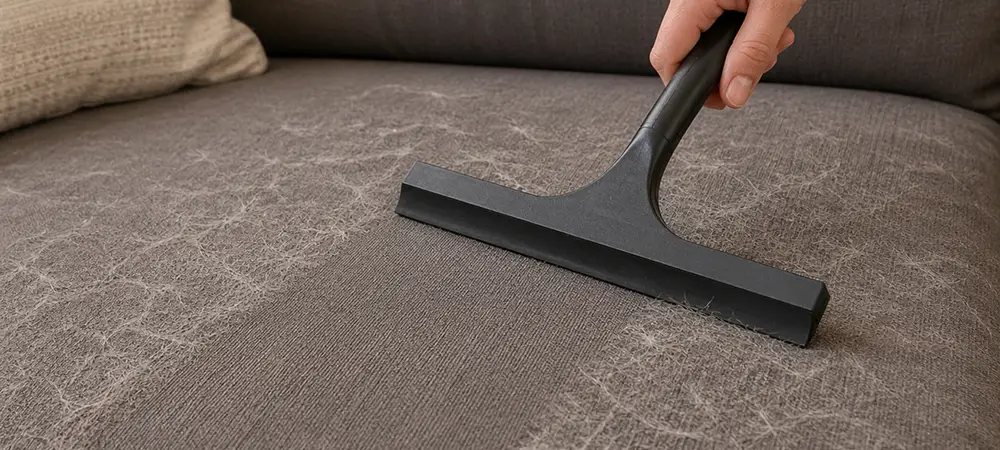
A dry rubber squeegee is another underrated option: drag it firmly across the cushion surface in parallel rows, and the hair collects into easy-to-grab strips. This works particularly well on microfiber and tightly woven fabrics. For coarser or more textured upholstery, pumice stones designed specifically for fabric can lift stubborn hair from the surface without causing damage — though you should always verify compatibility with your fabric type before using one.
5. Remove Embedded Pet Hair from a Couch with a Fabric Brush or Pumice Stone
When surface tools aren't reaching the fur that's buried in the weave, it's time for tools that penetrate the fabric rather than just skim it. This is the situation most people describe when they search for how to remove embedded pet hair from a couch — when vacuuming and rolling seem to make little difference.
A fabric brush with stiff, short bristles used in firm, short strokes in a single direction draws hair up and out of the weave rather than pushing it further in. Work in one consistent direction — don't scrub back and forth, which can tangle the hair deeper into the fiber. For particularly stubborn accumulation on durable upholstered fabrics, an upholstery-specific pumice stone offers a safe, reusable option. Look for pumice stones marketed for pet hair or fabric use, as general pumice stones can be too abrasive. Finish the section with a vacuum pass to collect everything that's been loosened.
How to Prevent Pet Hair Buildup Before It Becomes a Problem
Cleaning pet hair is always going to be part of life with pets, but how often and how hard you have to work at it is largely within your control. A few consistent habits make a significant difference.
Establish a Regular Pet Grooming Routine
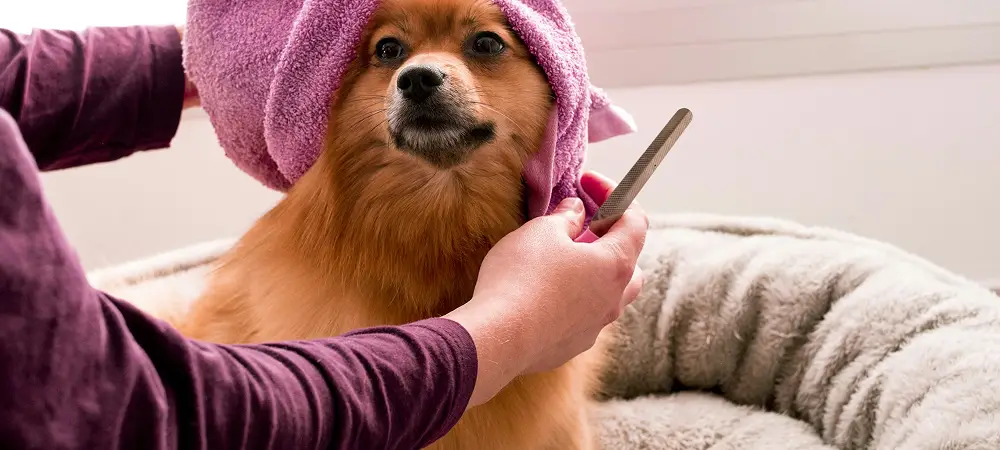
The most effective way to reduce pet hair on your furniture is to reduce the amount of loose hair your pet carries in the first place. Brushing your pet frequently — ideally several times a week — removes loose, dead fur before it sheds onto your couch. During high-shedding seasons in spring and fall, daily brushing can cut the volume of hair that reaches your furniture substantially.
Where you groom also matters. Brushing outdoors or in an easy-to-clean area like a bathroom or laundry room keeps the hair contained to a space where it can be vacuumed or swept up efficiently rather than settling across your living room upholstery.
Protect Your Upholstery with Washable Covers and Throws
A machine-washable throw blanket or slipcover placed over your pet's favorite spot on the couch acts as the first line of defense between shedding fur and your upholstery. Rather than embedding into the couch fabric, hair collects on the cover, which can be pulled off and laundered in under 10 minutes — a far easier routine than a full couch cleaning session.
When choosing covers, opt for tightly woven fabrics that resist hair penetration rather than fluffy or textured blankets that trap hair just as effectively as the couch itself. Microfiber throws and canvas slipcovers tend to release pet hair well in the wash. Covers in pet-friendly fabrics also extend the life of the underlying upholstery significantly by protecting it from daily wear and surface abrasion from claws.
Build a Preventive Maintenance Schedule
Consistent, light upkeep is far less time-intensive than periodic deep cleaning sessions — and it keeps hair from embedding deeply into fabric fibers where it becomes significantly harder to remove. A practical schedule for most pet households: a quick pass with a lint roller or rubber glove 2 to 3 times per week on high-traffic surfaces, a thorough vacuum with a pet attachment once a week, and a deeper cleaning session once a month that includes removing cushions and brushing out embedded fur.
Whether it's dealing with everyday dust, knowing how to remove pet hair from a couch, or cleaning up accidental spills, regular maintenance can help prolong the life of your furniture and keep it looking beautiful for years to come.
Reduce Airborne Hair and Dander with an Air Purifier
One often-overlooked contributor to pet hair accumulation on furniture is airborne hair and dander — fine particles that float through a room and gradually settle onto every horizontal surface, including upholstery. A HEPA air purifier placed near frequently used seating areas captures these particles before they land, reducing the overall rate at which hair builds up on your couch between cleanings.
HEPA filters capture particles as small as 0.3 microns, which covers both pet hair and the finer dander particles that aggravate allergies. Running the purifier continuously in rooms where your pets spend the most time makes a noticeable difference within a few weeks.
How Coleman Furniture Approaches Pet-Friendly Living
At Coleman Furniture, the reality of living with pets is built into how we curate our selection — not treated as an afterthought. Real households include dogs who have a favorite corner of the sectional and cats who consider the armrest their personal territory. Our living room collection reflects that, with fabric options, construction standards, and finishes chosen with both style and practicality in mind.
Pet-friendly features like stain-resistant upholstery treatments, removable and washable cushion covers, and durable frame construction are part of the standard conversation when you're shopping for a sofa or sectional. If you're not sure where to start, our guide to the best couches for dogs breaks down the specific features that hold up best in pet households and what to look for by fabric type.
Choosing a Couch That Makes Pet Hair Easier to Manage
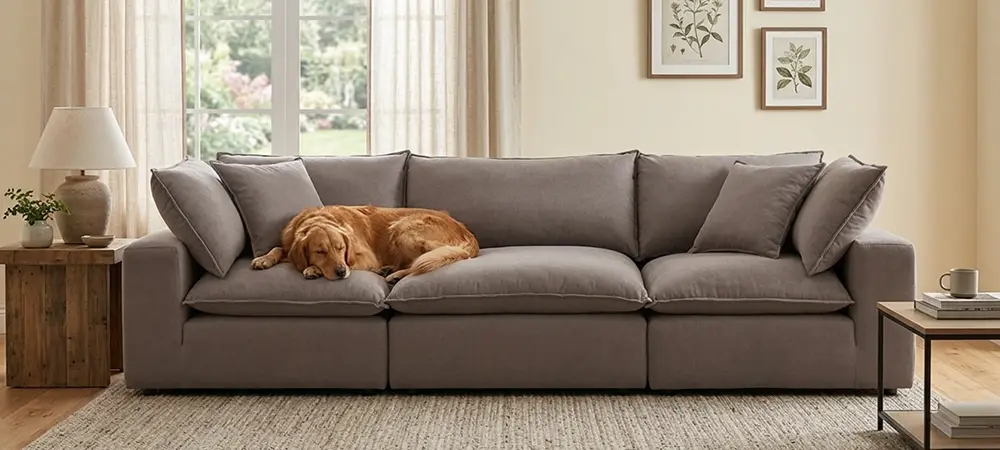
The easiest way to reduce how much effort pet hair removal takes is to choose a couch that works with you rather than against you. Fabric choice is the single biggest factor. Tightly woven microfiber is one of the most forgiving options in pet households — it keeps hair near the surface where it can be easily vacuumed or rolled away. Leather and faux leather are even easier to clean, since hair sits on the surface without embedding. Velvet and bouclé, while beautiful, trap hair aggressively and require more frequent and careful cleaning.
Color and pattern matter more than most people expect. Darker solid upholstery and multi-tone or patterned fabrics hide hair between cleaning sessions far better than pale solids like cream or light gray. Removable, machine-washable cushion covers are one of the most practical features you can prioritize when shopping — they transform what would be a 45-minute cleaning session into a 10-minute laundry task.
Ready to Find a Couch That Fits Your Life With Pets?
Coleman Furniture's curated selection of pet-friendly sofas, sectionals, and living room furniture is built for homes where pets are part of the family — with fabric options, constructions, and finishes that hold up to daily life without sacrificing the style or comfort you want.
Browse Pet-Friendly Living Room Furniture
A slightly dampened rubber glove run across the fabric in one direction is the fastest method for light surface hair. For heavier buildup, a ChomChom roller or dry rubber squeegee covers more area quickly. Vacuuming with a motorized pet attachment is fastest for embedded hair across large surfaces.
For deeply embedded hair, use a fabric brush with stiff, short bristles in firm strokes in one consistent direction to draw hair up from the weave. Follow with a vacuum pass. For durable fabrics, an upholstery-specific pumice stone can reach hair that brushes miss. Always vacuum first to remove surface hair before targeting embedded fur.
The best tool depends on your fabric type and the severity of the buildup. For everyday maintenance, a ChomChom roller or dampened rubber glove works well on most fabrics. For heavy shedding, a vacuum with a motorized pet attachment is most effective. Rubber squeegees work particularly well on microfiber and tightly woven fabrics.
Leather and faux leather are the easiest — hair sits on the surface and wipes off with a damp cloth. Among fabric options, tightly woven microfiber is the most forgiving because hair stays near the surface where tools can reach it. Velvet, chenille, and open-weave fabrics like linen or bouclé are the most difficult because hair embeds deeply into the fibers.
For most pet households, a quick pass with a lint roller or rubber glove 2 to 3 times per week on high-traffic surfaces keeps hair manageable. A thorough vacuum with a pet attachment once a week prevents buildup, and a deeper session once a month — removing cushions and brushing out embedded fur — keeps the couch in good condition long-term.
Yes. Leather, faux leather, and tightly woven microfiber resist hair embedding significantly. Darker colors and patterned fabrics also hide hair between cleanings. Couches with removable, machine-washable cushion covers make maintenance much easier. Avoid velvet, bouclé, and loosely woven fabrics if minimizing pet hair effort is a priority.


