

7 Maximalist Living Room Ideas for Bold, Eclectic Style
"Less is more" has dominated living room advice for years, but maximalism argues the opposite: more can be more, when every piece is chosen on purpose. Where a minimalist living room strips a space down to its essentials, a maximalist living room builds outward—layering color, pattern, and texture until the room feels rich, personal, and unmistakably yours. Done well, maximalism isn't chaos. It's curation. The difference between a room that feels overwhelming and one that feels alive comes down to a handful of principles: which colors repeat, which textures get paired, and which single piece anchors the whole look. That tension—bold versus busy—is worth naming up front, and we resolve it fully in the FAQ below. Each of the seven ideas that follow pairs a maximalist design principle with a real piece you can shop directly, so you can move from inspiration to your own living room without guesswork. Once you're ready, browse our living room sets to see how these looks come together as ready-made collections.Key Takeaways
- Maximalist design layers bold color, pattern, and texture on purpose—every piece earns its place.
- Cohesion comes from repeating 2–3 colors or materials across a room, not from matching everything exactly.
- You don't need a houseful of new furniture to go maximalist: a few statement pieces can transform a room.
What Is a Maximalist Living Room?
A maximalist living room is built on a "more is more" philosophy: bold color, layered pattern, and a mix of textures and eras stand in for the empty space and restraint that define minimalist design. Where a minimalist room might use one neutral sofa and a single piece of art, a maximalist room might pair a jewel-tone velvet sofa with a patterned pillow set, a leather accent chair, and a curio cabinet full of collected objects—all in the same space.
The key word is intentional. Every color, texture, and object in a maximalist room is a choice, not an accumulation; a room that's simply full of things, without any color or material repeating, reads as cluttered rather than curated. The seven ideas below are the building blocks of the style — how to mix color and pattern, layer texture, blend furniture eras, display collections, and tie it all together with repeating motifs, while keeping the room as comfortable as it is bold.
1. Mix Bold Colors and Patterns Without Fear
A moody maximalist living room almost always starts with one anchor piece in a saturated color—think a jewel-tone velvet sofa in berry red, emerald, or sapphire. That single piece sets the palette for the entire room and gives you a fixed point to build around, rather than trying to balance five bold colors at once.
From there, add pattern in small, controlled doses. Pair your saturated base color with 1–2 patterns—a geometric print, a floral, or an animal motif—rather than four or five competing prints at once. A patterned accent pillow set against a solid-color sofa is the lowest-risk way to start: you get the visual energy of pattern mixing without recovering the whole piece.
-
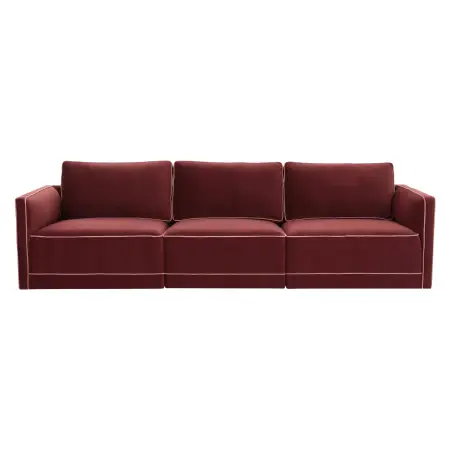
Willow Berry Red Velvet Modular Sofa
A saturated berry-red velvet sofa that gives a room its color story in one piece—pair with the Radiant Oasis Dala Black and Gold Accent Pillow Set to layer in a graphic pattern without introducing a new color family.
Shop This Sofa →
Working a Bold Rug or Textile Into the Mix
A richly patterned rug or a few contrasting throws carry this same principle into the rest of the room. Look for a rug in 2–3 colors that echo your anchor piece, then layer in throws or textiles in a complementary pattern—treat them as styling additions you can swap seasonally, rather than a single expensive commitment.
2. Layer Textures Like You Mean It
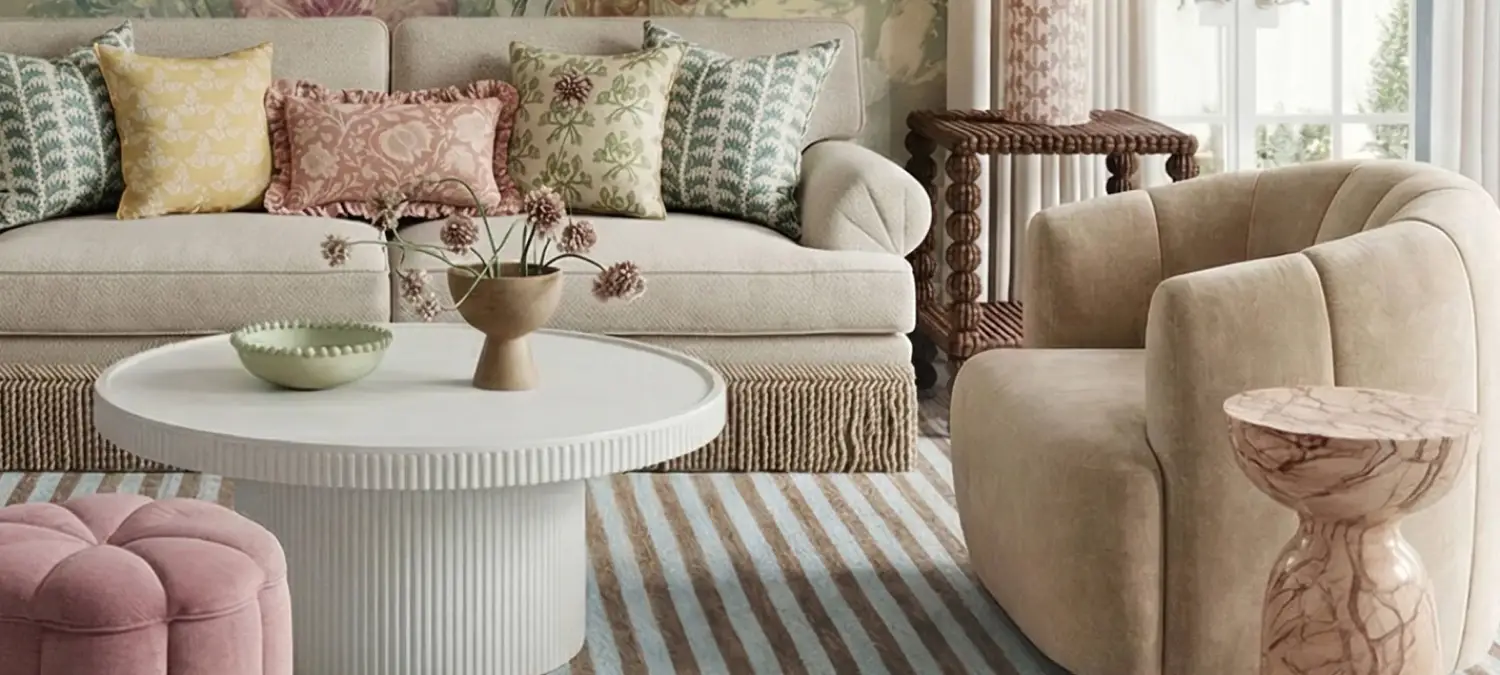
Color isn't the only way to add richness to a maximalist living room—texture does the same work, even within a single color family. Velvet, leather, bouclé, and shearling all catch light differently, and putting two or three of them next to each other keeps a room from reading as flat, even if everything sits in the same shade of taupe or stone.
A dependable pairing: a velvet sofa against a leather accent chair, tied together with a bouclé or shearling pouf as the connecting texture. Because the shapes and materials differ but the color family stays consistent, the combination feels layered rather than mismatched. Mixing textures is a lower-commitment way to add richness than mixing colors, which makes it a good starting point if bold color still feels like a stretch.
-
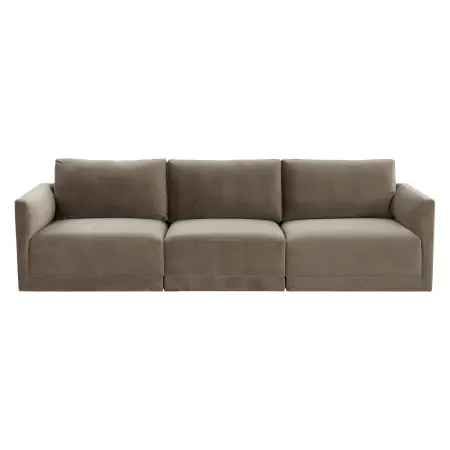
Willow Taupe Velvet Modular Sofa
Shop This Sofa → -
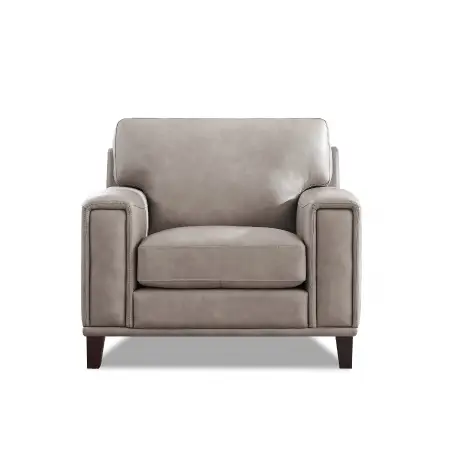
Halwyn Stone Leather Accent Chair
Shop This Chair → -
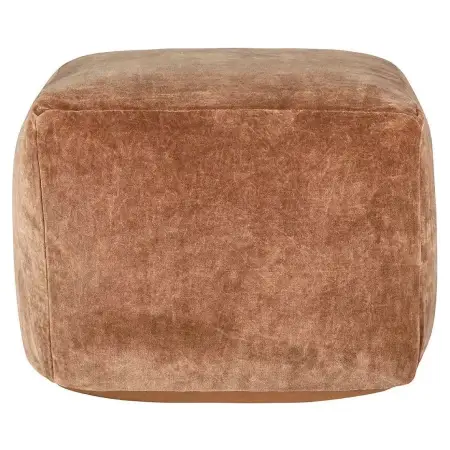
Heirloom Velvet Hazel Square Accent Pouf
All three pieces sit in the same neutral color range but bring three distinct textures into the room — velvet, leather, and a plush weave — exactly the kind of texture layering that keeps a monochrome maximalist room from feeling one-note.
Shop This Pouf →
3. Blend Furniture Eras and Styles on Purpose
Building an eclectic maximalist living room is a deliberate pairing skill, not a random one. The move is to pull one piece from a different era or style than the rest of the room and let it stand out—a vintage-inspired silhouette next to a contemporary sofa, or a sculptural chair beside a classic sectional.
Address the fear directly: eclectic doesn't mean mismatched at random. 1 anchor piece per room is usually enough to create that "collected over time" feeling without the space losing cohesion. Add more than one contrasting piece and the eye starts looking for a rule that isn't there.
-
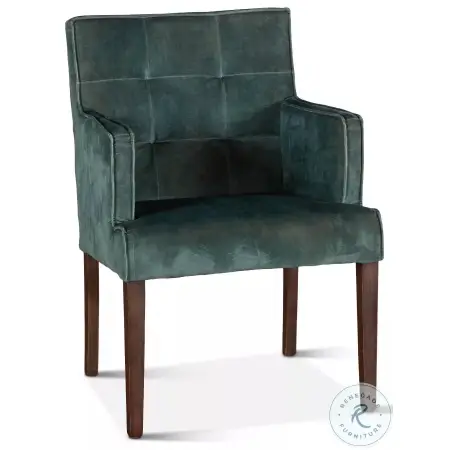
Avery Dark Green Velvet Arm Chair
Shop This Chair → -
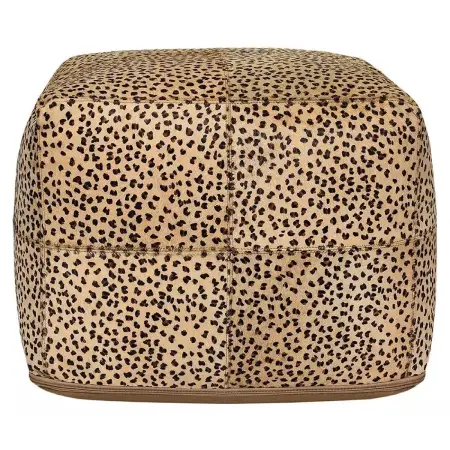
Leopard Hide Camel & Black Leather Pouf
Shop This Pouf →
The Avery Dark Green Velvet Arm Chair paired with a piece like the Willow Navy Velvet Living Room Set is a good example: two different silhouettes and two different jewel tones, tied together by the same rich velvet and a shared cool undertone. Add in something unexpected, like the Leopard Hide Camel and Black Leather Accent Pouf, for a single high-contrast texture moment that reads as intentional precisely because it's the only one in the room.
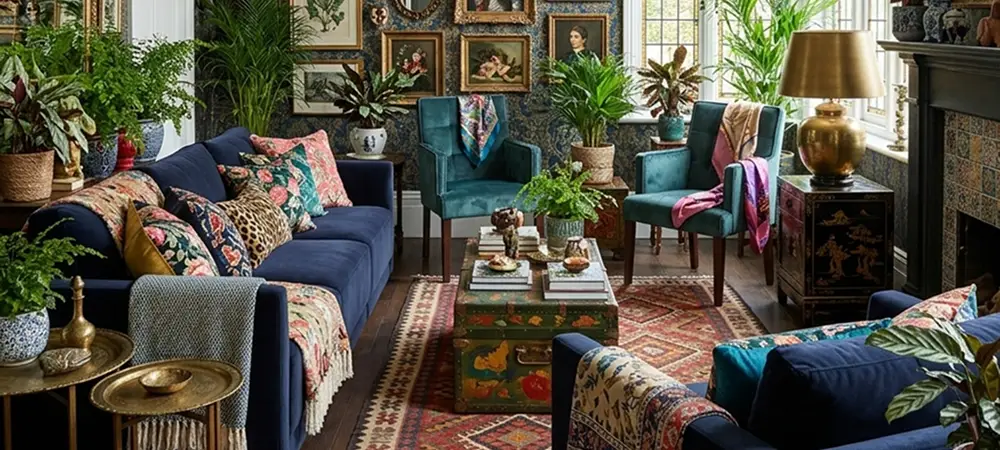
4. Curate Collections Instead of Hanging a Gallery Wall
The gallery wall is the most common maximalist idea in design content, but it isn't the only way to tell a visual story on your walls—or the most practical one if you don't already own a collection of framed art. A curio cabinet or an open bookcase does the same storytelling work: it groups meaningful objects where they can actually be seen, dusted, and rearranged as the collection grows.
Group collectibles, books, and travel finds by color or theme rather than scattering them evenly across shelves. A shelf of blue-and-white ceramics reads as curated; the same objects mixed randomly with unrelated colors reads as cluttered. A glass-front curio cabinet adds its own layer of texture and shine on top of whatever you display inside it.
-
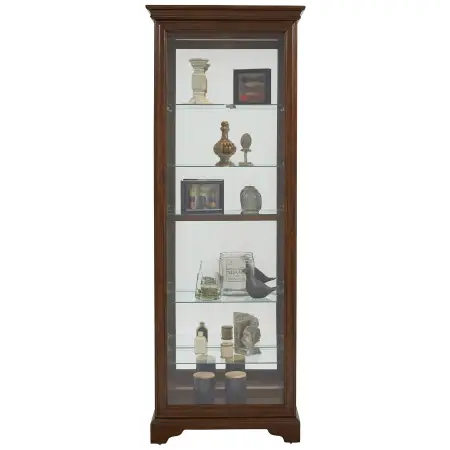
Dark Brown Gallery Curio Cabinet
Shop This Cabinet → -
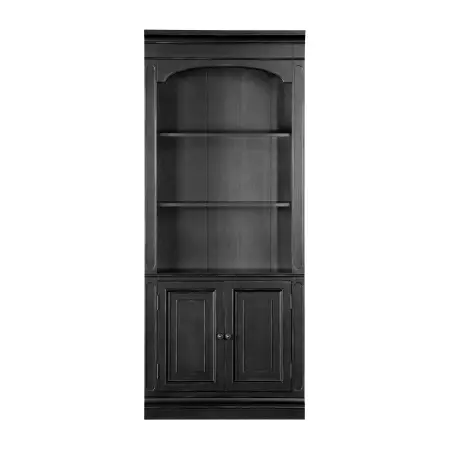
Roanoke Black Bookcase
Shop This Bookcase →
If your collection leans toward formal china or serving pieces, a piece from our china cabinets does similar visual work in a dining-adjacent space.
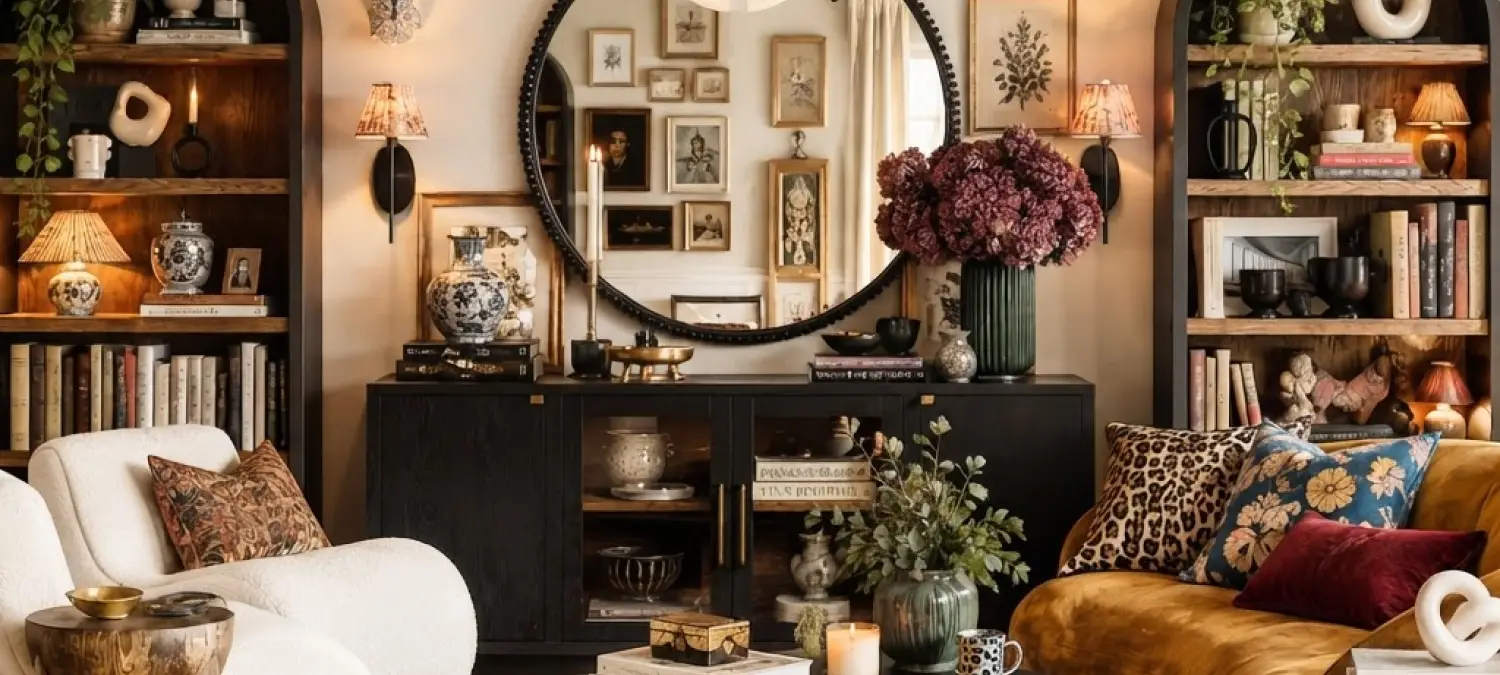
5. Tie It Together With Repeating Colors and Motifs
The single biggest fix for a maximalist room that feels chaotic instead of curated is repetition. Pick 2–3 colors and repeat them across upholstery, pillows, and displayed objects—a navy sofa, a navy-and-gold accent pillow, and a navy ceramic vase on the bookcase all reference each other, even though they're entirely different objects.
-
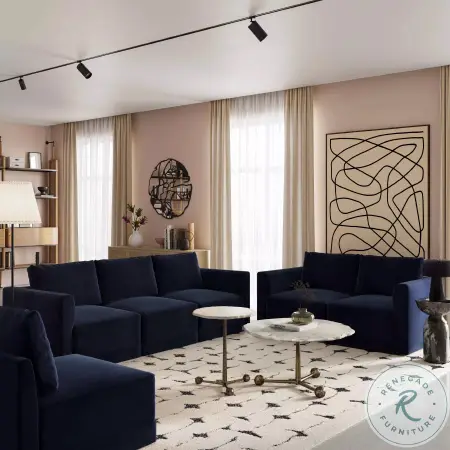
Willow Navy Velvet Living Room Set
A matched furniture collection is the fastest way to guarantee cohesion, since the manufacturer has already coordinated the colorway across pieces. This set spans a sofa, loveseat, and sectional in the same navy velvet.
Shop This Set →
If a room feels chaotic, the fix is almost always fewer colors repeated more often—not more restraint overall. Two colors, repeated six times, will look more intentional than six colors used once each.
6. Let Your Personality Lead the Design
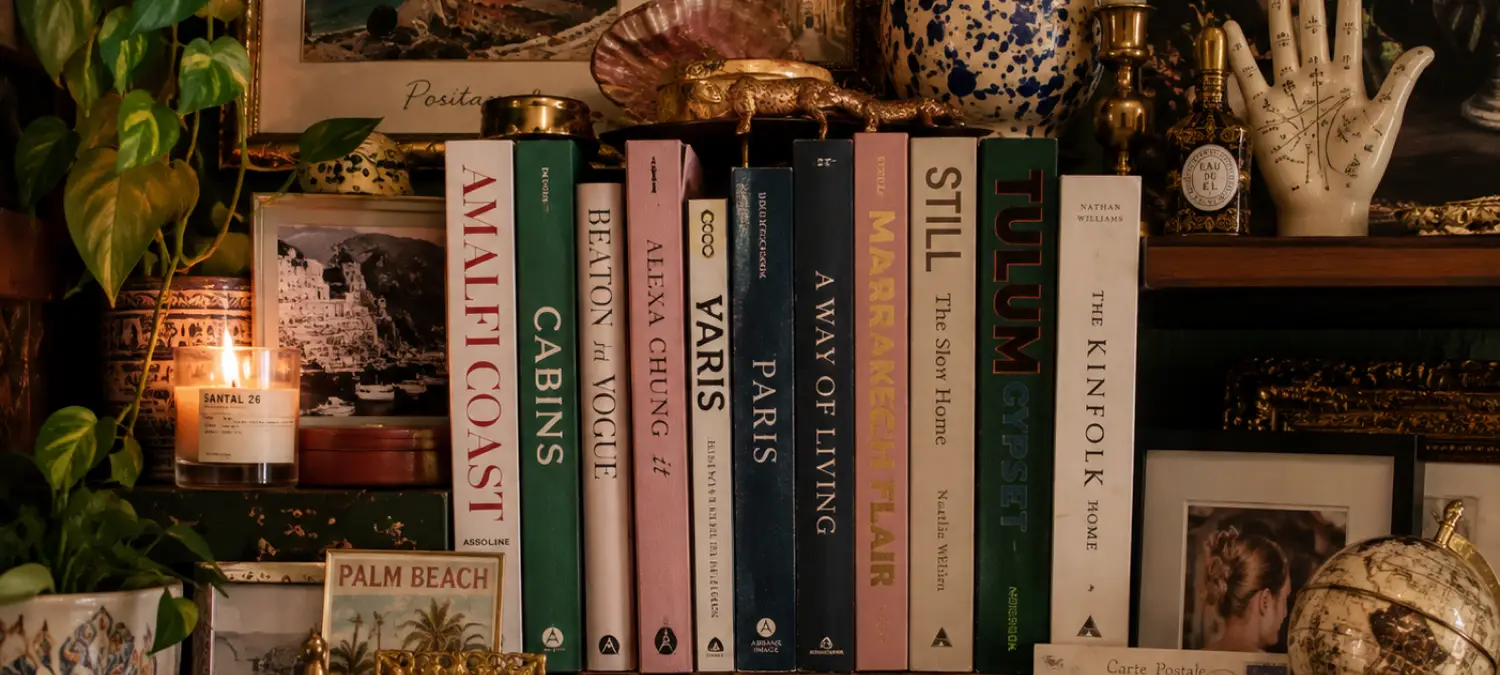
A maximalist living room works best when it's built around what you actually collect or love, not a generic mood board. Travel finds, books, art, family pieces, or a specific color you've always gravitated toward all make better source material than furniture chosen purely to fit a trend.
This is about what to display, not how—the curation principles from the section above still apply, but the starting point here is your own life rather than a store shelf. Look at what you already own before buying anything new: the objects with a story attached are usually the ones worth building a room around.
A bookcase or curio cabinet gives a growing personal collection somewhere to live as it changes over time, which matters more than it sounds—a collection that outgrows its shelf space usually ends up in a box instead of on display.
7. Keep It Comfortable, Not Just Beautiful
A bold room doesn't have to sacrifice comfort for the sake of a strong photo. Plush, deep seating makes a cozy maximalist living room just as much as color and pattern do—a striking sofa that's stiff or shallow undercuts the whole look the moment someone actually sits down.
A modular sectional is a practical way to get maximalist scale and comfort in one piece, and because it's reconfigurable, it can adapt as the room's use changes—more open for entertaining, more enclosed for movie nights.
-
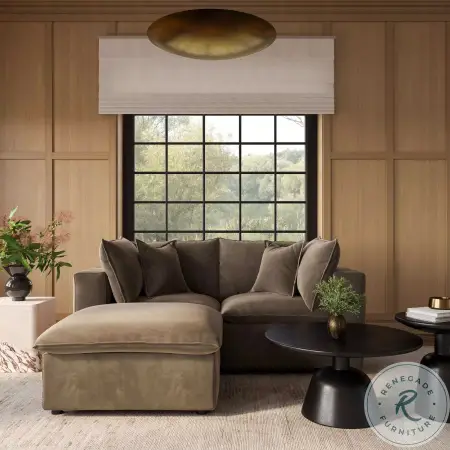
Cali Chocolate Brown Performance Velvet Modular Large Sectional
Delivers flexible, deep seating at maximalist scale. Pair with the Heirloom Velvet Hazel Square Accent Pouf for extra low seating or a footrest without a permanent spot in the layout.
Shop This Sectional →
If you're working with a smaller footprint, browse our full range of modular sectionals to find a configuration that fits, and see our living room layout ideas guide for help placing bold, larger-scale pieces without overwhelming the room.
The room still needs to work for daily life, not just photos—comfort and boldness aren't in competition here.
Design that Delivers
A maximalist living room isn't built all at once—it's built one intentional piece at a time, starting with an anchor color, then layering in texture, a contrasting era, a curated collection, and enough repetition to hold it all together. Start with whichever idea above feels most like you, add the next one when you're ready, and let the room keep evolving.
Coleman Furniture carries the velvet sofas, leather chairs, curio cabinets, and modular sectionals to build a maximalist living room piece by piece, with free white glove delivery on thousands of items. Shop Maximalist Furniture Now and start building a room that's unmistakably yours.
Maximalist Living Room FAQs
No. Clutter is unplanned accumulation—things that piled up without much thought. Maximalism is a deliberate layering of color, texture, and objects chosen on purpose, where every piece earns its place in the room.
Eclectic describes mixing styles and eras; maximalist adds boldness in color, pattern, and volume. A room can be eclectic without being maximalist, but most maximalist rooms are eclectic, since blending furniture eras is one of the easiest ways to build the look.
Yes. A room can use a minimalist furniture silhouette—clean lines, less ornamentation—as a calm base, then layer in maximalist color and pattern through textiles and displayed objects. It's a practical middle ground if full maximalism feels like too much of a leap.