

10 Small Living Room Sectional Layout Ideas
Key Takeaways
- The right sectional layout can make a small room feel more open.
- Focus on balance, movement, and light when arranging furniture in a small living room.
- Compact and modular sectionals work well in tight spaces.
Small Living Room Sectional Layout Ideas
-
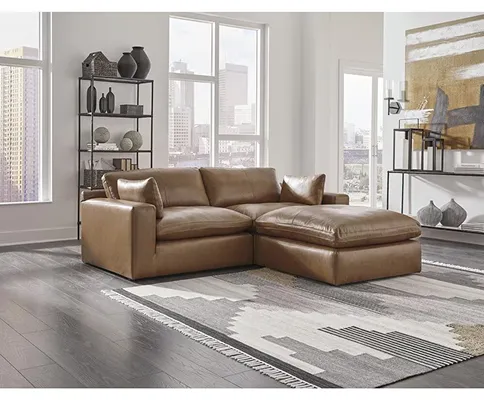
1. Float your sectional away from the wall
Pulling a sectional slightly away from the wall can make a small room feel more balanced. This layout adds breathing room around the furniture and creates a natural flow through the space.
Floating the sectional also allows you to define zones within the room. You can position a console table or narrow shelf behind the sofa to display décor or provide extra storage. If your living room opens into another area, such as a dining space or hallway, this setup helps create visual structure.
This idea works best with compact L-shaped sectionals that leave enough clearance for walking behind the piece.
-
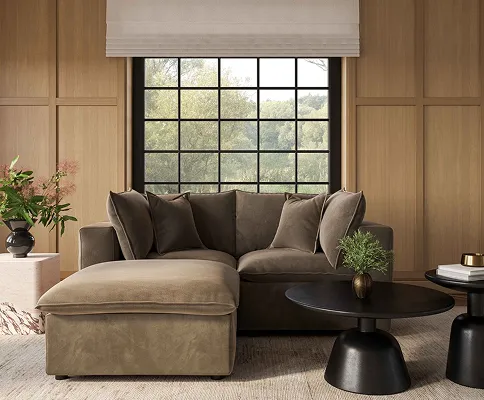
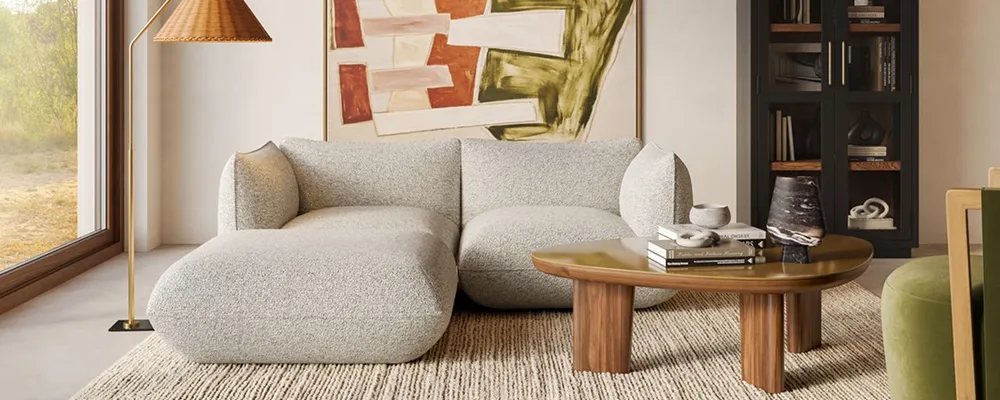
2. Add a chaise lounge
A sectional with a chaise can help shape the layout of a small living room. The extended seat defines the edge of the space and separates it from nearby areas like a dining nook or entryway.
This layout works especially well in open-concept homes. The chaise gives structure without using walls or partitions, keeping the room feeling open and connected. You can also use a rug under the sectional to ground the space and add contrast.
Choose a chaise configuration that fits the direction of your traffic flow. A reversible design lets you switch sides easily if your layout changes.
-
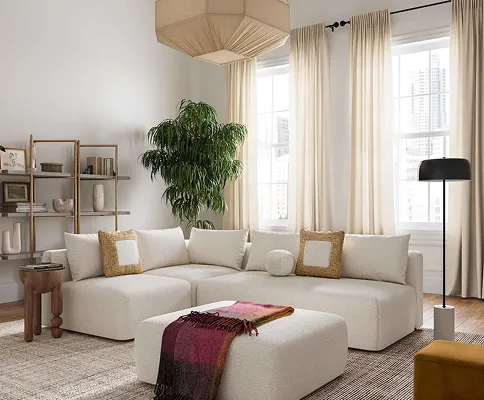
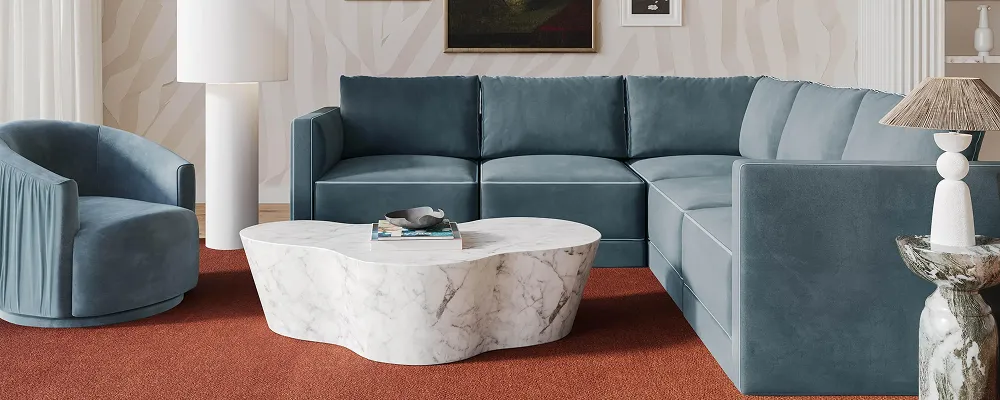
3. Try an L-shaped sectional
A small L-shaped sectional can make the most of a tight living room layout. Its angled shape helps define a corner while leaving the rest of the room open for movement.
This setup works especially well in apartments or condos where space is limited. Position the shorter side of the sectional against a wall to maximize seating without blocking pathways.
To complete the look, add a small coffee table or ottoman in the center. It keeps the space functional without feeling crowded.
-
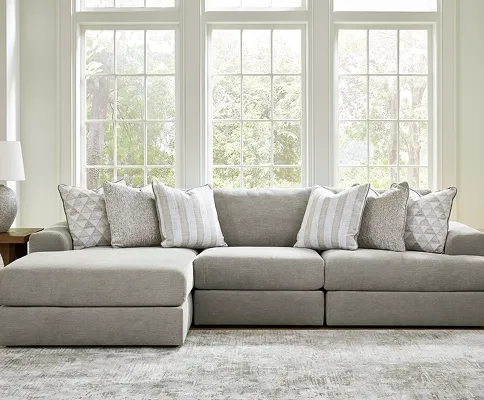
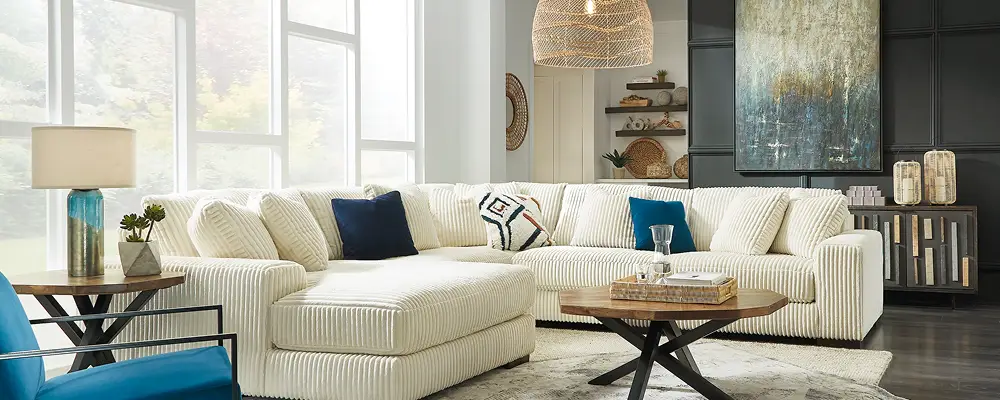
4. Place your sectional under a window
Positioning a sectional beneath a window can open up the rest of your living room while creating a bright, welcoming focal point. Natural light draws attention to the sofa and makes the space feel larger.
Choose a low-profile sectional so the back doesn’t block the window view. This layout also works well in rooms with corner windows, where an L-shaped sofa can frame the light beautifully.
You can balance the look with light curtains or a simple side table to keep the area feeling airy and uncluttered.
-
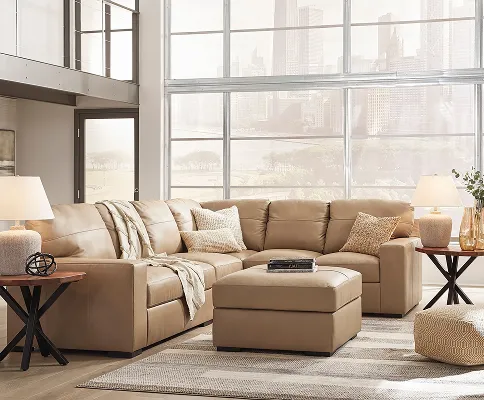
5. Divide an open floor plan
A sectional can help define your living room within an open layout. By placing it strategically, you can separate the seating area from the kitchen, dining space, or entryway without needing walls or partitions.
The back of the sectional acts as a natural divider while keeping sightlines open. Add a narrow console table or floor lamp behind it to complete the transition between zones.
This layout is ideal for modern homes where every inch of space matters and flow is key.
-
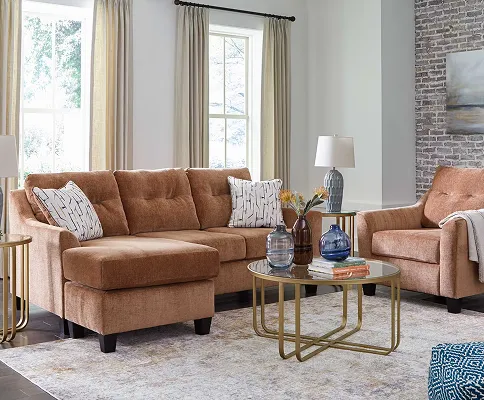
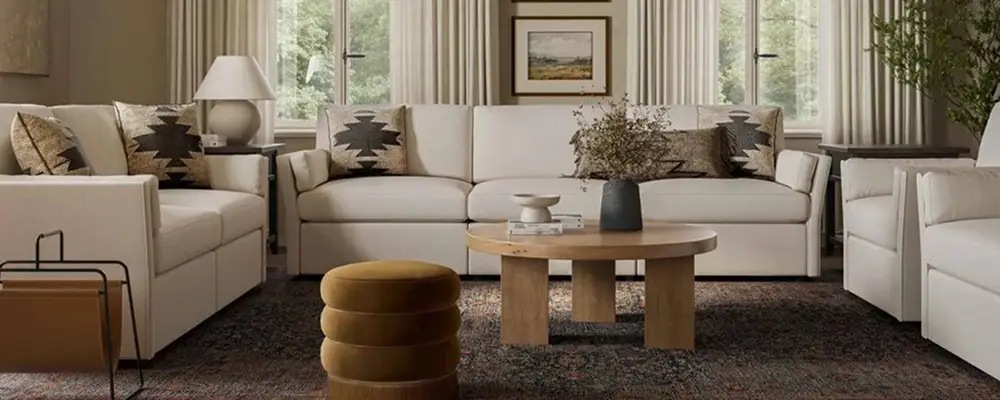
6. Pair with an accent chair
Adding a single accent chair can complete your seating area without overwhelming a small living room. The chair creates balance and gives guests a flexible place to sit without taking up much space.
Place the chair opposite or diagonally from the sectional to keep the layout open. Choose a slim, armless design or swivel chair to make the room feel lighter.
A small side table or floor lamp nearby helps tie the setup together while keeping the focus on the sectional.
-
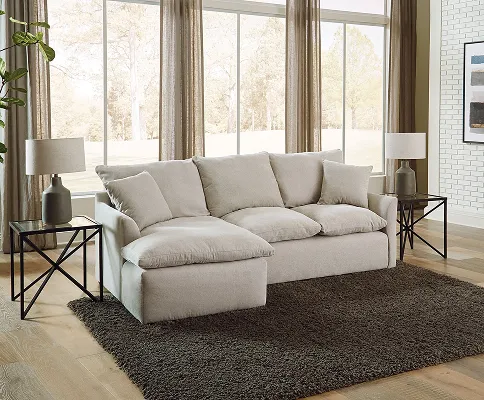
7. Center around a rug
A rug can anchor your living room and make even a small space feel intentional. Position your sectional so the front legs rest on the rug, creating a clear boundary for the seating area.
This layout helps define your living room within a larger space and visually ties the furniture together. Choose a rug that complements the shape of your sectional.
Keeping the rug size proportional ensures the room feels open and balanced.
-
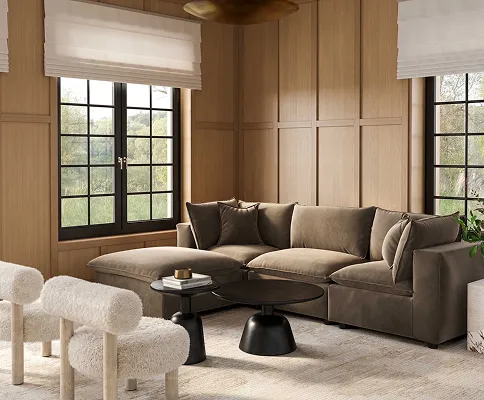
8. Use a corner
Corners are natural spots for sectionals, especially in small living rooms. Tucking your sofa into a corner maximizes floor space and leaves room for other essentials.
This setup creates a cozy, contained area for relaxing or watching TV. To prevent the space from feeling boxed in, add wall art or a tall plant in the corner to draw the eye upward.
A light-colored sectional or one with slim arms can also help make the room feel more open.
-
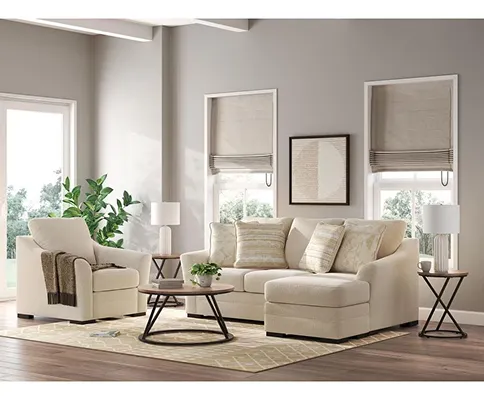
9. Try a conversational layout
Arrange your sectional so seating naturally faces inward to encourage conversation. In a small living room, this layout keeps everyone close while maintaining a relaxed flow.
Place a coffee table or ottoman at the center to connect the space and give guests a place to set drinks or books. If there’s room, add a single chair or pouf on the open side to round out the seating area.
This arrangement works especially well for family gatherings or movie nights, creating a comfortable, welcoming setup.
-
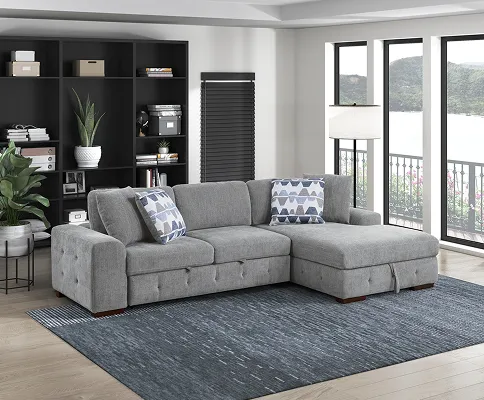
10. Use open shelving or wall décor
When floor space is limited, look to your walls for balance. Adding open shelving, artwork, or wall-mounted lighting above your sectional draws attention upward and makes the room feel taller.
This layout helps create symmetry without cluttering the space. Floating shelves can display books or décor, while sconces free up floor space that lamps would otherwise take.
Keeping the area above your sectional visually light will make the entire room feel more open and connected.
How to make the most of a small living room with a sectional
A small living room can still feel open and comfortable with the right layout and design choices. Start by choosing a sectional that fits the scale of your space. Low-profile designs, slim arms, and raised legs help a room feel airy instead of crowded.
Keep traffic flow in mind. Leave at least two feet of walking space between your sectional and nearby furniture or walls. This ensures the room feels connected rather than cramped.
Lighting also plays a big role. Use a mix of floor lamps, sconces, and table lamps to brighten dark corners. Natural light enhances the sense of space, so avoid heavy curtains or furniture that blocks windows.
Finally, think vertically. Add floating shelves or tall plants to draw the eye upward and balance your layout. A few intentional décor choices can make even a compact living room feel like a thoughtful, inviting retreat.
Find your perfect sectional with Coleman Furniture
Your sectional can completely transform a small living room. With the right layout, it adds comfort, flow, and personality to your space. Explore Coleman Furniture’s collection of sectionals designed for every home. From modular and reversible styles to deep-seated favorites, each piece is built to fit your space and your lifestyle.
Start by deciding what the main focus of your room will be—whether it’s a TV, a window, or a conversation area. Position your sectional to face that focal point, leaving enough space to walk around it comfortably. In most cases, placing the longer side of the sectional against a wall or floating it slightly forward helps create flow without wasting space.
Compact L-shaped or reversible sectionals are ideal for small spaces. Look for models with slimmer arms and low backs to keep the room from feeling closed in. Sectionals with built-in storage or modular pieces also give you flexibility to reconfigure your layout when needed.
Yes! Just choose one that suits the scale of your space. Round or oval coffee tables work well because they soften the angles of the sectional and make it easier to move around. If space is tight, try a small ottoman or nesting tables that can be tucked away when not in use.
Some of the best layouts include floating your sectional away from the wall, placing it in a corner, or pairing it with a narrow console or chaise lounge. Each option helps you maximize seating without making the room feel crowded. Experiment with angles and accessories until you find the flow that feels right for your home.
A sectional often provides more seating in less floor space than two separate sofas or chairs. However, if your room has multiple entry points or limited wall space, a standard sofa with accent chairs might offer more flexibility. The right choice depends on how you use the room day to day.