

The Best Compact Kitchen Table Options for Small Spaces
Finding the right table for a small kitchen isn't just a style decision — it's a space-planning exercise that affects how your kitchen functions every single day. A table that's even 6 inches too wide can block a walkway, crowd a chair, or make an already-tight kitchen feel genuinely unworkable. The good news is that the category of compact kitchen tables has expanded dramatically. Whether you're dealing with a narrow eat-in kitchen, a studio apartment, or an open-plan space that does double duty as a home office, there's a format — round, drop-leaf, extendable, counter-height — designed for exactly that constraint.
This guide walks through what are the best compact kitchen table options by clearance requirements, table type, shape, material, and seating — so you can browse with a plan instead of guessing.
Key Takeaways
- The right compact kitchen table starts with clearance planning, not style — at least 36 inches of clearance on all sides is non-negotiable before sizing a table.
- Round, drop-leaf, extendable, and wall-mounted tables each solve different space constraints; matching the table type to the room layout matters more than aesthetics alone.
- Materials and base style affect how large or small a kitchen feels — glass and light wood open a space, while dark, bulky designs visually shrink it.
Why Compact Kitchen Table Choice Has Bigger Stakes Than Most Shoppers Realize
A wrong-sized table creates daily friction: blocked walkways, chairs that won't pull out comfortably, and a kitchen that feels smaller than it actually is. These aren't minor inconveniences — they're the kind of thing that erodes the enjoyment of your home over months and years. Compact does not mean limited, though. The category now includes drop-leaf, extendable, round, and wall-mounted designs purpose-built for real space constraints, many from trusted brand-name manufacturers.
The most common and costly mistake shoppers make is choosing by looks before confirming dimensions. Browse Coleman's full dining collection once you've done your measurements — not before — and you'll narrow the field quickly to options that actually work for your room.
Sizing and Clearance: The Framework That Comes Before Browsing
How to measure your kitchen dining area accurately
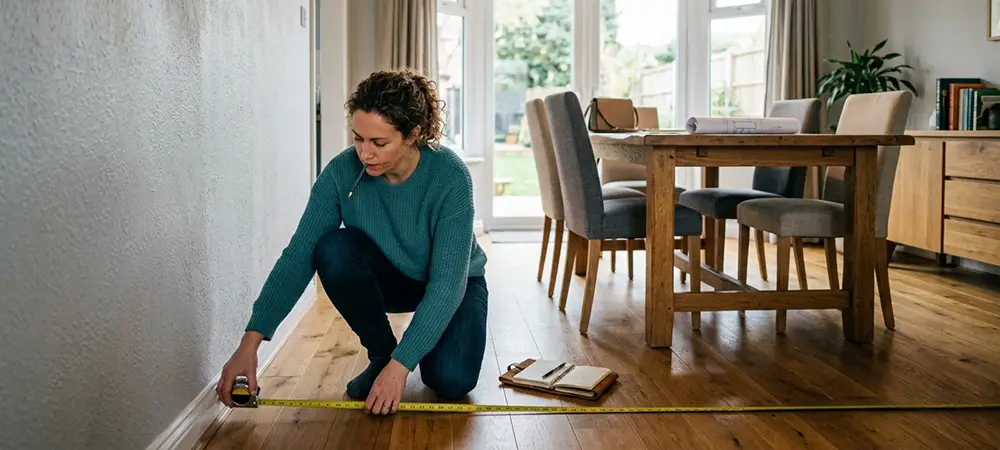
Measure the full room, not just one wall. Note doorways, kitchen islands, and appliance swing zones — a refrigerator door that opens into the dining area can eliminate several inches of usable clearance. Once you have the room dimensions, subtract your clearance requirements on all sides to get your maximum table footprint. Then account for chairs: a pulled-out dining chair adds 18–20 inches beyond the table edge. That number needs to fit comfortably inside your remaining space on every seating side.
Clearance thresholds and when to apply them
Not every side of a table needs the same amount of space. Use these numbers as your baseline before you look at a single product page:
| Side Type | Minimum Clearance | Notes |
|---|---|---|
| Active walkway side | 36 inches | Minimum for comfortable movement past seated diners |
| Kitchen traffic path | 48 inches | Any side that doubles as a path to the stove, sink, or exit |
| Wall or bench side | 24 inches | Acceptable where no one walks; bench seating works well here |
Before you start filtering by style or finish, confirm these numbers are met. If your available footprint is tighter than expected, that's actually useful information — it tells you whether a round table, a drop-leaf, or a wall-mounted option is the right category to focus on. For budget-conscious shoppers who need to stretch their investment further, our guide to affordable dining table options covers where quality and value overlap most reliably.
Compact Kitchen Table Types: Tradeoffs and Best-Fit Scenarios
Once you know your clearance constraints, the right table type becomes much clearer. Each format below solves a specific problem — and each comes with tradeoffs worth understanding before you commit.
-
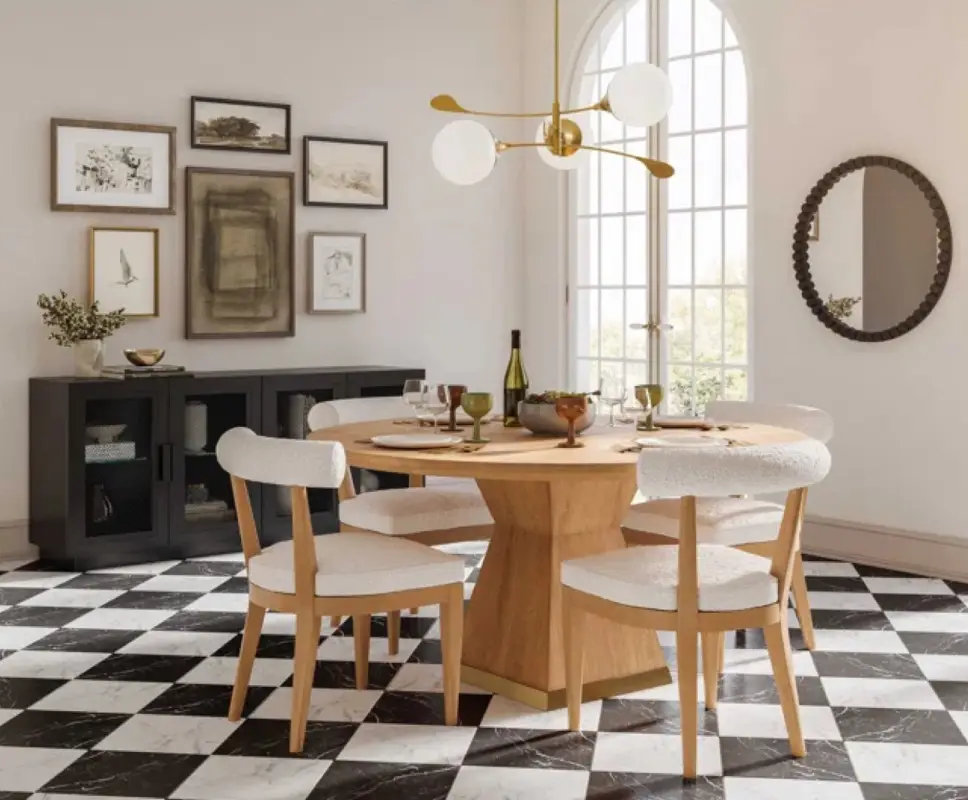
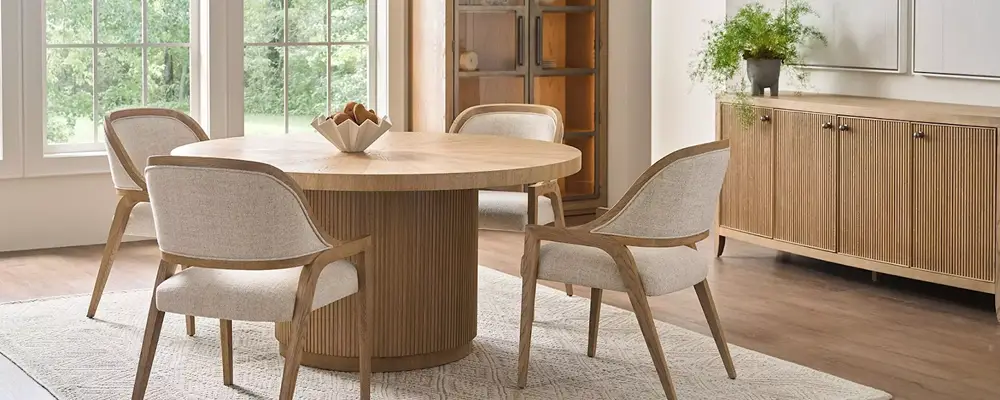
No corners means no bottlenecks — traffic flows naturally around all sides. Pedestal bases eliminate corner legs entirely, maximizing legroom and allowing flexible chair placement. Oval shapes offer the seating efficiency of a rectangle with softer edges that are easier to move around.
Best fit: Square rooms; eat-in kitchens where people move around all sides of the table.
-
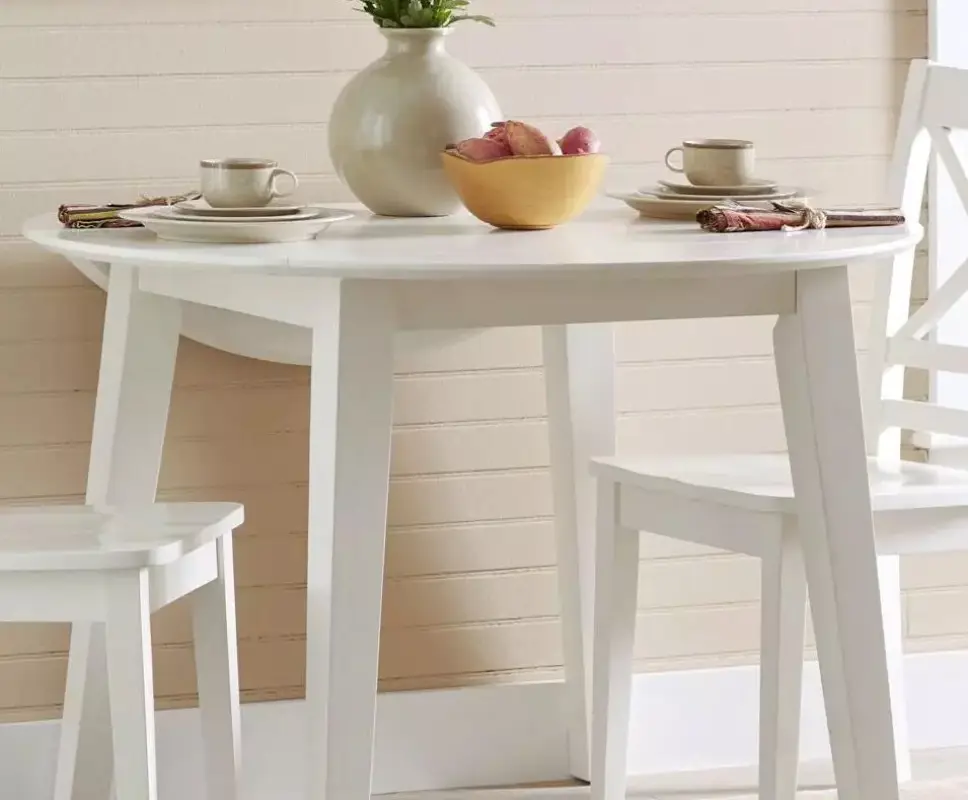
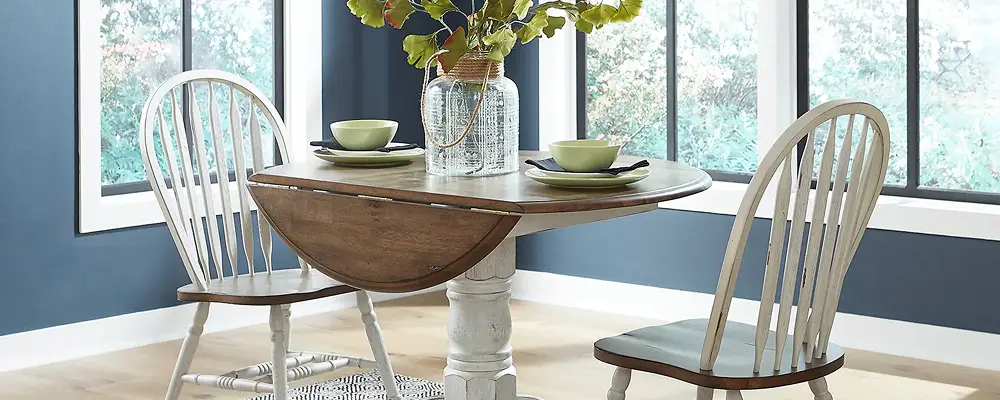
The leaves fold down to a compact everyday size — sometimes as narrow as 12 inches deep — then expand to seat 4–6 when you need the space. They require no separate storage for the leaf and double naturally as a workspace or prep surface when the kitchen is in use.
Best fit: Studio apartments; multipurpose rooms; eat-in kitchens that also serve as work-from-home areas.
-
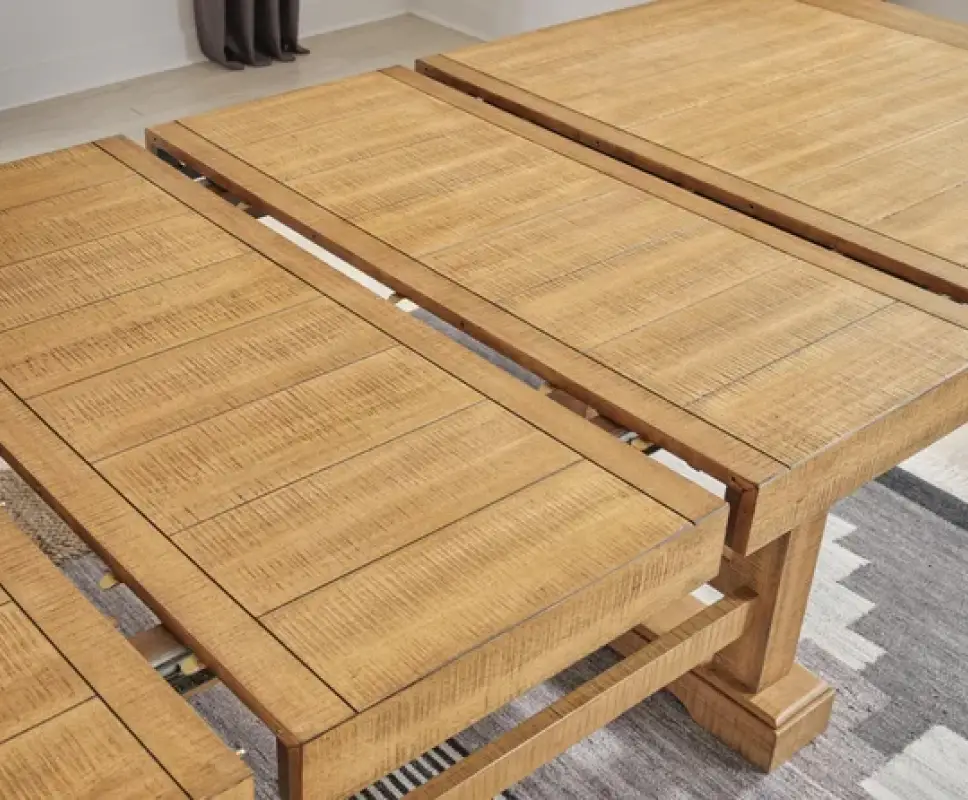
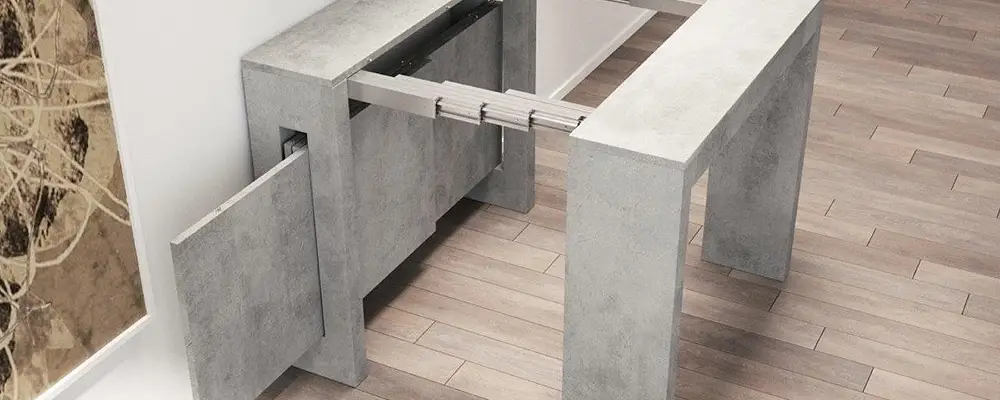
A built-in butterfly leaf stores inside the frame and extends in seconds — no separate piece to find space for. At their compact size, they function as an everyday 2–4 person table; extended, they seat 6–8 comfortably. This is the format for households that host a few times a year but don't want a large table dominating the room daily.
Best fit: Households that need occasional full-capacity seating without committing to a large everyday footprint.
-
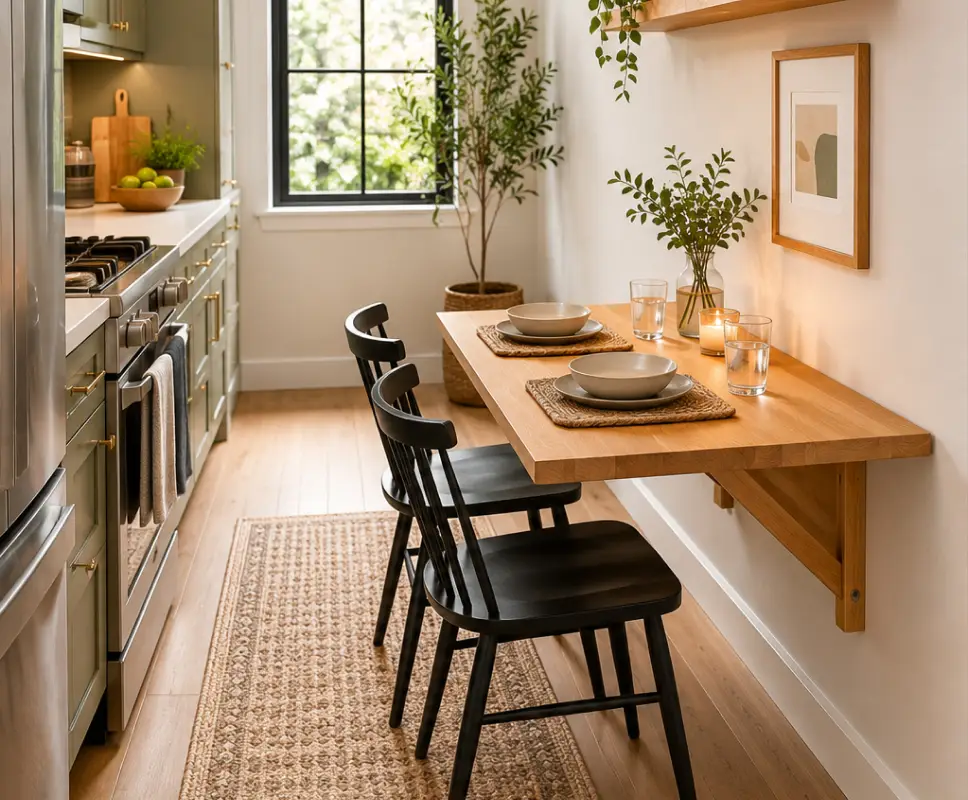
When folded flat, these tables reclaim the entire floor area — there's nothing to work around. Most wall-mounted designs seat 2–4 and are fixed to a single wall, making them ideal for extremely narrow kitchens where a freestanding table of any size would block movement.
Best fit: Very small kitchens with no dedicated dining zone; galley layouts; spaces where the table will only be used for a meal or two per day.
Table Shape as a Traffic and Layout Decision, Not Just a Style One
Shape choice has a direct impact on how easily people move through your kitchen — and it's worth thinking through before browsing by style. The framework below maps each shape to the room types and traffic patterns it handles best. For a deeper look at this question, see our full guide on what is the best shape for a kitchen table.
| Shape | Traffic Performance | Best Room Type |
|---|---|---|
| Round | Best flow; no corner bottlenecks | Square rooms; kitchens with movement on all sides |
| Oval | Softer corners than rectangular; good flow on long sides | Narrow rooms with traffic on the long edges |
| Rectangular | Highest seating per sq. ft.; corners can block narrow passages | Wider rooms; against-the-wall placements |
| Square | Even distribution on all sides | Square rooms with equal clearance on all four sides |
Material and Visual Weight: How Table Construction Affects Perceived Space
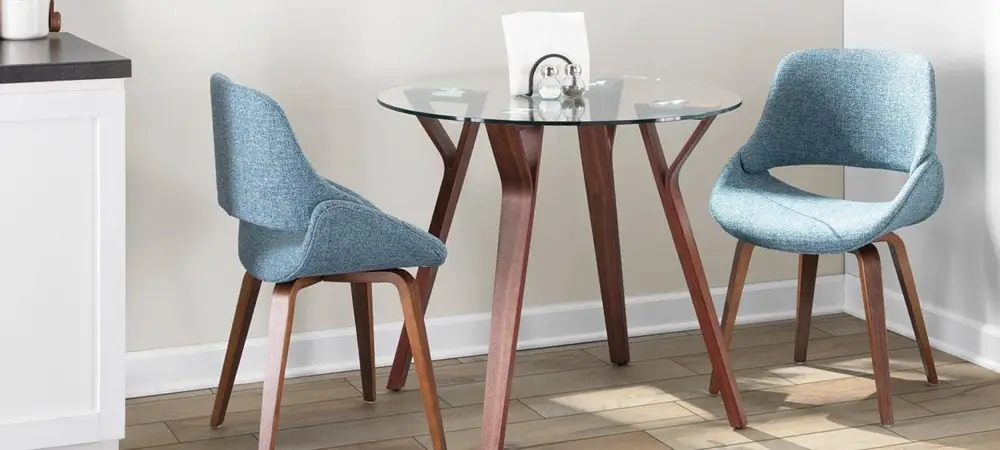
The physical footprint of a table is only part of the story. Visual weight — how heavy or bulky a piece looks in a space — has a real effect on how large or small a kitchen feels. Glass tops let sightlines pass through completely, making the room feel larger; tempered glass is the recommended choice for durability and safety. Light wood tones like oak, ash, and maple reflect rather than absorb light, which reduces the perceived heaviness of the table versus darker stained finishes. Metal and acrylic bases carry significantly less visual bulk than solid wood four-leg designs, especially when paired with a round or oval top.
On the other end of the spectrum, dark heavily-grained tops visually anchor a space — which can feel grounded and intentional in a larger room but compressing in a small one.
Seating, Height, and Multi-Purpose Features: Decisions That Compound Space Savings
Seating types ranked by space efficiency
The seating choice matters as much as the table itself. Armless chairs tuck fully under the table when not in use, leaving the smallest daily footprint of any seating option. Benches slide entirely beneath rectangular tables and seat more people per inch than individual chairs — an underused option in compact kitchens. Stools pair naturally with counter-height tables and are easy to store under or beside the base. Stackable or folding chairs offer the most flexibility of all, since they can be removed entirely when you're not using the full capacity.
Height options and when each fits
| Height | Dimension | Best Use Case |
|---|---|---|
| Standard dining | 28-30 in. | Widest chair and bench compatibility; the default for most kitchens |
| Counter height | 34–36 in. | Casual profile; stool-compatible; can open sightlines in open-plan spaces |
| Bistro height | 40–42 in. | Bar-stool seating; typically seats 2; best for very tight or nook layouts |
For a detailed walkthrough of which height works best in different kitchen configurations, our standard dining table height guide covers the tradeoffs in full. Counter-height dining sets are worth a close look if your kitchen has an open-plan layout — the elevated profile blends more naturally with kitchen counter lines and can help the dining area feel intentional rather than squeezed in.
Multi-purpose features worth prioritizing
In a small kitchen, a table that does more than one job earns its footprint. Built-in shelves or drawers reduce the need for additional storage furniture. Scratch- and heat-resistant tops — common in solid wood and certain laminates — let the table serve as a prep surface when counter space runs short. Self-storing extendable leaves solve one of the most common compact-kitchen frustrations: having nowhere to put the leaf when it isn't in use.
How Coleman Furniture Approaches Compact Kitchen Tables Differently
Selection depth across every compact table type
Coleman carries round, oval, drop-leaf, extendable, counter-height, and bistro options from trusted brand-name manufacturers. The filter system lets you narrow by table size, shape, material, and seating capacity — so you can match a table to your exact room dimensions rather than settle for something close enough. That level of specificity is rare in furniture retail and makes the difference between a table that works and one that requires you to rearrange your kitchen around it.
Delivery and setup built for large furniture
Buying a dining table online carries a real logistics concern: getting a large, heavy piece from a truck into a specific room, assembled and in place. Coleman offers free shipping on all orders, with White Glove delivery available on thousands of items — including full assembly and room placement. That eliminates the risk that usually makes people hesitant to buy furniture this significant without seeing it in person first.
How to Choose the Right Compact Kitchen Table: A Decision Framework
Work through these steps in order before browsing a single product page. Each step narrows the field based on your specific constraints, so you're comparing the right options rather than everything at once.
1.
Measure the room and confirm clearance on all sides before opening any product filter.2.
Identify your seating frequency. How often do you need full capacity versus a compact everyday size? This determines whether drop-leaf, extendable, or fixed-size is the right category.3.
Match table shape to room shape using the traffic flow framework above — round for square rooms, oval or rectangular for narrow ones.4.
Choose material based on visual weight. Glass and light wood for smaller kitchens; darker finishes only if the room can support them.5.
Confirm seating type and height alignment before finalizing — armless chairs and benches extend your space savings significantly.
Coleman Furniture carries compact kitchen and dining tables across every type covered in this guide — round, oval, drop-leaf, extendable, counter-height, and bistro — from brand-name manufacturers, with free shipping on every order and White Glove delivery available on thousands of items.
Explore Coleman Kitchen Table Options
Compact Kitchen Table FAQs
Drop-leaf and round pedestal tables are the strongest choices for apartment living. A drop-leaf folds to 12–18 inches deep against a wall when not in use and expands to seat 4 when you need it. A round pedestal table with armless chairs takes up minimal floor space and can seat 2–4 comfortably in a tight kitchen or dining nook.
A round table 42 inches in diameter seats 4 comfortably with standard chairs. For a rectangular or oval table, 48 inches long by 30 inches wide is a workable minimum for 4 seats — though 54 inches is more comfortable. Drop-leaf tables can seat 4 when extended from a compact base that's significantly smaller.
Round is generally the most space-efficient shape for small kitchens because it eliminates corners, promotes better traffic flow, and allows pedestal bases that maximize legroom. In narrow rectangular kitchens, an oval table with a slim profile often works better than a rectangle by reducing corner intrusion on walkways.
Yes, particularly for kitchens that serve as workspaces or multipurpose rooms. When folded, a drop-leaf table can occupy as little as 12 inches of floor depth, freeing the space for other uses entirely. The tradeoff is that leg placement can sometimes limit seating flexibility when the leaves are down.
Glass tops, light-toned woods (oak, ash, maple), and metal or acrylic bases all reduce visual weight. A tempered glass top with a slim metal base is the most visually open combination; a light oak pedestal round table is a close second. Avoid dark, heavily-grained finishes or thick four-leg bases in spaces under 100 square feet.
Standard dining tables measure 28–30 inches tall and pair with standard dining chairs. Counter-height tables measure 34–36 inches and use counter-height stools. Bistro tables measure 40–42 inches and use bar stools; they typically seat 2 and are best for very tight nook configurations or open-plan spaces where the table is a secondary eating option.
Yes — and for small apartments, it often needs to. Look for scratch- and heat-resistant surfaces (solid wood, engineered wood, or durable laminates) and a base design that doesn't interfere with legroom when seated for extended periods. Drop-leaf and extendable tables are particularly well-suited to this dual role because they can be sized to the task at hand.