

Extending vs. Expandable Dining Room Tables: Which Is Best for Your Home?
Shopping for an extending vs. expandable dining room table can feel confusing — and you're not alone if you've used the two terms interchangeably. While they're often treated as synonyms, there are real differences that could affect how you live with your table day to day. This guide breaks down what each type means, how the mechanisms differ, which styles suit each, and how to choose the right one for your home and lifestyle.
Key Takeaways
- Extending tables use separate, removable leaves you add manually; expandable tables often feature built-in, self-storing mechanisms.
- Expandable tables are generally better for small spaces and frequent use — no extra storage needed.
- Style-wise: extending = traditional and classic; expandable = modern and Scandinavian.
- Both types can seat 6–8+ guests when fully extended.
- Look for solid wood construction and a tight track mechanism to avoid wobbling over time.
What's the Difference Between an Extending and an Expandable Dining Table?
The terms "extending," "extendable," and "expandable" all describe dining tables that can change size — but they aren't identical. Here's a concise breakdown:
An extending dining table (also called a dining table with leaf) has a fixed frame. You expand it by pulling the two halves apart and inserting one or more separate leaves manually. Those leaves are stored outside the table — in a closet, under a bed, or in a dedicated storage bag — when not in use. These tables tend to have a classic, formal look and are most associated with traditional dining rooms.
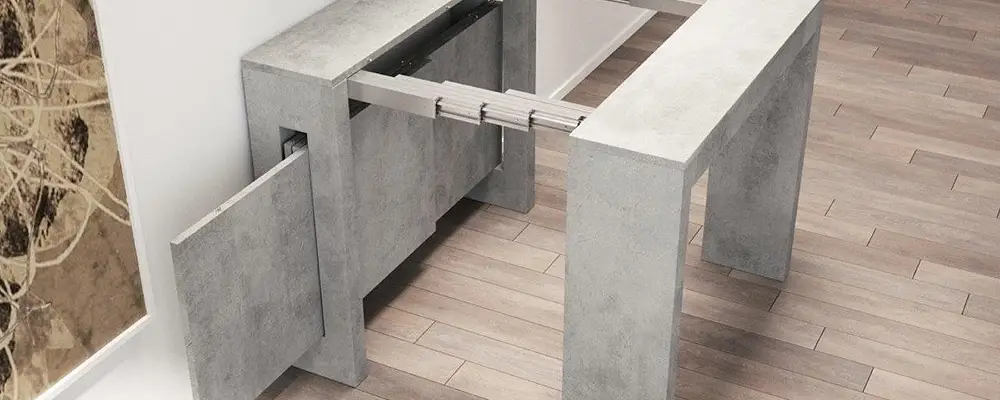
An expandable dining table is a broader category that encompasses any table with a built-in or self-storing expansion system. This includes butterfly leaves, accordion mechanisms, telescoping slides, and drop-leaf designs. Because the expansion hardware lives inside the table frame, you can resize the table quickly without hunting for a stored leaf or clearing extra space.
Note: "Extendable" is commonly used as an umbrella term for both categories — so you'll see it applied to tables with removable leaves and tables with built-in mechanisms alike. When shopping, it's worth confirming which type of system a specific table uses.
Types of Expansion Mechanisms
The biggest practical difference between extending and expandable tables comes down to the mechanism. Here are the four main types you'll encounter:
-
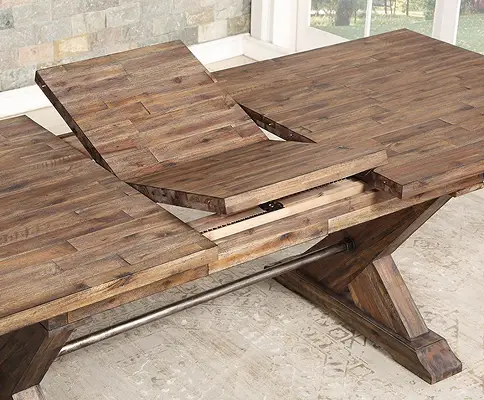
A butterfly leaf is stored folded inside the table and unfolds from the center when you pull the two halves apart. No separate storage is needed — the leaf pops up and lies flat in seconds. This is the most convenient option for everyday resizing and is commonly found in modern and transitional style tables.
-
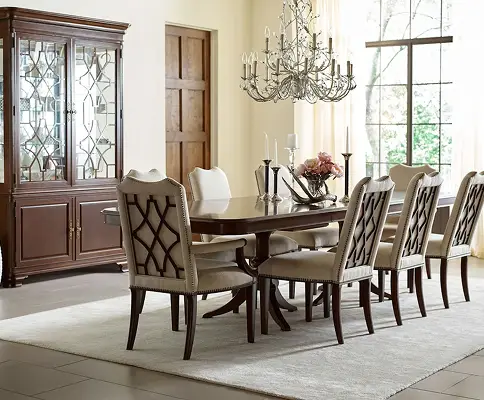
With removable leaves, you pull the table apart along a center track and slide one or more leaves into the gap manually. This is the classic "extending" setup and is typical in traditional dining sets. The tradeoff is storage: when leaves aren't in use, you need a place to put them — a closet shelf, under a bed, or a padded storage bag all work well. Store them flat and away from moisture to prevent warping.
-
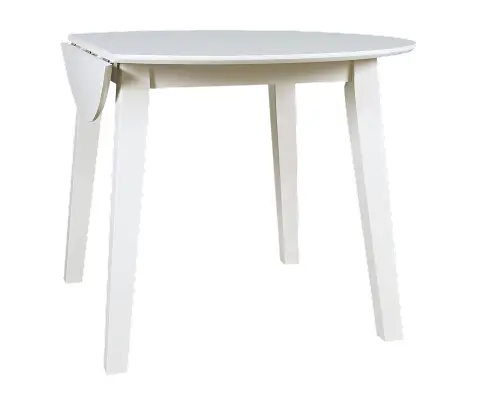
Accordion and drop-leaf tables use hinged panels that fold out from the sides of the table. When closed, they can be very compact — ideal for small apartments or rooms that need to serve multiple purposes. Opening the leaves adds significant surface area quickly, making them one of the best expandable dining table options for small spaces. They often appear in apartment-sized dining sets and multifunctional furniture collections.
-
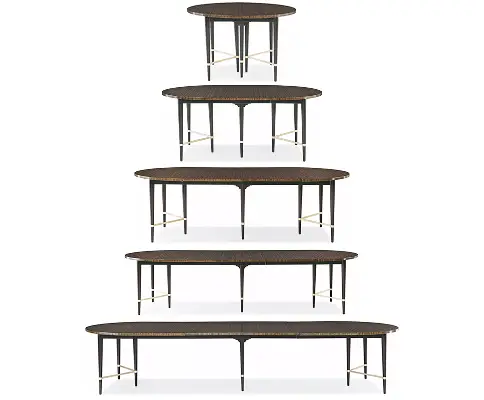
Telescoping tables expand by sliding the tabletop outward along a hidden track, revealing a built-in extension. The result is a seamless, clean look even when fully extended — no visible seams or hardware. This mechanism is more common in high-end and contemporary designs, and it's a popular feature in Scandinavian-inspired furniture for its low-profile aesthetic.
Storage Considerations
One of the most underrated factors when choosing between an extending vs. expandable dining room table is where the leaf lives when you're not using it.
-
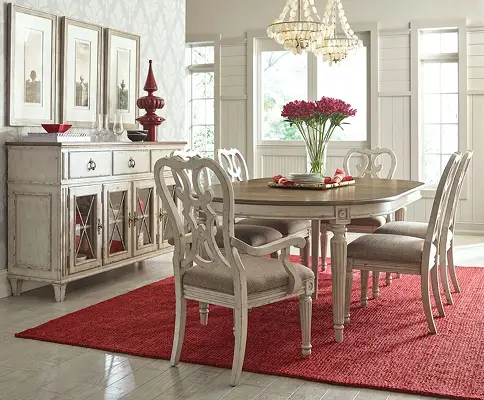
If you choose a traditional extending table, you'll need a dedicated spot to safely store extra leaves. Common solutions include a closet shelf, the space under a bed, or a padded storage bag made for table leaves. Keep leaves stored flat, at room temperature, and away from humidity — wood is susceptible to warping if conditions aren't stable, and a warped leaf won't sit flush when inserted.
Westvale Fossil & Parchment Extendable Round Dining Room Set is a beautiful round-to-oval extending set that transitions from an intimate everyday table to a full gathering table with its removable leaf — available storage optional but easy to plan for.
-
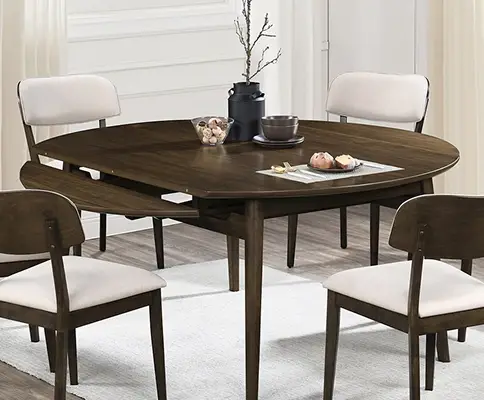
Self-storing tables — those with butterfly leaves, accordion mechanisms, or telescoping tracks — eliminate the storage problem entirely. The expansion hardware lives inside the table frame. For anyone in an apartment, condo, or a home with limited closet space, a self-storing expandable table is almost always the more practical choice.
A stunning walnut round table that stores its own leaves inside the frame — no extra closet space needed. The Rex Walnut 65" Round Dining Room Set with Self-Storing Leaves is ideal for anyone who loves the look of a large table but needs everyday flexibility.
Style and Aesthetic Differences
Beyond mechanics, extending and expandable tables have distinct aesthetic personalities. Knowing which camp your décor falls into makes the choice much easier.
Extending Tables — Classic & Traditional
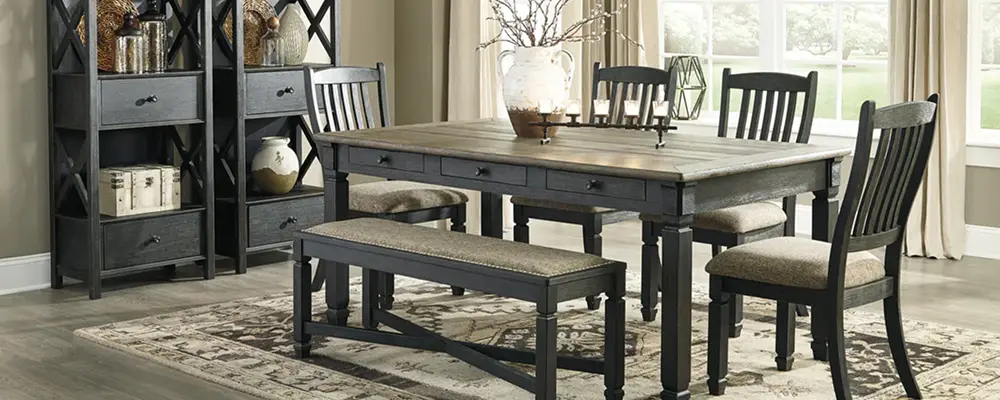
Extending tables (those with removable leaves) tend to lean into classic design: ornate turned or pedestal legs, rich wood tones like cherry, mahogany, or dark walnut, and formal silhouettes. They're the natural fit for traditional, farmhouse, or transitional dining rooms. When leaves are inserted, the tabletop usually achieves a seamless, symmetrical look that feels pulled-together for a formal dinner party.
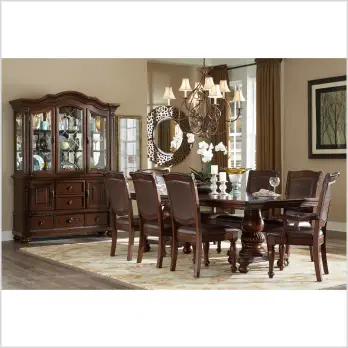
Rich tones and a classic silhouette — a flagship traditional extending set.
Shop Now →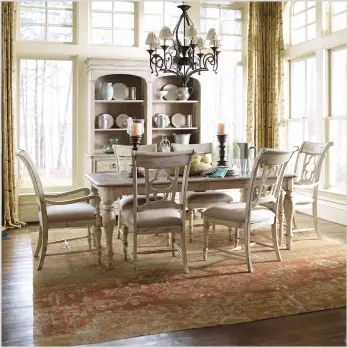
Casually elegant with a warm farmhouse-inspired finish — ideal for transitional spaces.
Shop Now →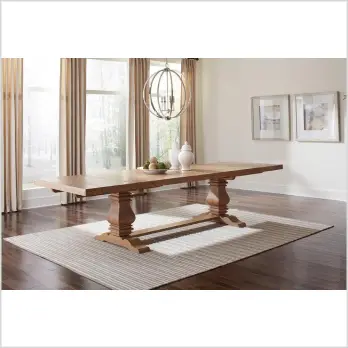
Warm natural wood with rustic European charm — an extendable design made for effortless, everyday dining.
Shop Now →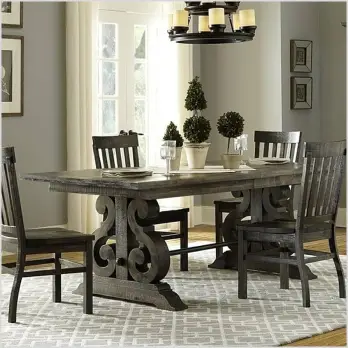
Rustic warmth meets versatile function with a rich peppercorn finish — perfect for transitional dining spaces.
Shop Now →Expandable Tables — Modern & Contemporary
Expandable tables with built-in mechanisms tend to showcase cleaner lines, minimalist bases, lighter wood tones, and an overall pared-back aesthetic. Scandinavian, mid-century modern, and industrial styles are all natural matches. In many cases, the expansion mechanism itself becomes a design statement — a center track or unfolding leaf is displayed rather than hidden, celebrating the table's functionality.
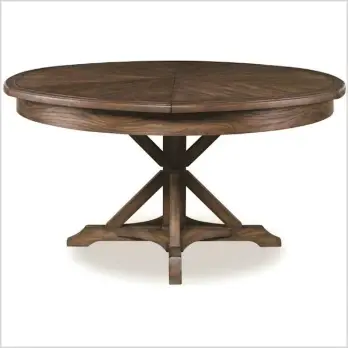
Clean-lined and confidently modern, this expandable table's self-contained design goes from intimate to entertaining-ready without any extra hassle — and looks great either way.
Shop Now →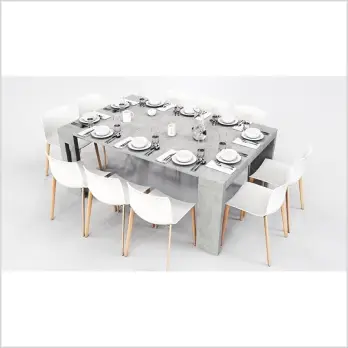
Sleek gray with a modern edge — an extendable design for easy everyday dining.
Shop Now →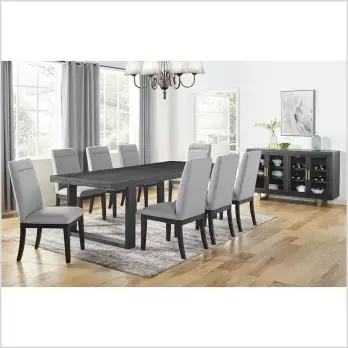
Bold charcoal tones with clean modern lines — an extendable design made for effortless, elevated dining.
Shop Now →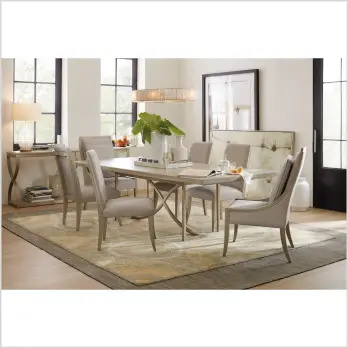
Soft gray-beige tones with subtle texture and brass accents — an extendable design that brings modern warmth to refined dining spaces.
Shop Now →Stability, Material Quality & Sizing
Whichever type you choose, build quality matters enormously — especially in a table that's designed to be taken apart and reassembled repeatedly.
What to Look for in Build Quality
Top surface material: Solid wood or solid wood veneers over hardwood cores hold up best over time. Avoid particle board tabletops in extendable tables — expansion and contraction from temperature changes is harder on low-density composites, and the track mechanism will see more wear.
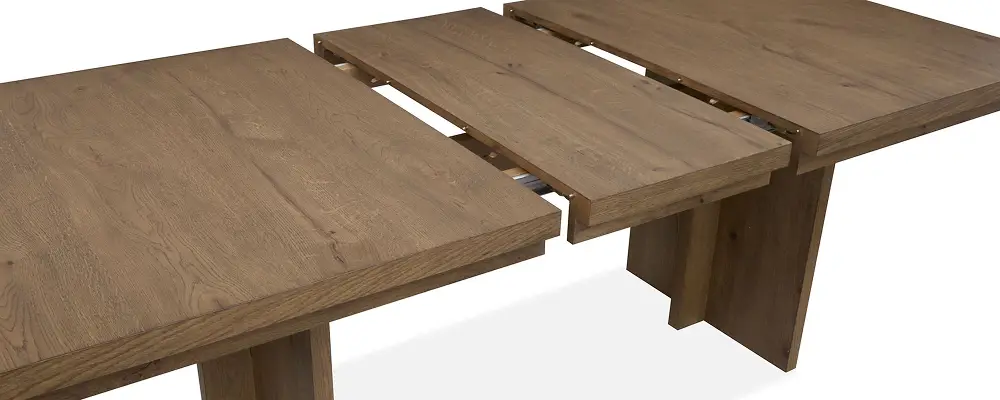
Extension track mechanism: Metal center tracks are significantly more durable than plastic ones. Look for a mechanism that glides smoothly with minimal wobble when extended. If you're shopping in person, extend the table fully and gently push on the corners — it shouldn't flex. When shopping online, check customer reviews specifically for notes on long-term stability and whether the table remained wobble-free after a year or more of use.
Leaf fit: On tables with removable leaves, the leaf should lock flush with the tabletop surface with no noticeable gap or height difference. A well-fitted leaf is a sign of quality joinery.
Room Clearance and Sizing Guidance
Before falling in love with a table at its fully extended size, measure your dining room with the extended dimensions in mind. The golden rule: allow at least 36 inches of clearance on all sides of the table — enough for chairs to pull out and for people to walk comfortably around the table.
| Seating Capacity | Recommended Room Size | Table Length (approx.) |
|---|---|---|
| 6 guests | 10' × 12' minimum | 72"–84" |
| 8 guests | 10' × 14' minimum | 84"–108" |
| 10+ guests | 12' × 16' or larger | 108"+ |
If your room is on the smaller side, consider a round-to-oval expanding table — they tend to use floor space more efficiently and feel less imposing in tighter rooms. The Madison County Vintage White Round to Oval Extendable Dining Room Set is a great example: compact and charming when closed, spacious when you need it.
Which Table Is Right for You?
Still weighing your options? Here's a simple framework to help you decide.
✔ Choose an Extending Table If…
- You prefer a traditional or formal aesthetic
- You only need extra seating occasionally — holidays, dinner parties
- You have storage space available for extra leaves
- You're furnishing a larger, dedicated dining room
- Leaf storage in a closet or under a bed isn't an inconvenience
✔ Choose an Expandable Table If…
- You live in a small apartment or home with limited storage
- You resize the table frequently — weekly or even daily
- You want a self-contained, low-maintenance solution
- You prefer a modern, Scandinavian, or minimalist look
- Convenience of a built-in mechanism matters to you
What About Seating Capacity?
The good news: both extending and expandable tables can comfortably accommodate 6–8 or more guests when fully expanded. What matters most is matching the table's fully extended length to your room size and remembering that 36-inch clearance rule on all sides. When evaluating any table, check the product dimensions for both the closed and extended measurements, and compare those against your room with furniture already in place.
If you're hosting larger gatherings regularly and need a table that seats 8 or more, look at options in dining sets that include matching chairs — buying a matched set ensures chairs tuck neatly under the apron and the proportions are designed to work together.
Top Picks by Use Case
- Large Gatherings: Magnolia Manor Antique White 108" Extendable Dining Room Set
- Small Spaces: Savion Espresso Oval Extendable Dining Room Set
- Modern Style: Collin Brown Rustic 74" Expandable Dining Table
- Traditional Style: Hadleigh Cherry Double Pedestal Extendable Dining Table
- Round / Oval: Savona Versaille and Elm Octavia Round Extendable Dining Room Set
Find Your Perfect Expandable Dining Room Table at Coleman Furniture
Whether you're after a classic extending table or a sleek self-storing expandable design, Coleman Furniture has hundreds of options to match your style, space, and budget — with free shipping on most orders.
Frequently Asked Questions
The main drawbacks of an extendable table — particularly one with separate, removable leaves — are storage and convenience. You need a dedicated place to keep the leaves when they're not in use, and leaves stored improperly (on their side, in a damp garage, or with fluctuating temperatures) can warp over time. Inserting and removing the leaf also takes more effort than a self-storing system, which can make it feel like a project if you need to resize the table frequently.
For most households, yes — especially if you have a smaller home or like to entertain regularly. Expandable tables with built-in mechanisms like butterfly or accordion leaves let you resize the table in under a minute without any extra storage footprint. They offer the best of both worlds: a compact, everyday table and a spacious dining surface when you need it. The key is investing in a quality mechanism — solid wood construction and a metal track will last far longer than budget options.
"Extendable" is typically used as an umbrella term for any dining table that can be made larger, including both removable-leaf and built-in-mechanism styles. "Expandable" more specifically refers to tables with self-storing or built-in expansion systems, such as butterfly leaves, telescoping tracks, or accordion panels. In practice, both terms are used interchangeably in retail — so it's always worth checking the product description to confirm whether leaves are separate or stored inside the table frame.
In 2026, warm wood tones — walnut, oak, and acacia — continue to dominate expandable dining table design, paired with mixed-material bases that combine metal and wood for an updated look. Round and oval extendable tables are surging in popularity for open-plan spaces, where they create a more conversational flow than rectangular designs. Built-in mechanisms are increasingly celebrated as design features rather than hidden necessities, with manufacturers showcasing the extension track as part of the table's overall aesthetic.