



How to Deodorize a Couch
Couch odors don't usually appear overnight. They build up gradually from everyday use—a spilled drink here, a pet nap there, a closed-up room on a humid week—until one day the smell is impossible to ignore. The good news is that most cases respond well to a few at-home steps, no upholstery cleaner or professional visit required. These steps work best in order. Identify the source first, since a musty smell and a pet odor call for two completely different treatments. Prep the surface next, so the treatment you choose can actually reach the fabric instead of sitting on top of dust and debris. Then apply the right fix for that specific odor type. Prevention matters just as much as the initial fix, which is why the final sections cover how to keep the smell from returning at all.Key Takeaways
- Identifying the odor source—pet, food, moisture, or general mustiness—determines which treatment actually works, not just which one you try first.
- Always check the fabric care tag (W, S, WS, or X) before applying any liquid treatment, since some fabrics can only be dry-cleaned or vacuumed.
- Regular vacuuming and quick spill response prevent most odor buildup before it starts, which is easier than treating it after the fact.
Identify the Odor Source
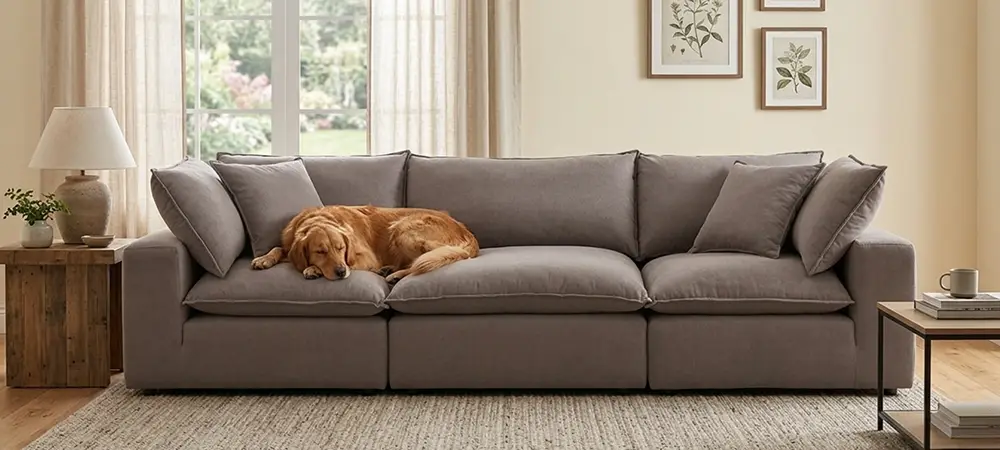
Before reaching for baking soda or a spray bottle, take a minute to figure out what's actually causing the smell. The most common culprits are pet accidents or dander, smoke residue, food and drink spills, mildew from trapped moisture, and general mustiness from a room that hasn't been aired out in a while.
This step matters more than it seems, because different odor sources respond to completely different treatments. A musty, closed-up smell responds well to fresh air and a baking soda treatment. Pet odor, on the other hand, needs an enzymatic cleaner that actually breaks down the organic compounds causing the smell, not a fragrance that just masks it temporarily.
Pay attention to when the smell gets worse, too. An odor that intensifies in humid weather or after rain usually points to trapped moisture or early mildew rather than a surface stain, which changes the approach you'll want to take in the sections below. Getting the source right is the real foundation of how to deodorize a couch effectively, since the wrong treatment can waste an afternoon without ever touching the actual cause.
1. Check the Upholstery Cleaning Code First
Before applying any liquid to your couch, find the fabric care tag. It's usually tucked under a cushion or on the underside of the frame, not printed anywhere on the visible upholstery itself. That tag carries one of four standard cleaning codes, and it determines which treatments in this guide are safe to use.
- W | Water-based cleaners are safe to use
- S | Solvent-based cleaners only—no water
- WS | Either water- or solvent-based cleaners work
- X | Vacuum only—no liquid of any kind
This single check prevents most at-home cleaning mistakes, including water stains on solvent-only fabrics or discoloration on more delicate materials. Skipping it is the fastest way to turn a smell problem into a stain problem. If you're not sure what fabric you're working with in the first place, Coleman's couch materials guide breaks down how common upholstery types hold up to cleaning and daily life.
2. Vacuum and Prep the Surface
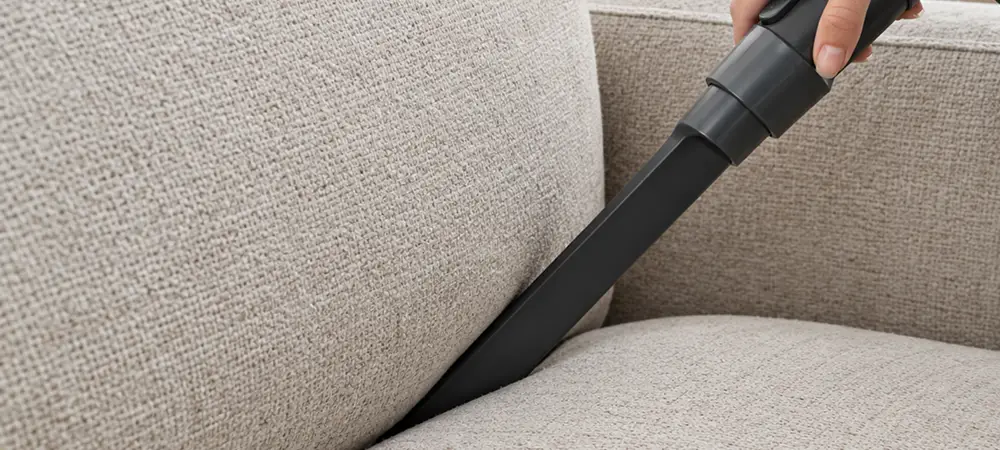
Any deodorizing treatment works better on a clean surface. Vacuum the seat cushions, the crevices between cushions, the seams, and the areas underneath before applying anything else. Much of what causes a couch to smell—crumbs, dust, pet hair, general debris—gets removed at this step alone, often reducing mild odors significantly before you even start treating them.
Use a vacuum attachment small enough to reach into seams and corners, since that's where debris collects the most and where it's easiest to miss with a standard upholstery brush. Pull the cushions off entirely if they're removable, and vacuum both sides along with the base of the frame underneath.
If pet hair is a recurring issue on top of the odor itself, it's worth tackling both at once. Coleman's guide on how to remove pet hair from a couch covers tools and techniques that pair well with the vacuuming step here.
3. Baking Soda Treatment for General Odors
Baking soda treatment is one of the simplest answers to how to deodorize a couch that just smells generally stale, musty, or closed-up. Sprinkle it evenly across the surface, gently work it into the fabric with a soft brush or your hand, and let it sit for 20–30 minutes for mild odors, or up to 1–2 hours for stronger ones. Vacuum thoroughly once the dwell time is up.
This method works because baking soda absorbs odor molecules rather than covering them with a fragrance, which is why it holds up so well against general mustiness, a closed-up-house smell, and light everyday odors. It's not strong enough on its own for pet-related smells, though—those need the enzymatic treatment covered further down.
Check the fabric code from Step 1 before you start, since some higher-pile fabrics like velvet need a lighter touch when you're working the powder in, and vacuuming should always be done with a low-suction attachment on delicate materials.
4. White Vinegar Solution for Bacteria and Odor
Mix equal parts white vinegar and water in a spray bottle. Lightly mist the solution onto the surface—not soaked, just misted—then wipe with a clean cloth and let the area air dry completely before using the couch again.
Vinegar works differently than baking soda: it neutralizes the odor-causing bacteria itself, rather than absorbing or masking the smell. The vinegar scent is strong at first but fades completely as the fabric dries, so there's no lingering odor once it's done its job.
Spot test this one specifically before applying it to a visible area. Vinegar is acidic, and it can affect certain dyes or delicate fabrics in ways that aren't obvious until it's too late to reverse.
5. Enzymatic Cleaners for Pet and Organic Odors
An enzymatic cleaner is a cleaning solution formulated with live enzymes that break down organic material—like the proteins in pet urine, vomit, or other biological stains—at the molecular level, instead of simply masking the smell on top.
This is where baking soda and vinegar reach their limit. Pet urine, vomit, and other organic-based odors don't fully respond to either one alone, since the smell comes from proteins that need to be broken down, not just neutralized or covered. For that reason, enzymatic cleaners are often the real answer to how to deodorize a couch that's been used by pets for years, not just a stronger version of the same steps. Blot any dampness first, apply the enzymatic cleaner to the affected area, and let it sit for the product's recommended dwell time—check the label, since this varies by formula.
Blot again afterward and let the area fully air dry. Enzymatic cleaners are worth keeping on hand in any pet-owning household, since they're the most reliable option specifically for this type of odor.
6. Always Spot Test First
Before you apply anything wet: test it on a hidden area first, like the back or underside of a cushion, and let it dry completely before judging the result.
The rule is simple: any liquid treatment—the vinegar solution, an enzymatic cleaner, or even plain water—should go on a hidden spot before it touches anything visible. Check for discoloration, a change in texture, or any residue left behind once the test area has fully dried.
This single step prevents the most common, and most regrettable, at-home cleaning mistakes. A test spot takes a couple of minutes; a bleached patch on the front cushion of your couch doesn't come back with a second try.
7. Prevent Odors From Coming Back
A quick weekly vacuum, prompt spill blotting, and periodic airing out with open windows handle most odor buildup before it ever becomes a problem worth treating. Blot spills as soon as they happen rather than rubbing them, since rubbing pushes liquid deeper into the fabric and cushion foam instead of lifting it out.
For households with pets or kids, a removable, washable slipcover is one of the simplest long-term fixes. It can go through a normal wash cycle on a regular schedule instead of requiring a full deodorizing treatment every time something happens on the cushions.
Material choice makes a real difference here too. A performance fabric or leather couch resists odor absorption more effectively than untreated fabric from the start, which cuts down on how often any of these steps are needed at all. Coleman's performance-fabric and slipcovered pieces are built with exactly this kind of everyday maintenance in mind, so knowing how to deodorize a couch becomes less of a recurring chore and more of an occasional touch-up.
-
Cali Natural Performance Fabric Modular Sofa
Coleman Furniture · Contemporary
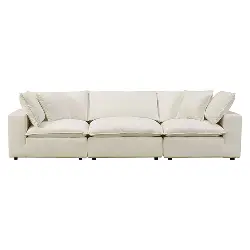
A 119.5"W x 40"D x 35"H modular sofa upholstered in stain- and odor-resistant performance fabric, with a 31" seat depth built for everyday lounging. The modular layout lets you rearrange or swap sections as your space and needs change.
View Cali Natural Modular Sofa → -

Habitat Bennett Moon Slipcover Performance Fabric Sectional
Four Hands · Contemporary
A 133"W x 67"D x 31.5"H slipcovered sectional finished in high-performance fabric with a removable cover—an easy option for pet- or kid-heavy households that want deodorizing to mean a wash cycle, not a spot-treatment.
View Habitat Bennett Moon Sectional →
8. When Deodorizing Isn't Enough
If odor keeps returning after trying these steps—especially on an older couch whose foam or fabric has absorbed years of spills and everyday use—the smell may be embedded deeper than any surface treatment can reach. That's a normal end-of-life sign for a couch, not a failure of the cleaning method, and it's worth recognizing rather than repeating the same steps indefinitely.
Leather is naturally lower-odor and easier to keep fresh than fabric, since it doesn't absorb spills, pet dander, or moisture the same way upholstery does. That makes it a genuine option for anyone who wants to reduce this kind of maintenance going forward, not just patch an existing problem.
-
Santorine Dark Brown Leather 85" Sofa
Ashley Furniture · Transitional
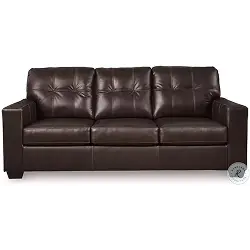
An 85"W x 38"D x 39"H sofa in matched leather and faux leather upholstery, with a 22" seat depth and ample cushions that don't absorb odor the way fabric upholstery does—a lower-maintenance material choice from the start.
View Santorine Leather Sofa →
Find a couch that's easier to keep fresh
Learning how to deodorize a couch is mostly about sequence: identify the source, prep the surface, then apply the treatment built for that specific smell—baking soda for mustiness, vinegar for bacteria, enzymatic cleaner for pets. Most odors respond well to these few simple steps, and ongoing prevention is a lot easier than repeating a deep treatment every few months.
Browse performance-fabric, slipcovered, and leather sofas built for real life, with free White Glove delivery and setup on qualifying items.
How to Deodorize a Couch FAQs
Vacuum thoroughly, sprinkle baking soda over the surface, let it sit, then vacuum again. If the smell persists, follow up with a light vinegar spray and let the area air dry.
Yes, for general and mild odors—it absorbs the smell rather than masking it. Pet-related odors typically need an enzymatic cleaner instead, since baking soda can't break down the organic proteins involved.
Check the upholstery cleaning code on the fabric care tag, usually found under a cushion or on the underside of the frame. A "W" or "WS" code means water-based cleaners are safe; an "S" or "X" code means you'll need a solvent-based cleaner or vacuum only.
A quick baking soda refresh every 4–6 weeks keeps most odors from building up in the first place. Treat spills or pet accidents as soon as they happen rather than waiting for a scheduled cleaning.