


How Long Should a Couch Last? A Lifespan Guide by Material, Price, and Use
A breakdown of couch lifespan by frame, foam, fabric, and household — so you can tell whether your couch (or the one you're eyeing) is built for the long haul. You sit down after a long day and something feels different. The cushions don't spring back the way they used to, there's a faint creak when you shift your weight, and the fabric on the arms looks tired even though you can't remember the last time anything spilled on it. If that sounds familiar, you're probably wondering how long should a couch last, and whether what you're feeling is normal wear or a sign it's time to start shopping. Most couches last 7 to 15 years, though the real number depends heavily on how the couch was built, what it's made of, and how hard your household uses it. This guide breaks lifespan down by price tier, materials, household factors, and warning signs, so you can judge your own couch—or one you're about to buy—against real benchmarks.Key Takeaways
- Most couches last 7 to 15 years, but frame quality and cushion density can push that range well past 20 years or under 5.
- Fabric or leather choice, household pets and kids, and daily use intensity affect lifespan as much as price does.
- Sagging cushions, a creaking frame, and lingering odors are the clearest signs to replace a couch rather than repair it.
How Long Does a Couch Actually Last?
On average, a couch lasts 7 to 15 years before the frame, cushions, or upholstery wear out enough to justify replacement. That range reflects the pattern across major furniture guides and manufacturer warranties, but "average" hides a wide spread — a budget couch built on a particleboard frame with low-density foam can wear out in 3 to 5 years, while a well-built, hardwood-frame piece with quality suspension can clear 20 years with the right care.
The same spread applies whether you're asking how long do sofas last or how long do couches last under more casual, daily use—the terms describe the same piece of furniture, and the lifespan math doesn't change. A sectional couch typically falls into that same 7-to-15-year window, though the average life of a sectional couch can run a bit shorter than a standard two-or three-seat sofa, simply because it has more seating segments absorbing daily wear.
The rest of this guide explains what drives that spread: price tier, materials, household factors, and the warning signs that tell you which end of the range your couch is headed toward.
Average Couch Lifespan by Price Tier and Material
Budget, Mid-Range, and High-End Estimates
Price is a rough proxy for lifespan, but it's really a stand-in for the frame wood, foam density, and upholstery quality underneath the sticker price. Here's how the estimates typically break down:
| Price Tier | Typical Lifespan | What You're Buying |
|---|---|---|
| Budget | 3-5 years | Particleboard or softwood frame, lower-density foam, basic fabric |
| Mid-Range | 7-12 years | Hardwood-blend frame, mid-density foam, performance fabric |
| Hard-End Hardwood | 12-20 years | Kiln-dried hardwood frame, high-density foam, reinforced joinery |
| Quality Leather | 10 to 25 years with care | Top-grain or full-grain leather over a hardwood frame |
The gap between a 4-year couch and a 20-year couch rarely comes down to sticker price alone—it comes down to what's inside the frame, cushions, and joinery. Coleman's guide to types of couches and sofas breaks down how different silhouettes and constructions affect these numbers further. Here's a sample across that range, from an entry-level frame to a leather piece built to go the distance:
-
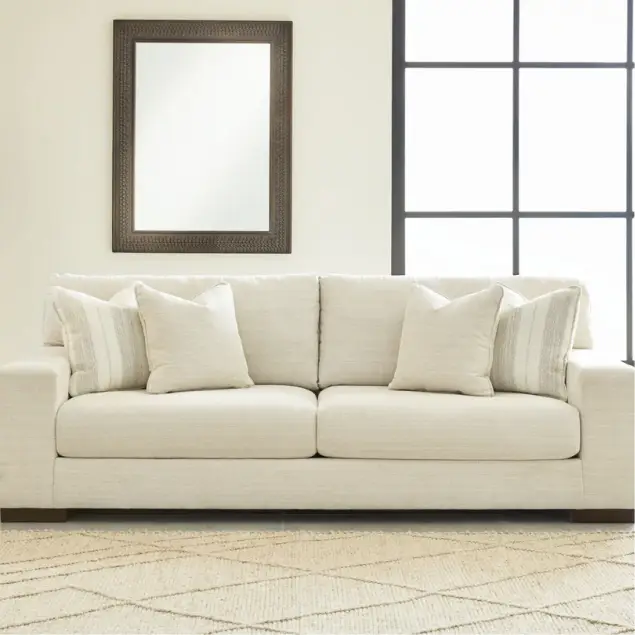
An Ashley Furniture fabric sofa in a warm birch tone — a solid entry point for a lightly used room.
$959 Shop Now → -

A step up in fabric durability and cushion density, in a versatile fog gray.
$1,075 Shop Now → -
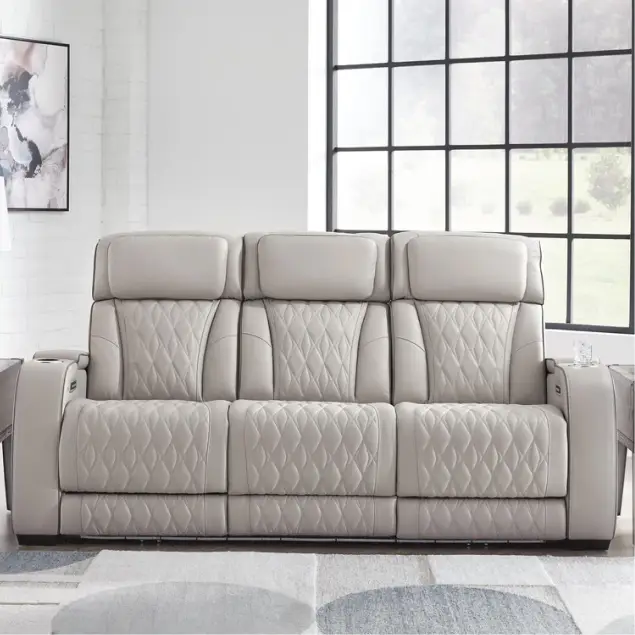
A hardwood-frame leather recliner built for the 10-to-25-year end of the range.
$2,149 Shop Now →
What You're Really Paying For
COST PER YEAR
A $600 couch that needs replacing every 4 years costs about $150 per year, not counting the hassle of hauling out the old one and breaking in a new one. A $2,000 couch that lasts 15 years costs roughly $133 per year — less per year despite a much higher upfront price.
That math holds because a higher price tag on a well-built couch usually buys denser foam, hardwood joinery, and better upholstery—not just a nicer look or a name brand. The frame and suspension underneath decide the outcome long before anyone notices the color or style stitched on top.
What Actually Determines How Long a Couch Lasts
Frame Construction
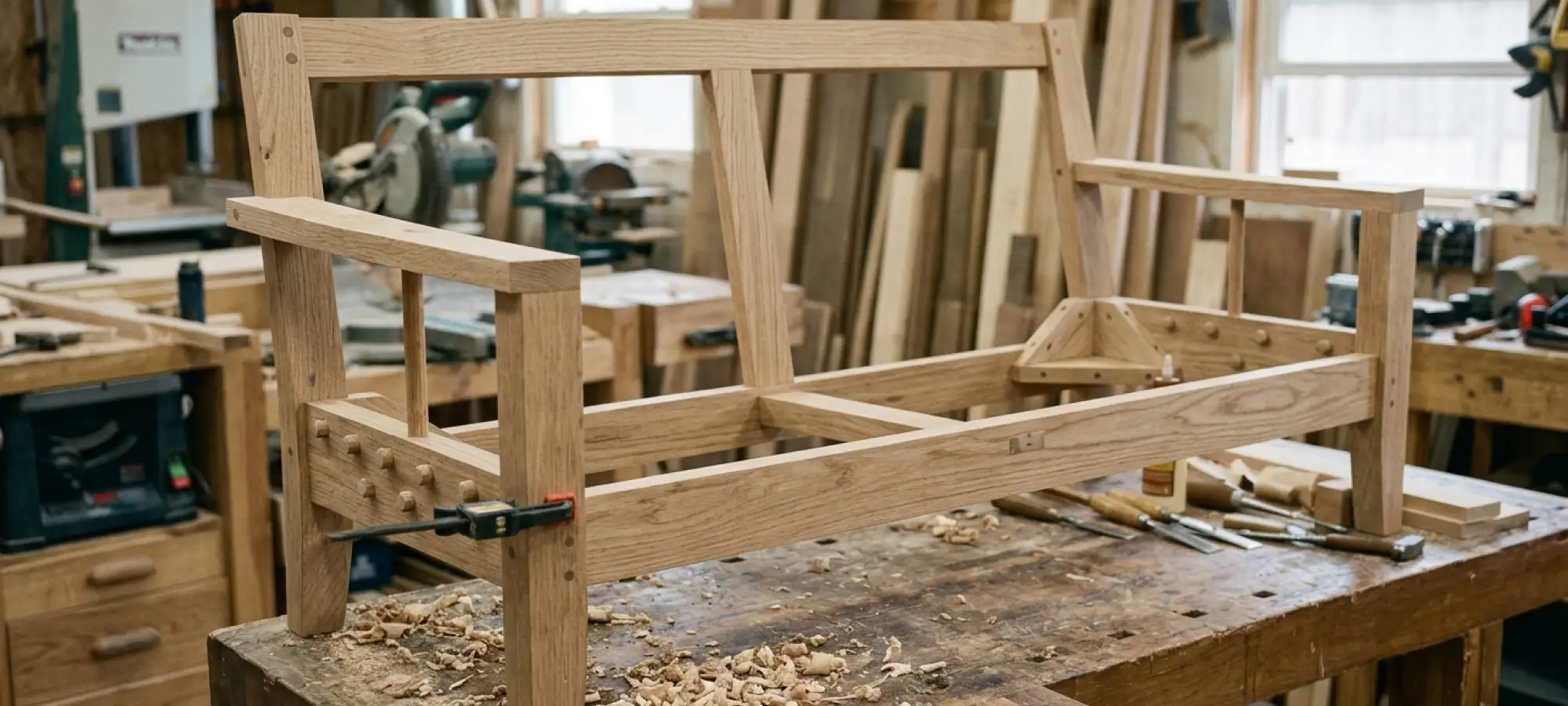
The frame is the single biggest factor in how long a couch lasts, more so than fabric, cushions, or even price. Kiln-dried hardwood frames—oak, maple, and ash are the most common—resist warping and hold joints tightly for decades, while particleboard or softwood frames tend to loosen, crack, or sag within a few years of regular use.
You don't need to see the frame in person to check for quality construction. Ask whether it uses reinforced corner blocks and dowel joints, or just staples and glue—corner blocks and dowels are the signal of a couch built to be sat on for years, not just displayed in a showroom.
Cushion Fill and Density
Cushion foam is measured in density, expressed as pounds per cubic foot (lb/ft³), and that number predicts how long the cushions hold their shape. Lower-density foam under 1.5 lb/ft³ tends to flatten out in 1 to 3 years of regular use, while high-density foam at 2.0 lb/ft³ or higher can hold its shape for 7 to 10 years or more.
Down-blend and polyester fiberfill cushions offer a softer, more casual feel, but they trade some durability for that comfort—expect to fluff them more often and notice loft loss sooner than with high-density foam. One advantage of well-built couches: the cushions can often be replaced on their own without touching the frame underneath, which extends the practical life of the whole piece by several more years.
Suspension System
Suspension is one of the least-discussed durability factors, and one of the easiest to check before you buy. Eight-way hand-tied springs are the most durable and most expensive option, sinuous (S-shaped) springs are the mid-range standard found in most retail couches, and webbing suspension is the least durable, typically reserved for budget pieces.
Before buying, ask what suspension system a couch uses, or look for it in the product spec sheet—it's a detail that rarely shows up in photos but has an outsized effect on how the seat feels five years in. Coleman's guide to couch materials covers frame, foam, and suspension side by side if you want the full breakdown before you shop.
Fabric and Upholstery Durability
Fabric vs Leather Lifespan
Fabric and leather age differently, and knowing the typical lifespan of each helps set realistic expectations. Performance fabric typically lasts 7 to 12 years, bonded leather lasts a shorter 3 to 7 years, top-grain leather lasts 10 to 20 years, and full-grain leather can last 20 years or more with regular conditioning.
If you're wondering how long do leather couches last compared to fabric, the honest answer is that it depends heavily on the leather grade. Leather resists pilling and tearing better than fabric over time, but it needs conditioning every 6 to 12 months to avoid cracking, while fabric requires less upkeep but wears down faster under heavy daily use.
Double Rub Counts and What They Mean
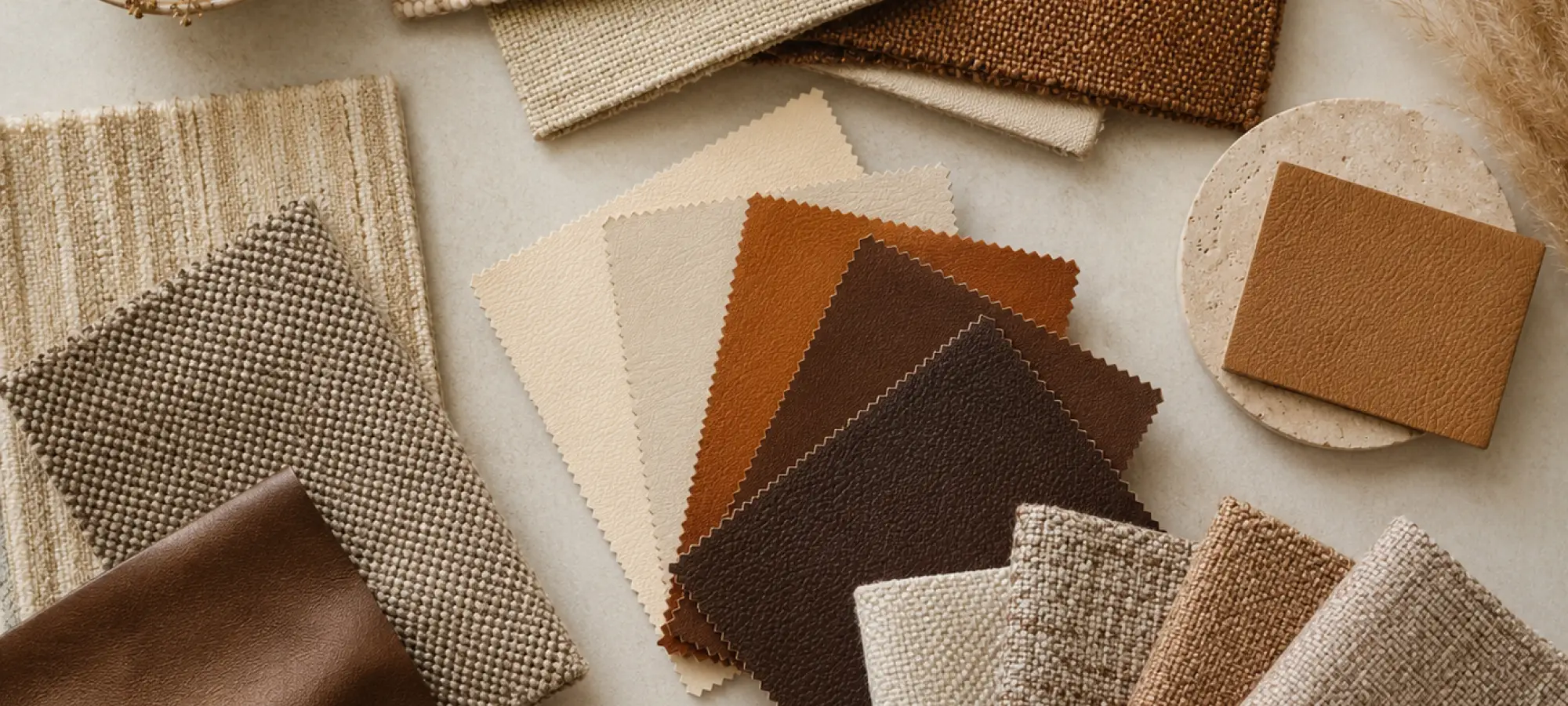
Double rub count is the industry test for fabric abrasion resistance, measuring how many times a mechanical arm can rub the fabric before it shows wear. For a normal household, look for 15,000+ double rubs; for households with pets, kids, or heavy daily use, aim for 30,000+.
Warranty length is a second useful proof point—a 5-year frame warranty signals more manufacturer confidence in the build than a 1-year warranty. Coleman's durable sofa guide goes deeper on which fabrics and constructions hold up best over time.
How Your Household Affects Couch Lifespan
Pets and Kids
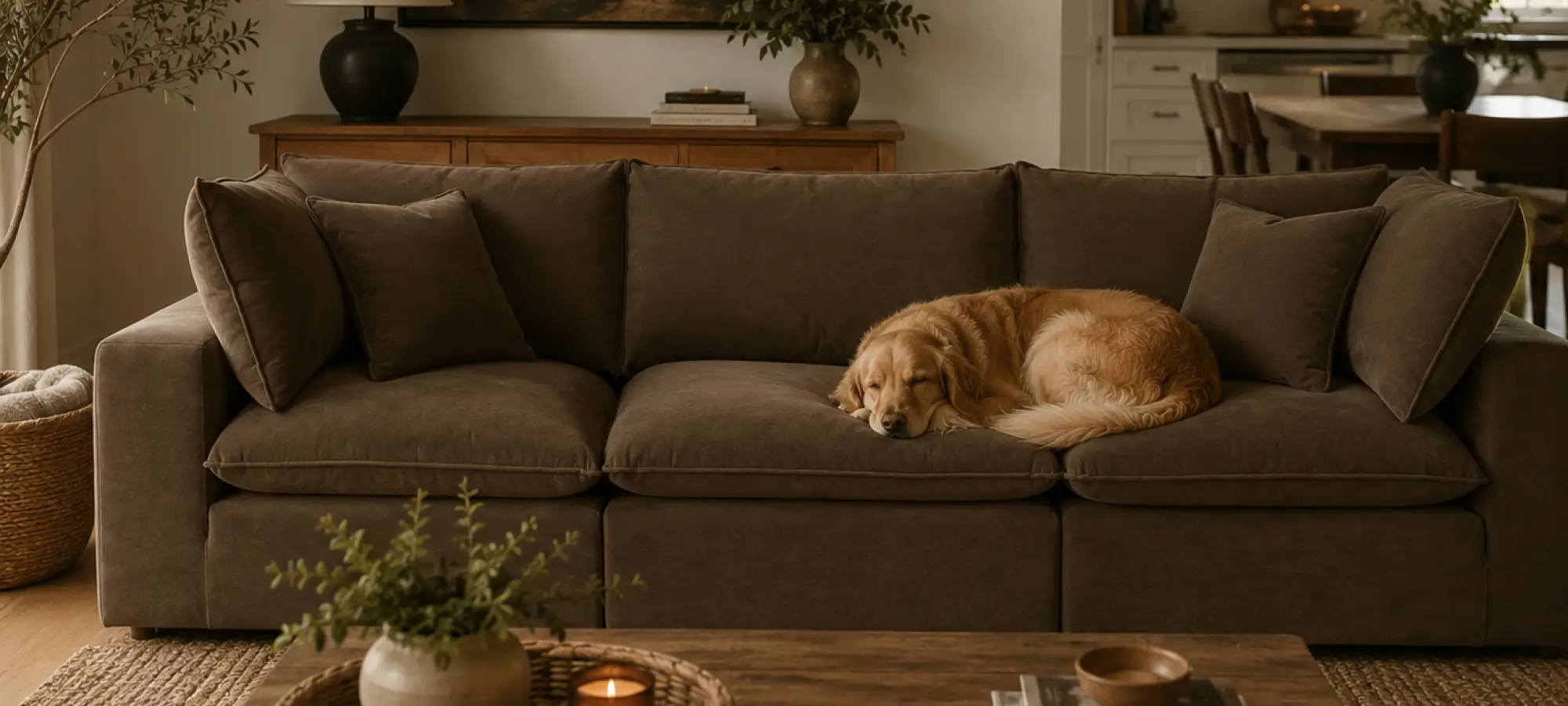
Claws, shedding, and the occasional accident can shorten fabric life by an estimated 20 to 40 percent in households with pets, and jumping or spills add similar stress in households with young kids. If you're specifically wondering how long does a couch last with dogs or other pets, plan on the lower end of whatever range your couch's materials suggest, and look for tightly woven, pet-friendly performance fabrics that resist claws and stains.
Coleman's guides to the best couches for dogs and best couch material for kids go deeper on which fabrics, colors, and constructions hold up best in busy households.
Daily Use Intensity
How often a couch gets used matters almost as much as who's using it. A lightly used, formal living room couch can realistically last 12 to 20 years, while a primary daily-use couch in a small apartment or studio—where it doubles as a bed, workspace, and everything in between—tends to wear out faster, often in just 5 to 8 years.
Signs Your Couch Needs to Be Replaced
Materials and household factors set the expected range, but these five signs to replace a couch tell you when your specific piece has reached the end of its useful life, regardless of its age.
- Permanent sagging or cushion collapse
The foam has broken down internally and lost its ability to spring back — no amount of fluffing will fix it. - Audible creaking or wobbling
A sign the frame joints have loosened or cracked, and continued use can accelerate structural failure. - Visible fabric damage beyond repair
Worn-through upholstery or deep tears usually mean the fabric has exceeded its double rub tolerance, and patching only delays the inevitable. - Lingering odors that cleaning won't remove
The odor has worked its way into foam or frame padding that professional cleaning can't reach. - Avoiding sitting on it altogether
Probably the clearest sign of all — if your family is already gravitating to a different chair, your couch is telling you something a spec sheet can't.
How to Make a Couch Last Longer
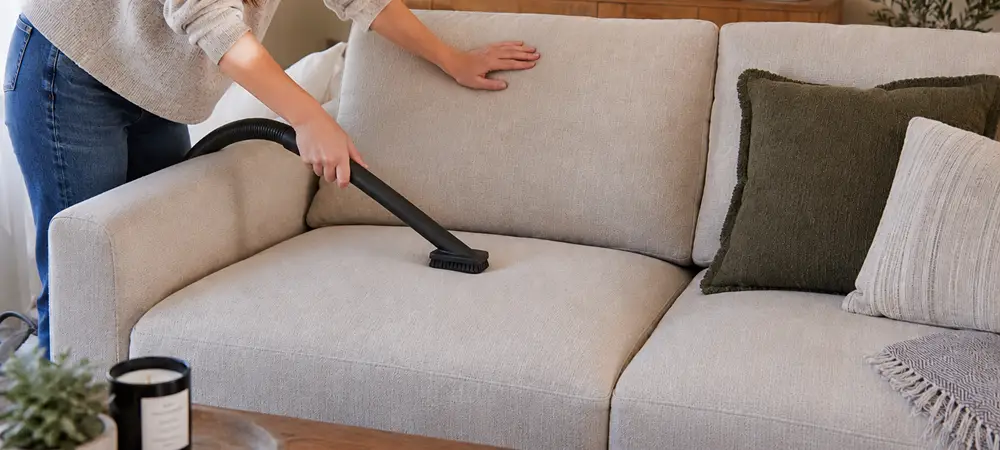
A few consistent habits can meaningfully extend a couch's lifespan on either end of its expected range. Rotate and flip reversible cushions every 2 to 3 months to distribute wear evenly, vacuum weekly to prevent fiber and foam breakdown from trapped dust and debris, and keep the couch out of direct sunlight, which fades fabric and dries out leather over time.
Trim pets' nails regularly to reduce snags and tears, and have fabric professionally cleaned every 1 to 2 years to remove buildup that regular vacuuming can't reach. For high-traffic households, washable slipcovers or arm covers add a layer of protection without changing how the couch looks day to day.
Coleman's how to clean a couch guide walks through the full process step by step, including which methods are safe for different fabric and leather types.
Shop Sofas and Couches Built to Last at Coleman Furniture
Once you know what to look for—a kiln-dried hardwood frame, high-density foam, and a fabric or leather with a strong double rub count — shopping for a couch that lasts becomes a lot less guesswork and a lot more checklist. Coleman Furniture's collection spans budget-friendly options through hardwood-frame and leather pieces built for 15-plus years of daily use, all with the same criteria you've just read about built into every listing.
Every sofa ships with free white glove delivery and setup, so your new piece arrives ready to sit on the same day it's delivered, not the same day you finish assembling it. If you're deciding between a sofa and a sectional for your space, Coleman's sofa vs couch guide can help you land on the right shape before you commit to a size and style.
-

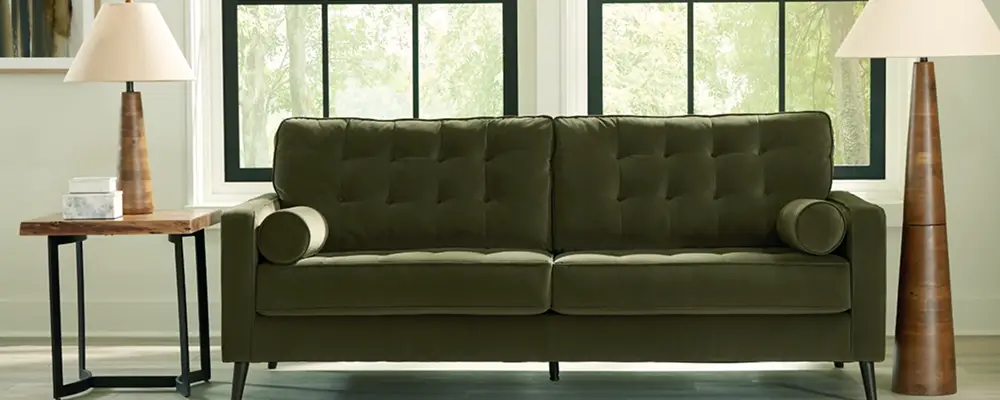
Performance velvet built to resist stains and wear — a strong pick for pet and kid households.
$1,620 Shop Now → -

A traditional silhouette on a solid wood frame, built for the long end of the lifespan range.
$1,349 Shop Now → -

Quality construction at a value price point, in a versatile stone neutral.
$949 Shop Now →
Lifespan isn't a luck question—it's a construction and care question. A couch's frame, foam density, suspension, and upholstery determine most of how long should a couch last in your home, and daily habits like rotating cushions and keeping it out of direct sunlight determine the rest. Whether you're evaluating the couch you already own or comparing options before you buy, the same benchmarks apply: look for hardwood joinery, high-density foam, and a double rub count that matches your household.
Ready to Find a Couch Built to Last?
Browse Coleman Furniture's full selection of sofas and couches, built with the frame, foam, and fabric standards covered in this guide — plus free white glove delivery.
Frequently Asked Questions
Most couches last 7 to 15 years on average, though budget pieces can wear out in 3 to 5 years and high-end hardwood-frame or leather couches can last 20 years or more with proper care.
A couch typically lands on the lower end of its expected range in homes with dogs, since claws, shedding, and accidents can shorten fabric life by an estimated 20 to 40 percent. Pet-friendly performance fabrics with double rub counts above 30,000 hold up best.
Often yes, when you compare cost per year rather than sticker price. A $2,000 couch that lasts 15 years costs roughly $133 per year, while a $600 couch replaced every 4 years costs about $150 per year—plus the hassle of replacing it more often.
Yes. A well-built couch with a kiln-dried hardwood frame, high-density foam, eight-way hand-tied springs, and full-grain leather or a high double-rub-count fabric can realistically last 20 years or more with routine care, like rotating cushions and professional cleaning every 1 to 2 years.
If the frame and suspension are still solid, replacing worn cushions is often a smart way to extend a couch's life by several more years at a fraction of the cost of full replacement. If the frame creaks or wobbles, though, the cushions aren't the real problem.