

How to Design a Living Room With Large Furniture: Layout & Styling Tips
Key Takeaways
- Large furniture works best when scale, layout, and visual weight are intentionally balanced rather than left to chance.
- Smart zoning, proper rug sizing, and layered lighting help oversized pieces feel grounded instead of overwhelming.
- Choosing fewer, multi-functional pieces creates a polished room that feels open, livable, and styled with purpose.
Why Designing Around Large Furniture Matters
Oversized sofas, sectionals, and statement pieces have the power to anchor a room beautifully—or completely overwhelm it. The difference almost always comes down to intention. When large furniture is placed without a plan, the results are predictable: cramped walkways, mismatched proportions, and a room that feels either cluttered with too many pieces fighting for attention, or strangely sparse because the scale just doesn't add up.
A strategic approach changes all of that. When you design with scale, layout, and visual weight working together, large furniture becomes an asset—enhancing comfort, defining the room's function, and creating a space that feels both impressive and livable. Whether you're furnishing a great room, an open-concept layout, or a generously proportioned living space, the same design principles apply.
Coleman Furniture offers a wide range of living room furniture: scaled-for-comfort sofas, sectionals, and statement pieces designed to anchor both formal and casual living spaces—with detailed dimensions and room scene photography to help you plan before you purchase.
Mastering Scale and Proportion With Large Pieces
Scaling Furniture to Your Room and to Each Other
Before you shop, measure. Note your room's full dimensions—length, width, and ceiling height—and use those numbers as your baseline for every piece you consider. Large furniture rarely fails because of its size alone; it fails because it wasn't scaled to the room or to the other pieces around it.
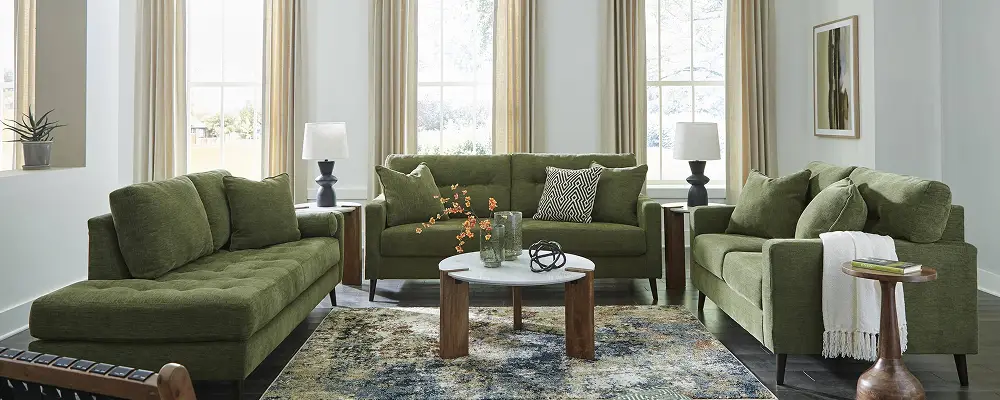
Once you've identified your anchor piece—typically a sofa or sectional—build outward from there. Pair an oversized sofa with a coffee table that has visual weight to match: something wide, low, and substantial rather than a small glass square that floats beneath it. Side chairs, consoles, and accent tables should feel like they belong in the same conversation. Avoid the common mistake of mixing one dominant large piece with several small ones; this fragmented approach makes even beautiful furniture feel disconnected.
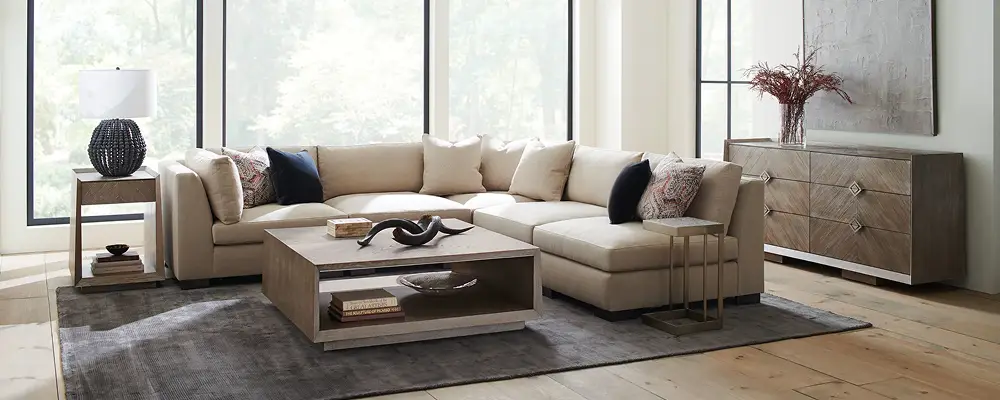
Use a single statement piece as the anchor and treat it as a fixed point around which everything else is sized and positioned. When every piece is in conversation with the others, the room reads as designed rather than assembled.
Managing Visual Weight to Keep Rooms Feeling Open
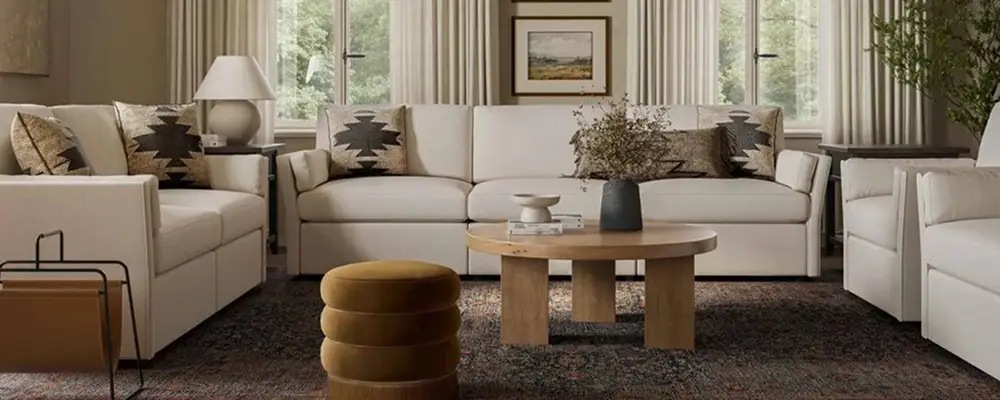
Visual weight is the perceived heaviness of a piece based on its silhouette, material, and color—and in a room with large furniture, managing it is just as important as managing physical size. A wide, low-profile sofa upholstered in deep charcoal reads very differently than the same sofa in warm oatmeal linen, even if the dimensions are identical.
Choose large upholstered pieces in lighter tones—warm whites, soft grays, sandy neutrals—to prevent the room from feeling visually heavy. Pair them with materials that offer contrast: a glass-topped coffee table, a metal-frame accent chair, or an open-frame wood console. These lighter-material pieces let the eye travel through the room rather than stopping at each heavy form.
Exposed legs are one of the most effective tools for maintaining a sense of openness—a sofa on tapered legs shows a strip of floor beneath it, which reads as breathing room.
Balance bulkier silhouettes with a curved accent chair or a slim-profile side table to soften the overall composition. For more on choosing a piece built to last through years of daily use, see Coleman's guide to finding a durable sofa.
Planning Layout and Traffic Flow
Defining Zones and Protecting Walkways
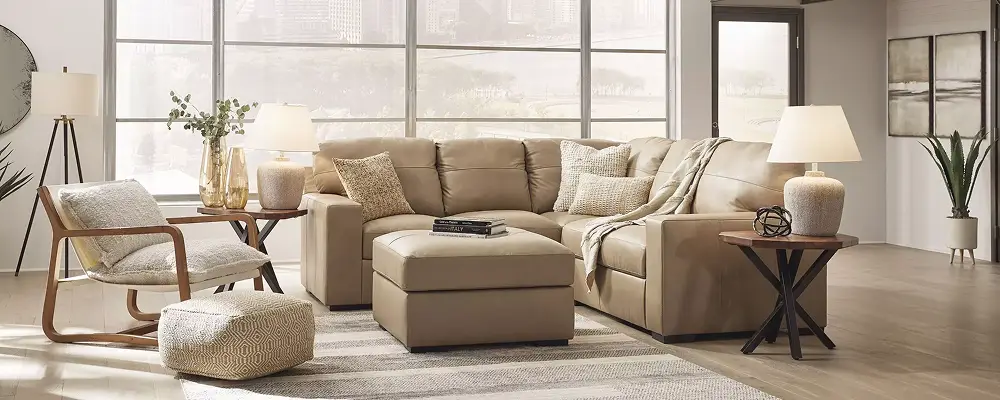
Layout is where good intentions most often break down. The most important number to know: maintain 30 to 36 inches of clear pathway around major seating areas and through any high-traffic routes in the room. This applies whether you're navigating around a single large sofa or an L-shaped sectional that anchors a great room.
In larger spaces, resist the instinct to push furniture against the walls. Floating a seating group toward the center of the room—even by just a few feet—creates a more intimate, defined conversation area and makes the overall space feel purposefully arranged rather than empty at the edges. Use a back-of-sofa console, an open bookcase, or a low screen to signal the boundary of a zone without closing it off.
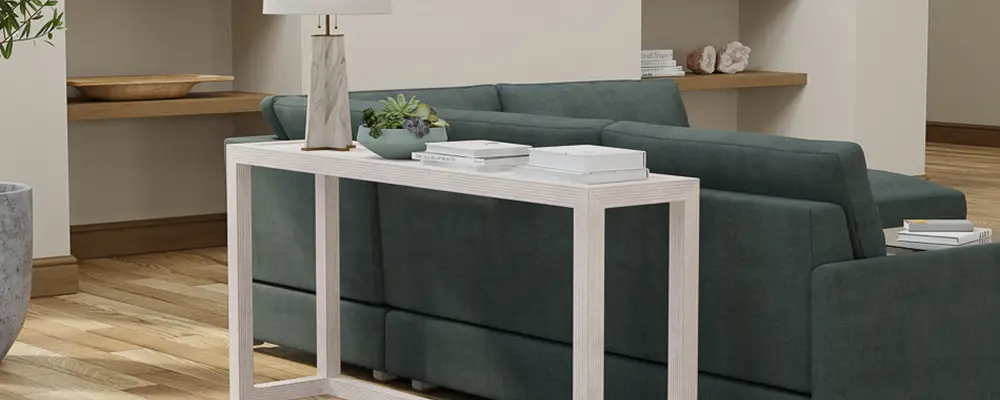
Group all primary seating pieces around a single focal point—a fireplace, a media wall, or a large window—and aim for a configuration where faces across the seating arrangement are within 8 feet of each other. Beyond that distance, conversation stops feeling natural.
Sizing and Placing Rugs to Anchor the Layout
A rug that's too small is one of the most common design missteps in large living rooms—and it's especially noticeable under oversized furniture. The rule of thumb: choose a rug large enough to fit at least the front legs of every major seating piece. In larger rooms with sectionals or multiple seating zones, a 9×12 or larger rug is usually the right starting point.
Quick Rule: Leave 12 to 18 inches of bare floor between the rug's edge and the room's walls. This lets the rug read as a defined design element rather than wall-to-wall flooring—and gives large furniture a visual stage to stand on.
In open-plan or multipurpose spaces, layering multiple rugs—one per zone—is an effective way to define separate areas while keeping large furniture properly anchored. Avoid the temptation to go smaller to "leave more floor showing." An undersized rug makes even well-scaled furniture look like it's floating without purpose.
Designing Atmosphere With Light, Color, and Height
Layering Lighting and Choosing a Cohesive Palette
Lighting is one of the most underutilized tools in rooms with large furniture. A single overhead fixture tends to flatten the space and cast unflattering shadows on bulky forms. Instead, layer three types of light: ambient (overhead or recessed), task (reading lamps, sconces), and accent (LED strips, picture lights, candles). This layered approach softens the visual impact of large pieces and gives the room dimension and warmth.
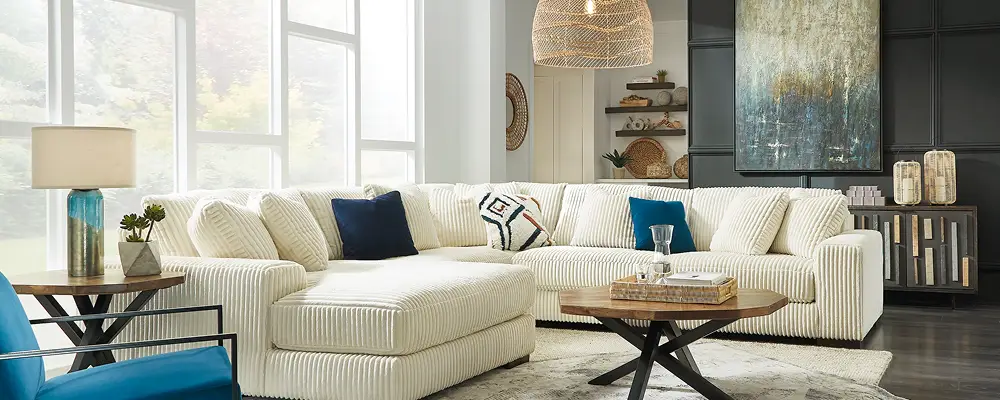
Position floor lamps alongside oversized sofas to add height and fill vertical volume near seating. Pendant lights over a coffee table or console can help define the central zone without demanding floor space.
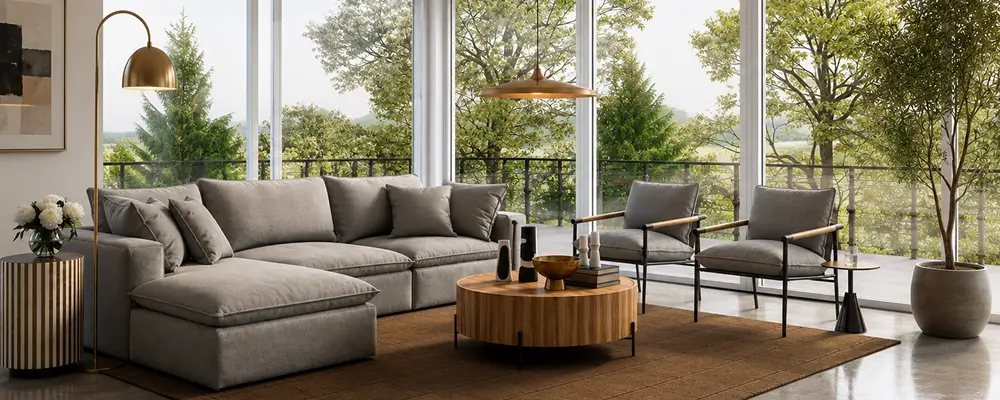
For color, lean into a neutral or tonal palette as the foundation. Soft greiges, warm whites, and earthy tones give large pieces room to breathe without competing. Introduce two or three accent colors through pillows, throws, and art—enough for visual interest without visual noise. If your living room is particularly large and feels cavernous, warmer paint tones on the walls will draw it in and make it feel more intimate.
Using Vertical Space to Balance Large Furniture
Wide, low furniture groupings need vertical counterpoints to feel balanced. A large sectional on its own can leave a room feeling top-heavy at the floor, especially if the walls above are bare. Anchoring wall space above sofas and consoles with oversized art—pieces that span at least two-thirds the width of the furniture below—corrects this immediately.
Install curtains as high as possible—close to the ceiling line—and let them drop to the floor. Even in rooms with standard 8-foot ceilings, this simple move adds perceived height and makes large furniture look grounded rather than overwhelming. Tall bookcases, oversized mirrors, and statement pendants all serve the same function: drawing the eye upward and creating a sense of vertical proportion that balances the weight below.
When arranging a gallery wall above large furniture, scale your grouping to match. A small cluster of frames above a sectional reads as an afterthought. Go larger, go bolder, and group with intention.
Choosing Pieces That Earn Their Footprint
Prioritizing Dual-Purpose and Statement Pieces
When working with large furniture, fewer is almost always better. Investing in two or three high-impact, well-made pieces creates a more cohesive, breathable room than filling the same space with six smaller ones. This is where multi-functional furniture becomes genuinely valuable—not as a trend, but as a practical solution for rooms where every square foot matters.
Storage ottomans that double as coffee tables, sleeper sectionals that handle overnight guests, lift-top coffee tables with interior storage, and media consoles with built-in organization all earn their footprint by doing more than one job. Look for modular sectionals that can be reconfigured as your needs change—families with young children have different layout needs than couples who entertain frequently.
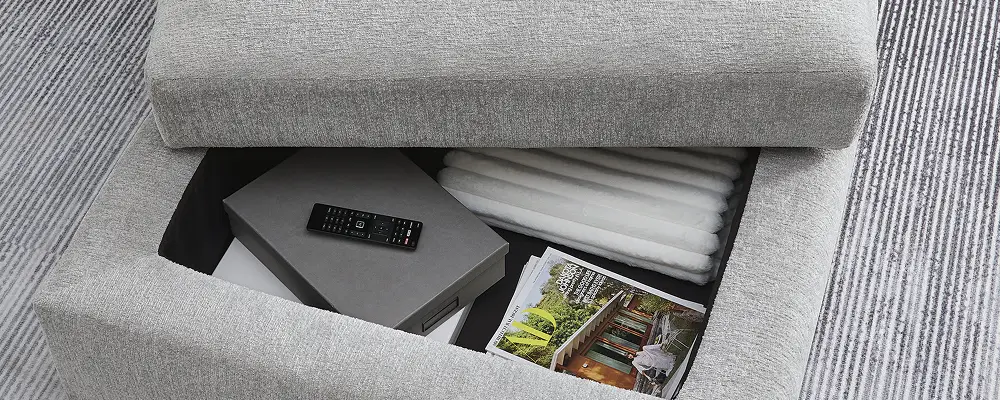
Select side tables and consoles that can flex into secondary functions—as a workspace, a small bar, or a display surface. For guidance on getting the most value out of seating investments, see Coleman's picks for affordable couches that don't sacrifice quality.
Editing Accessories for a Polished, Intentional Look
Large furniture demands a light touch with accessories. Many small decorative items scattered across surfaces compete with oversized pieces for visual attention—the result reads as clutter, not character. Instead, choose fewer, larger accessories: a wide ceramic vessel, a single oversized tray, a substantial stack of books. Scale your accents to match the scale of the furniture they sit near.
For coffee table and console styling, use the rule of three: group items in odd numbers, varying height and texture within the grouping. Keep surfaces 60 to 70 percent clear to give large pieces visual breathing room. When the room starts to feel crowded, that's the signal to edit, not add.
Refresh your space seasonally with pillows, throws, and stems rather than introducing new décor. A warm rust pillow in fall, linen in summer—these small swaps keep a large living room feeling current without adding clutter. For more on achieving a polished, streamlined look, see Coleman's guide to creating a minimalist living room.
How Coleman Furniture Helps You Design With Large Pieces
Shopping for large furniture carries more uncertainty than almost any other home purchase—the piece is substantial, the investment is real, and the margin for error is small. Coleman Furniture makes that process easier in several meaningful ways.
See it in your space before you order. Coleman's View in Room AR tool lets you place any piece in your actual living room using your phone—no app required. It's the most effective way to verify scale and proportion before committing to a large purchase.
Every product listing includes detailed dimensions, material specifications, and room scene photography specifically designed to help you plan with confidence. Style filters help you match large pieces across collections for a cohesive, designer-built look. And when your selections arrive, white glove delivery and assembly options mean the heaviest pieces are placed, assembled, and ready to enjoy—without you lifting a finger.
Free shipping and flexible financing options make outfitting an entire large living room more accessible, whether you're furnishing all at once or building toward a complete look over time.
Planning Your Large Furniture Living Room
Evaluating Your Space and Lifestyle Needs
Start with a full room map. Note doorways, windows, architectural features like built-ins or fireplaces, and any fixed elements that will influence furniture placement. A sectional that looks perfect in isolation might block natural light or obstruct a key traffic route—details that are easy to catch on paper before they become problems in your home.
Identify how you actually use the space. Entertaining a crowd, family lounging, or formal hosting each call for a different approach to layout, scale, and multi-functionality. Decide on your anchor piece before selecting anything else—that single decision shapes every other choice in the room.
Before finalizing furniture selections, confirm that your rug size, lighting plan, and wall décor proportions all support the layout. Coleman's room planning resources and detailed product specs can help you work through these decisions before anything ships.
Shop Living Room Furniture
Browse Coleman's full collection of sofas, sectionals, accent chairs, and tables built to scale beautifully in larger living rooms—with free shipping and white glove delivery available on thousands of pieces.
For large living rooms, sofas in the 90- to 108-inch range typically provide the best proportional fit. Sectionals with an L-shape or U-shape configuration work especially well in open-concept spaces, anchoring the seating area without looking undersized. Always measure your room and maintain at least 30 inches of walkway clearance around the piece.
Float your seating group toward the center of the room rather than pushing pieces against the walls. Define zones using rugs, consoles, and lighting. Group primary seating within 8 feet of each other to maintain conversation comfort, and orient the arrangement around a focal point like a fireplace or media wall.
A 9×12 rug is the minimum starting point for most large sectionals. The rug should be large enough that at least the front legs of all seating pieces rest on it. Leave 12 to 18 inches of bare floor between the rug edge and the walls for a balanced, intentional look.
Choose pieces in lighter upholstery tones, opt for furniture with exposed legs, and pair bulky items with lighter-material accents like glass or metal. Keep accessories minimal—60 to 70 percent of surfaces should remain clear. Use layered lighting and vertical elements like tall art or curtains to draw the eye upward.
It depends on how you use the room. A single large sectional works well for family lounging and movie nights, while separate pieces—a sofa plus two accent chairs—offer more flexibility for entertaining and can be rearranged for different occasions. Consider a modular sectional for the best of both worlds.
Layer three types of lighting: ambient (overhead or recessed), task (reading lamps, sconces near seating), and accent (LED strips, picture lights). Position floor lamps next to large sofas to add height. Pendant lights over coffee tables help define zones without taking floor space.
Choose a coffee table that's approximately two-thirds the length of your sofa and sits at or slightly below seat height (16 to 18 inches). For sectionals, a larger rectangular or square table provides better proportional balance than a small round one. Look for pieces with visual weight—solid wood, stone, or thick surfaces—that can hold their own against oversized seating.