

Unique Accent Chairs: How to Find a Statement Piece That Fits Your Space
A unique accent chair earns that description through a deliberate design choice—a bold silhouette, an unexpected material, or a saturated color chosen on purpose—not through an odd shape picked at random. That distinction matters because a chair can serve two very different jobs in a room: a bold visual statement, or an everyday-comfortable seat. The best unique accent chairs for living room spaces are chosen with that trade-off in mind, rather than by looks alone. This guide walks through the styles, materials, proportions, and placement decisions that separate a genuinely well-chosen statement chair from one that just looks out of place—and every section below points to a specific in-stock option that fits the idea being discussed.Key Takeaways
- A unique accent chair should complement your room's existing style, not fight against everything else in it.
- Material and silhouette carry more visual weight than color alone, so start there before choosing a hue.
- The most striking chair in a showroom isn't always the most comfortable one for daily use, and that trade-off is worth deciding on purpose.
What Makes an Accent Chair "Unique"?
A unique accent chair stands apart through silhouette, material, or color rather than trying to blend into the room around it. It's meant to function as a design moment—the piece your eye catches first when you walk in—not another neutral seat that disappears into the background.
That's the key difference from a matching armchair. A matching armchair is chosen to coordinate with your sofa and the rest of your seating, repeating a similar fabric family or a closely related tone. An accent chair does the opposite job: it's picked to contrast with what's already in the room, whether that's a curved silhouette next to a boxy sofa or a jewel-toned velvet against a neutral sectional.
Not every chair that looks different earns the word unique, though. A well-chosen statement chair works with your room's existing style even while contrasting with it—it just does so on purpose. The sections below cover exactly what separates a genuinely well-chosen unique accent chair from one that simply looks out of place, starting with Coleman's full accent chairs collection as a place to start browsing.
1. Design Styles and Categories
Most statement-style accent chairs fall into one of four major style lanes. Mid-century modern designs favor clean lines and tapered wood legs. Bohemian pieces lean on natural materials and woven texture—rattan, cane, or jute. Art deco chairs bring geometric shapes and a glamorous finish, often paired with brass or lacquer. Industrial styles favor metal frames and raw, unfinished materials over polish.
Sculptural, genuinely one-of-a-kind silhouettes form their own category entirely, separate from any single style era. Barrel-back and cocoon-style chairs wrap around the body in a rounded, oversized shape that reads as sculpture as much as seating—a shape you won't mistake for a standard armchair from across the room.
-
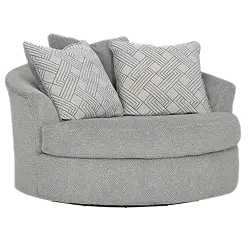
The Casselbury Cement Oversized Swivel Accent Chair is a direct example: a 56"W x 55"D x 35"H cocoon-style swivel chair in a neutral cement finish that reads as a genuine design statement in almost any room, without leaning on a bold color to do it.
Mixing one boldly-styled chair into an otherwise neutral room usually reads better than trying to match a chair's style exactly to everything else around it. A single sculptural or era-specific chair becomes the room's focal point precisely because it doesn't try to blend in—pairing two or three statement pieces in the same space tends to compete rather than complement. For a broader look at where accent chairs fit among other seating types, Coleman's guide to 29 types of chairs breaks down each style in more depth.
2. Material and Upholstery Choices
Material often communicates style faster than shape does, and it's usually the first decision to make before choosing a color. Velvet brings a rich, light-catching finish that pairs naturally with deep jewel tones. Leather wears in over time and reads as classic or industrial depending on the finish. Rattan and cane bring natural texture and a lighter visual weight than fully upholstered pieces. Bouclé adds a soft, nubby texture that's become one of the most popular finishes in contemporary seating.
Each material signals a different design lane before you even factor in color. Bouclé leans soft-modern, rattan leans bohemian or coastal, and leather leans classic or industrial—which makes material a faster shortcut to a specific look than silhouette alone. Performance fabrics now exist across nearly every one of these categories too, so choosing something unique doesn't have to mean choosing something high-maintenance.
Coleman carries a genuinely wide material range across accent chairs, so each category below points to a real, shoppable example rather than an abstract description.
-
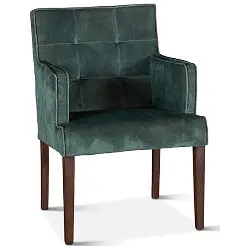
The Avery Dark Green Velvet Arm Chair is a jewel-tone velvet pick at 23.5"W x 25.5"D x 33.5"H, sized well for smaller living rooms that still want a genuine style statement.
-
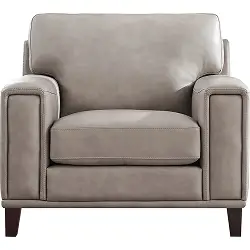
The Halwyn Stone Leather Upholstered Accent Chair brings a traditional-leaning leather build at 40.5"W x 38"D x 35"H.
-
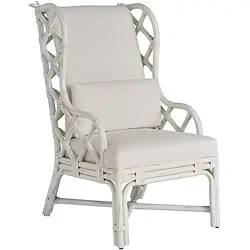
For a bohemian or coastal look, the Sonoma White Rattan Arm Chair pairs a white rattan frame with a lighter visual footprint at 25"W x 32"D x 46"H.
-
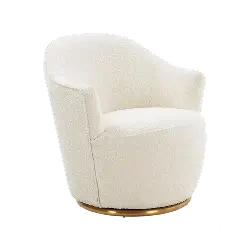
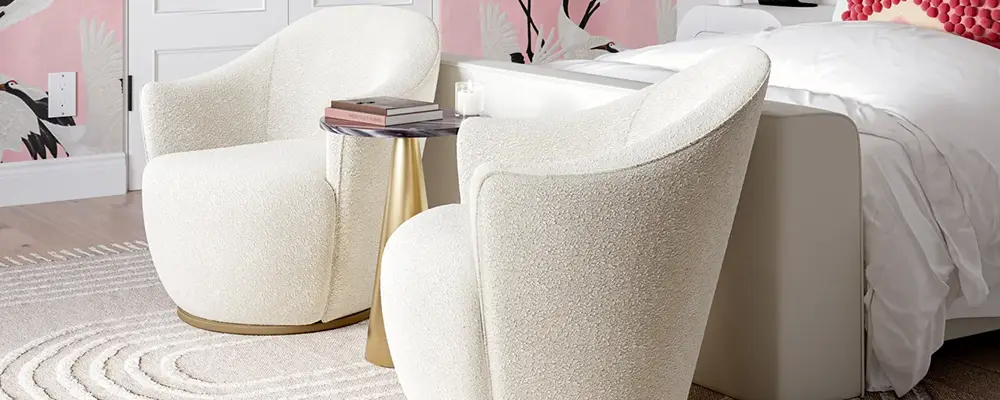
For the currently popular soft-modern look, the Skyla Boucle Swivel Chair delivers bouclé texture in a compact 29.1"W x 29.1"D x 30.9"H swivel frame—the kind of proportions that put it squarely among the unique small accent chairs that work in tighter rooms.
3. Scale, Proportion, and Spatial Fit
Before buying any accent chair, measure the actual floor space rather than eyeballing it. Leave at least 30–36 inches of walking space around the chair, and check both width and depth against the real dimensions of the spot you have in mind—not just the chair's footprint in a product photo.
A boldly-shaped chair often needs more visual breathing room than its measurements alone suggest. A deep barrel-back or cocoon silhouette, like the Casselbury above, reads as larger in a room than a same-width chair with a slimmer profile, simply because the eye registers the curve and volume as taking up more space. Give a sculptural chair a little extra clearance beyond the minimum, especially if it sits near a walkway rather than tucked into a corner.
Scale works in both directions. An oversized statement chair can overwhelm a small room and block traffic flow, but a chair that's too small can get visually lost next to a full-size sofa, undercutting the very statement it's meant to make. Matching chair scale to sofa scale—not just to the available floor space—keeps a statement chair reading as intentional rather than crowded or undersized. Coleman's guide to living room layout ideas covers how to work a statement chair into an existing floor plan without losing walking space.
4. Comfort Versus Aesthetic Appeal
Some of the most visually striking accent chair silhouettes prioritize form over all-day comfort, and it's worth deciding on purpose whether that trade-off works for how you'll actually use the chair. An oversized cocoon-style chair asks for real floor space and reads as a bigger design commitment the moment it's in the room—that's exactly what makes it a statement piece, but it also means it tends to work best as a dedicated reading-nook chair rather than an everyday seat pulled into conversation.
A plush, cushioned swivel chair takes the opposite approach: built for regular, daily use, with generous seat cushioning and an easy swivel base that makes it simple to turn toward a conversation or a TV. The trade-off is that it reads as less of a singular design statement on its own, though a bold color or a distinctive texture like bouclé narrows that gap considerably.
Decide based on how the chair will actually be used. If it will see daily use, prioritize a deep seat and easy-access cushioning; if it's an occasional or guest seat—a reading nook, a corner accent—aesthetic impact can lead the decision. Coleman's Casselbury Cement Oversized Swivel Accent Chair (sculptural scale, occasional-use) and Skyla Boucle Swivel Chair (compact, daily-use) sit at opposite ends of this exact trade-off.
5. Focal Point and Color Strategy
A single bold-colored or boldly-patterned chair can anchor a room more effectively than several smaller accent pieces working in competition with each other. One saturated jewel tone carried by a single chair reads as intentional; the same jewel tone spread across three throw pillows and a chair starts to compete for attention instead of anchoring it.
The practical approach is to pick one jewel tone or saturated color and let the chair carry it, keeping surrounding pieces—sofa, rug, walls—closer to neutral. That contrast is what makes the chair read as a deliberate focal point rather than one more colorful object in an already busy room. Pattern works the same way: one strongly patterned chair is a statement on its own, but patterned pillows plus a patterned chair start to visually compete rather than complement each other.
The Avery Dark Green Velvet Arm Chair is a direct example of this single-piece color strategy—a deep forest-green velvet that reads as a genuine focal point against a neutral sofa and walls, without needing a matching pattern or accessory to reinforce it.
6. Placement and Room Integration
A unique accent chair works best when it has a clear job in the room, rather than sitting in a corner without a purpose. A corner spot becomes a reading nook. A symmetrical pair flanking a fireplace becomes a conversation-starter. A chair angled near a window catches natural light through the afternoon and gives the room an obvious second seating zone beyond the sofa.
Pairing a statement chair with a small side table and a floor lamp turns it into a complete, functional nook rather than just an object placed in the room. That combination signals the chair's purpose at a glance—a place to actually sit and read, not just a shape parked against the wall. It's a small addition that makes even a single accent chair feel considered rather than incidental.
Placement should also respect the room's existing traffic patterns and furniture groupings rather than fighting them. Coleman's living room layout ideas guide covers how to work a chair into a floor plan without disrupting flow, and the 29 types of chairs guide is a useful reference if you're still deciding which silhouette fits your space best.
7. Durability and Maintenance Needs
Care needs vary significantly by material, and it's worth matching maintenance level to how the chair will actually be used. Leather wipes clean with a damp cloth and holds up well to everyday contact. Performance fabrics are engineered to resist stains and are a practical choice for busy households. Natural rattan needs to stay out of direct humidity and prolonged sun exposure to avoid drying out or fading. Bouclé should be vacuumed regularly with a soft brush attachment to keep the loop texture from matting down over time.
Households with kids or pets should generally lean toward leather or a performance fabric over delicate natural fibers or a light-colored bouclé, simply because those materials tolerate spills and daily wear with less upkeep. A chair used only occasionally—a guest seat, a reading-nook accent—can reasonably take on a higher-maintenance material since it sees far less wear than a daily-use piece.
For a deeper look at how upholstery materials hold up over time, including how the same trade-offs apply to sofas and sectionals, Coleman's guide to couch materials covers the pros and cons of thirteen popular fabric types in more detail.
5 Unique Accent Chairs to Shop Now
Each pick below represents a different style and material lane covered above, so you can see the ideas in this guide applied to real, shoppable options.
-
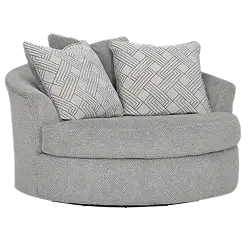
Casselbury Cement Oversized Swivel Accent Chair
Ashley Furniture · Sculptural / Cocoon
The sculptural, one-of-a-kind pick. A cocoon-style swivel silhouette at 56"W x 55"D x 35"H in a neutral cement finish—a genuine design statement that doesn't need bold color to make its case.
View Casselbury Accent Chair → -
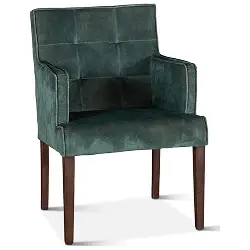
Avery Dark Green Velvet Arm Chair
World Interiors · Velvet / Jewel Tone
The single-piece color strategy pick. Deep forest-green velvet at a space-friendly 23.5"W x 25.5"D x 33.5"H, sized to anchor smaller living rooms without crowding them.
View Avery Arm Chair → -
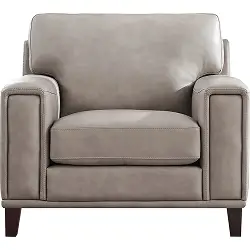
Halwyn Stone Leather Upholstered Accent Chair
Tanners Mark · Leather / Traditional
The low-maintenance, traditional-leaning pick. A stone-toned leather build at 40.5"W x 38"D x 35"H that wipes clean and ages well with daily use.
View Halwyn Accent Chair → -
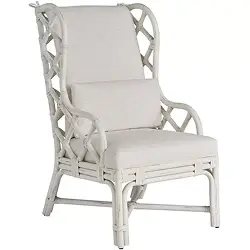
Sonoma White Rattan Arm Chair
Shoreline Living · Rattan / Bohemian
The bohemian, natural-texture pick. A white rattan frame at 25"W x 32"D x 46"H with a lighter visual weight than fully upholstered options.
View Sonoma Arm Chair → -
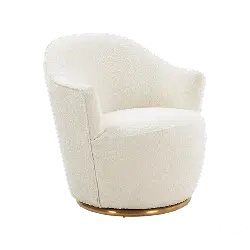
Skyla Boucle Swivel Chair
TOV · Bouclé / Contemporary
The compact, daily-use pick. Soft bouclé texture in a swivel frame at 29.1"W x 29.1"D x 30.9"H—plush enough for everyday sitting, small enough for tighter rooms.
View Skyla Boucle Chair →
Choosing the Unique Accent Chair That's Right for Your Room
Choosing well among unique accent chairs for living room spaces comes down to balancing personal style with how the chair will actually get used day to day—not choosing on looks alone. A sculptural cocoon chair and a plush bouclé swivel chair can both be genuinely unique picks; they simply serve different jobs in the room, and matching that job to your actual routine is what makes the choice feel right months after delivery, not just on the day it arrives.
Unique Accent Chairs FAQs
A unique chair is a deliberate design choice—a silhouette, material, or color chosen to stand out on purpose—not just an unusual shape picked at random. That intentionality is what separates a genuinely well-chosen statement chair from one that simply looks out of place.
No—accent chairs are meant to contrast with your existing seating, not match it. Coordinating through one shared color or material note, like a shared wood tone or a complementary neutral, is usually enough to keep the room feeling cohesive while the chair still reads as a genuine style statement.
It depends on the specific chair. Sculptural, minimal-padding designs like an oversized cocoon chair suit occasional use—a reading nook or guest seat—while plush, cushioned options like a bouclé swivel chair are built for everyday sitting.