

What Is a Boneless Couch? Your Complete Buying Guide
Boneless couches have taken over social media feeds — and it's easy to see why. That deep, cloud-like silhouette is hard to scroll past. But before you commit to one for your living room, it helps to understand exactly what you're buying, how they're built, and whether the comfort-first design fits your lifestyle. This guide covers everything you need to make a confident decision.Key Takeaways
- A boneless couch is a frameless sofa built entirely on layered foam — no rigid wood structure, metal springs, or traditional support system.
- It delivers a deep, sink-in seating experience, but offers less lumbar support than a structured sofa, making it better suited for lounging than long work sessions.
- Modular designs, removable zippered covers, and soft, edge-free construction make boneless couches a flexible and family-friendly option.
What Is a Boneless Couch?
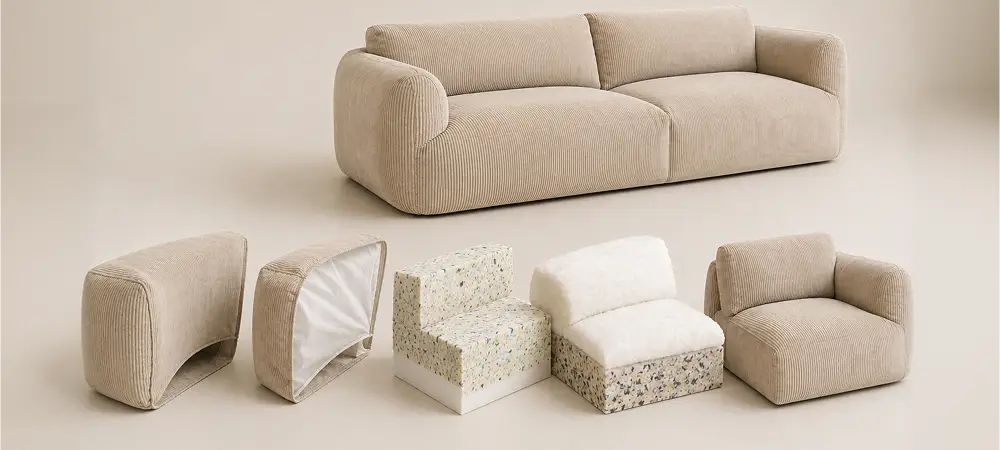
"Boneless" is informal shorthand for a frameless sofa — one with no wooden frame, no metal spring system, and no rigid internal structure of any kind. Instead of a traditional sofa foundation, the entire piece is built from layered foam or foam-and-fiber fills that hold their shape through density and compression rather than structural support. The result is a piece that conforms to your body rather than the other way around.
You may also see these referred to as cloud couches, foam sofas, or modular floor sofas — the names vary by brand and style, but they all describe the same comfort philosophy. The look went viral on social media largely because of its lush, pillowy silhouette: cushions that seem to spill over one another in the best possible way.
For a clear definition: a boneless couch is a frameless sofa made from layered foam cushions that provide a sink-in, cloud-like seating experience without any traditional structural support. If you're still exploring your options, our guide to sofas covers the full range of styles worth knowing before you shop.
How Boneless Couches Are Built
Core Design Features
The first thing you'll notice about a boneless couch is its low-profile stance — it typically sits several inches closer to the floor than a conventional sofa, which contributes to the casual, loungy aesthetic. Beneath the upholstery, there's simply foam: no wood, no metal, no springs. Modular sections connect to one another through zippers, snap straps, or friction-fit anchors that keep everything aligned when you're rearranging.
Because there's no rigid frame to work around, most boneless couches ship compressed in a box — similar to the mattress-in-a-box model you may already be familiar with. The foam expands to its full shape over 24 to 48 hours after unboxing, which makes delivery and setup considerably easier than moving a traditional sofa.
Foam Quality and Fill Materials
Not all boneless couches feel the same, and foam quality is the primary reason why. Higher-density foam — look for at least 1.8 lb per cubic foot — holds its shape better over time and resists the gradual compression that causes budget foam furniture to lose its loft. Common fills include memory foam, high-resiliency foam, and layered combinations of the two; the best designs use a firmer base layer for foundational support topped with a softer comfort layer for that signature sink-in feel.
When evaluating foam quality, also check for CertiPUR-US certification, which confirms the foam was made without harmful chemicals and meets standards for emissions and durability. It's a small detail that matters quite a bit, especially in households with young children or pets who spend a lot of time on the furniture.
Boneless Couch Comfort and Support
Comfort vs. Support Tradeoffs
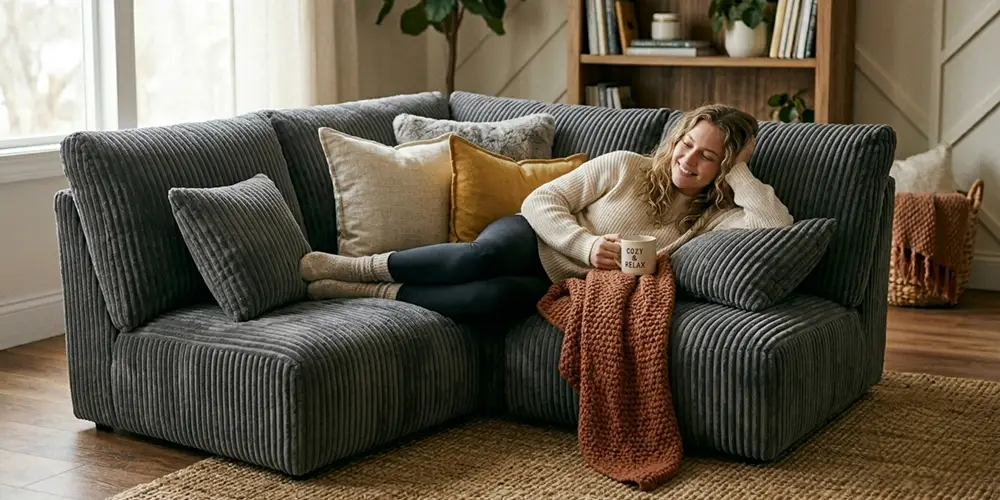
There's a reason boneless couches are consistently described as the most comfortable seat in the house: they're exceptionally well-suited to lounging. Whether it's movie nights, weekend reading, or just settling in after a long day, the deep sink-in feel is hard to replicate with a traditional sofa. That said, this comfort comes with a tradeoff worth understanding before you buy.
Because there's no rigid back structure, boneless couches provide limited lumbar support compared to a standard framed sofa. If you work from home and spend long stretches seated, or if you have existing back concerns, a boneless couch may not be the best choice as your primary seat. The cushions can also shift with movement — particularly in multi-piece modular configurations — so occasional repositioning comes with the territory.
Safety and Family Suitability
For families with young children, the frameless design carries a meaningful safety advantage: there are no hard edges. Kids can tumble into the cushions without the bruises that come with a traditional wood-framed sofa. The low-to-the-floor profile also means young children can climb on and off independently, which parents tend to appreciate. Just make sure any foam you're considering carries CertiPUR-US certification for peace of mind on non-toxic materials.
Boneless Couch Pros and Cons: Practical Drawbacks to Know
When weighing your options, it helps to see the full picture. Here's what to keep in mind before buying a boneless couch:
| Pros | Cons |
|---|---|
| Soft, flexible design conforms to your body for a relaxed, sink-in feel | High-quality foam recovers better, but all foam furniture eventually compresses over time |
| Covers are often removable and machine washable for easy cleaning | Covers can pill or stretch with heavy daily use |
| Lightweight and easy to move or reconfigure to fit your space | Harder to repair than traditional sofas — individual foam layers are not easily replaced |
| No hard edges makes it safer for kids and pets | Not ideal for buyers seeking a long-term, low-maintenance investment |
| Great for casual, low-profile living spaces and relaxed aesthetics | Limited lumbar support — not the best choice for extended sitting or back issues |
Looking for value-focused options? Browse our picks for the best affordable couches and sofas to find styles that balance comfort and budget.
Modularity and Boneless Couch Configurations
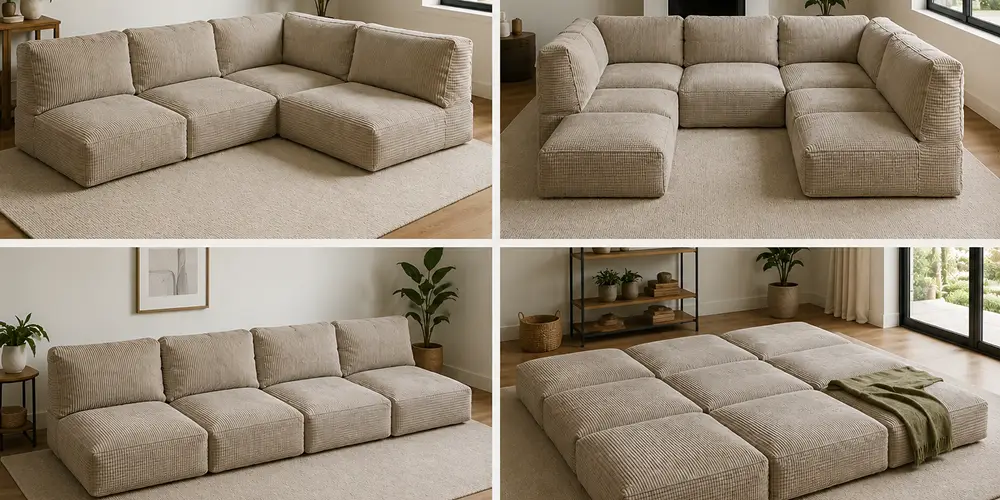
One of the most practical advantages of the boneless couch design is its modularity. Rather than a single fixed piece, most are sold as a system of individual sections — seats, corner units, chaise extensions, and ottomans that connect and reconnect in different configurations. Depending on your room, you can arrange them as a classic L-shape, a generous U-shape, a straight sofa, or even a sprawling open floor lounger.
That flexibility extends beyond the initial setup. Moving to a new space? Reconfigure the sections to fit the new floor plan. Growing your household? Many collections allow you to add pieces over time, so you're not locked into one size. It's a genuinely different way of thinking about sofa ownership compared to buying a fixed frame. If you're still deciding between styles, our guide to types of couches and sofas is a helpful starting point for understanding all your options.
Boneless Couch Fabric Covers and Maintenance
The upholstery on a boneless couch does more work than you might expect — it holds everything together, takes the daily wear, and sets the tone for the whole piece. Most quality boneless couches feature removable, zippered covers that can be pulled off and machine washed, which makes them considerably more practical than traditionally upholstered furniture, especially in homes with kids or pets.
Common fabric options include performance velvet, linen, faux leather, and microfiber. Of these, performance fabrics — those engineered to resist moisture and staining — are worth prioritizing if the sofa will see heavy use. They hold up to spills and cleaning cycles without degrading the way standard upholstery can. Whichever cover material you choose, fluffing and rotating the cushions regularly (every week or two with frequent use) helps maintain the shape and extends the cover's lifespan considerably.
Boneless Couches to Consider at Coleman Furniture
Coleman Furniture carries modular, foam-forward sofas that bring the boneless couch aesthetic — flexible configurations, sink-in comfort, and low-profile design — to a range of colorways and fabric choices. Below are three worth considering, each offering a different take on the style.
Top Boneless Couch Picks from Coleman Furniture
-
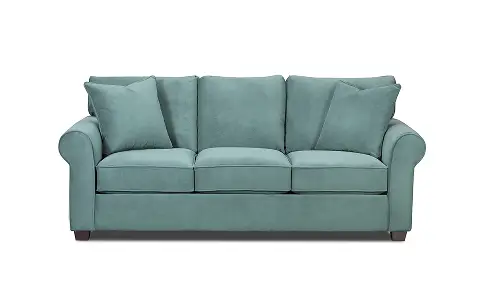
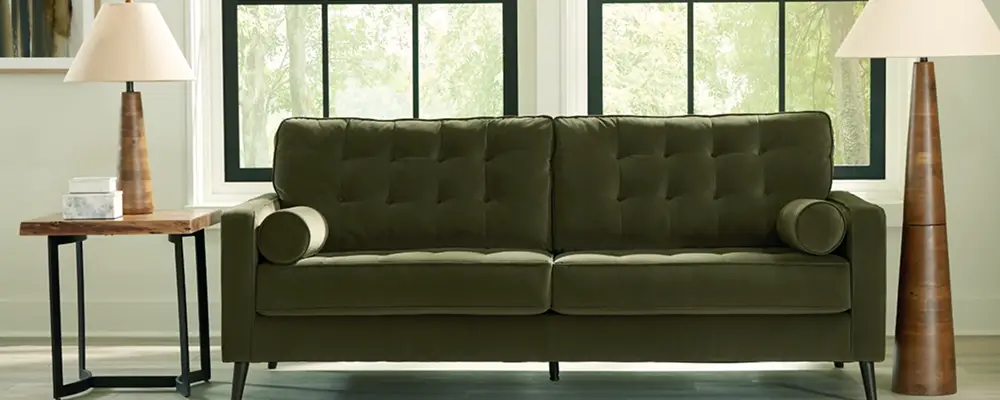
Built on a 5.25" memory gel foam system with 1.8-density dacron-wrapped seat cushions, this sofa delivers the deep, pillowy feel that defines the boneless couch style. Reversible and removable back and seat cushions make reconfiguring easy, and it converts to a queen sleeper for guests. The rich hunter green velvet microfiber upholstery brings warmth and depth to any living space.
Shop this sofa -
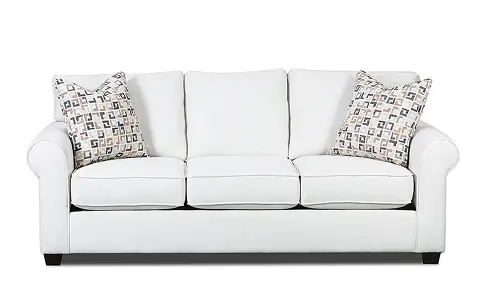
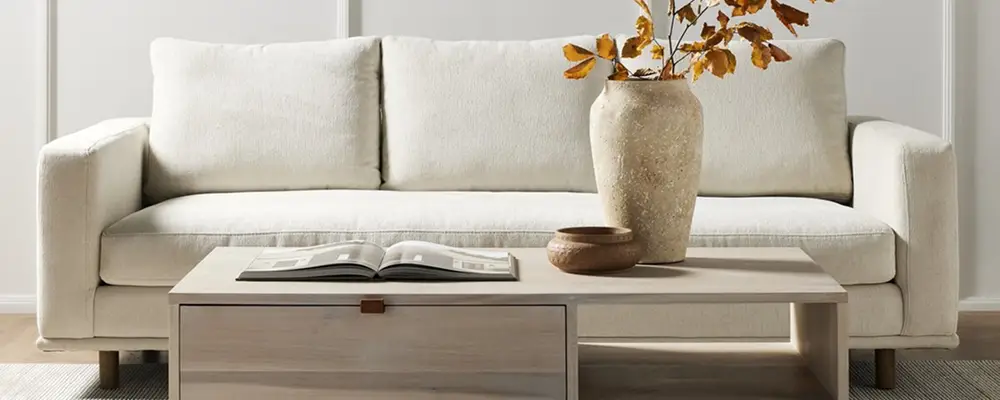
The same memory gel foam construction as the Bella, updated in a glacier (white/cream) chenille performance fabric that's liquid-resistant and easy to maintain. Reversible cushions, zippered throw pillows, and queen sleeper functionality round out a piece that handles both everyday lounging and overnight guests with equal ease. A strong choice for anyone who wants a light, airy colorway without sacrificing practicality.
Shop this sofa -
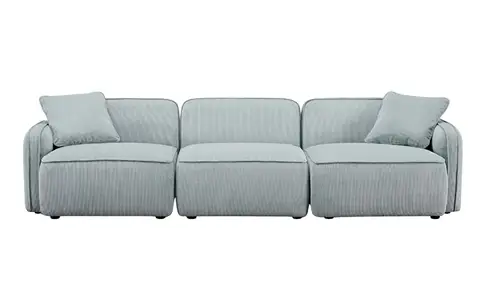
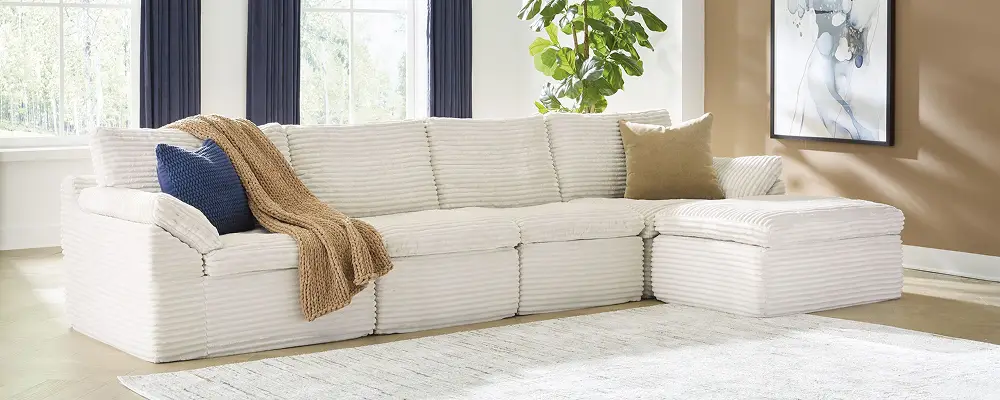
A fully modular design with fiber-wrapped foam arms and backrests upholstered in a liquid-repellent performance corduroy velvet. The sea foam colorway gives it a retro-modern edge, and the truly modular construction means configurations are essentially endless — rearrange, add pieces, or scale back as your space and needs evolve. It's one of the most versatile options in the boneless couch category.
Shop this sofa
Ready to Find Your Boneless Couch?
Whether you're drawn to the cloud-like comfort, the modular flexibility, or simply the look that's been all over your feed, a boneless couch can be a genuinely satisfying addition to the right living space. Coleman Furniture offers a carefully selected range of foam-forward, modular sofas — each delivered with free white glove service, so the experience is as good as the furniture itself. Browse our sofa collection to find the style and configuration that fits your home.
Explore Coleman Furniture's full range of modular sofas — available with free white glove delivery on thousands of items.
BROWSE BONELESS COUCH AESTHETICSWhat Is a Boneless Couch? FAQs
A boneless couch is a frameless sofa constructed entirely from layered foam — with no wooden frame, metal springs, or traditional structural support. The foam layers hold the shape of the piece and provide a sink-in, cloud-like seating experience. It's also sometimes called a cloud couch, foam sofa, or modular floor sofa.
Yes — for lounging, casual relaxation, and unwinding, a boneless couch is exceptionally comfortable. That said, it provides less lumbar support than a structured sofa, so it may not be the ideal choice if you spend long hours seated for work or have existing back concerns.
Lifespan varies significantly based on foam quality. A boneless couch built with high-density foam (at least 1.8 lb per cubic foot) and quality construction can last 7 to 10 years with regular care. Lower-density options tend to compress and lose their shape more quickly. Rotating and fluffing cushions regularly helps extend the life of any foam sofa.
They're among the more family-friendly sofa styles available. The frameless construction means no hard edges for kids to bump into, and the low-to-the-floor profile makes it easy for young children to get on and off independently. Look for sofas with CertiPUR-US certified foam and machine-washable covers for the most practical setup.
A traditional sofa is built on a rigid frame — typically hardwood — with coil or sinuous spring support and cushions placed on top. A boneless couch has no frame at all; it's built entirely from foam layers. This makes it lighter, easier to configure, and softer to sit on, but it also means less structured support and a shorter expected lifespan compared to a high-quality framed sofa.
Many are, but it depends on the specific fabric. Most quality boneless couches feature removable, zippered covers designed for easy washing — check the care label to confirm your specific cover is machine safe. Performance fabrics like chenille microfiber and corduroy velvet are generally more forgiving through wash cycles than standard upholstery fabrics.
For buyers who prioritize comfort and flexibility over long-term durability, yes — a quality boneless couch delivers excellent value. If you're looking for a sofa that will anchor a formal living room for 15-plus years, a framed sofa is likely the better investment. The boneless couch is best suited to casual living spaces where comfort and adaptability matter most.
Look for seat cushion foam with a density of at least 1.8 lb per cubic foot, and always check for CertiPUR-US certification, which ensures the foam meets standards for durability, emissions, and material safety. Memory foam and high-resiliency foam are the two most common fills; a firmer base layer combined with a softer comfort layer on top tends to offer the best balance of support and that signature sink-in feel.