

How to Keep Couch Cushions From Sliding: 6 Fixes That Actually Work
If you find yourself readjusting your couch cushions every time you sit down or stand up, you're not imagining it—and you're not alone. Figuring out how to keep couch cushions from sliding is one of the most common small annoyances in an otherwise perfectly good living room, and the good news is that it's rarely a sign anything is actually wrong with your couch. The fixes below are ordered from the easiest, cheapest, and most reversible up to the more involved. Most people find their answer in the first two. Occasionally, though, sliding cushions are a sign the couch itself has simply reached the end of its useful life rather than a problem you can fix—we'll cover how to tell the difference toward the end of this guide.Key Takeaways
- Most sliding-cushion problems come down to a smooth cushion bottom or a smooth couch frame surface, not a defective couch.
- Non-slip pads and hook-and-loop strips solve the majority of cases without any permanent changes to the couch.
- If cushions keep sliding even after trying these fixes, worn-out foam or a couch that's simply run its course may be the real issue.
Root Causes of Cushion Sliding
Cushions slide for one of three reasons, and figuring out which one applies to your couch determines which fix below will actually work. The first is a smooth cushion bottom—some fabric backings, particularly on lower-cost cushion covers, simply don't create enough friction against the frame underneath to hold their position. The second is a smooth or slick couch frame surface, which shows up most often on leather sofas or pieces with polished wood trim along the seat deck. The third is foam that has compressed and lost its original shape after years of use, which changes the cushion's fit against the frame even if nothing about the surface friction has changed.
Trying every fix at once rarely works as well as diagnosing the actual cause first. A non-slip pad, for example, won't do much for a cushion that's sliding because the foam inside has gone flat—but it will completely solve a smooth-bottomed cushion on a fabric couch. The six fixes below are ordered roughly from easiest and cheapest to more involved, so start at the top and work your way down only as far as you need to.
6 Ways to Stop Couch Cushions From Sliding
Think of these as an escalating sequence rather than six separate options to try all at once. Start with the cheapest, most reversible fix, and only move on to the next one if it doesn't hold. Most cases are solved by the first two fixes on this list, so the later sections are really for stubborn cushions or foam that's already lost its shape.
1. Non-Slip Grip Materials
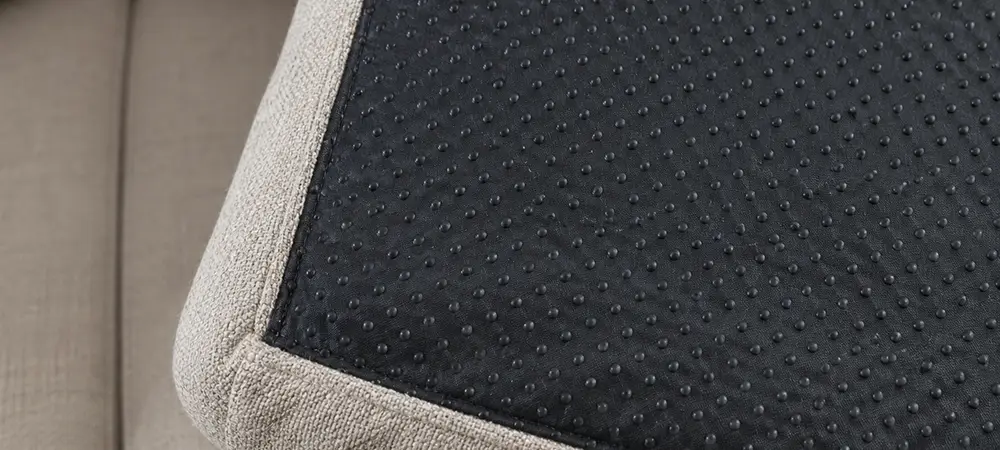
The simplest fix costs almost nothing and requires zero permanent changes to the couch: a non-slip pad cut to the size of the cushion base creates enough friction between the cushion and the frame to stop it from sliding in the first place. Because the pad sits loose between the cushion and the frame, you can remove it, reposition it, or take it out entirely without leaving any trace on the couch.
A few readily available materials work equally well for this. Rubber shelf liner is inexpensive, easy to cut to any shape, and available at almost any home goods store. A spare rug pad does the same job if you happen to have an offcut lying around. Purpose-made non-slip furniture pads are also sold specifically for this use and come pre-cut into common cushion sizes.
The one mistake worth avoiding: cutting the pad too small. A pad that only covers the center of the cushion base leaves too little surface area to create real grip, and the cushion will still shift at the edges. Cut the pad to match the full base of the cushion, corner to corner, for it to actually hold.
2. Velcro and Fastening Methods
If a non-slip pad alone doesn't fully solve the problem, hook-and-loop strips—the technical name for Velcro—attach the cushion directly to the frame at fixed points. Once in place, the cushion physically can't shift out of position at all, which makes this the more permanent step up from a simple grip pad.
You have two installation options here, and they suit different situations. Adhesive-backed strips go on faster and work best on smooth surfaces like a wood or laminate frame deck. Sew-on strips take a bit more effort to attach but hold more securely over the long term, and they're the better choice for fabric-to-fabric attachment where an adhesive wouldn't stick well in the first place.
There's one trade-off worth knowing before you commit to this fix: once Velcro is attached, you lose the ability to flip or rotate the cushion to even out wear over time, since each cushion is now matched to a specific spot on the frame. It's a small downside, but worth factoring in if you like to rotate cushions periodically to extend their life.
3. Structural and Gap-Filling Fixes
Sometimes cushions slide not because of friction at all, but because they've become slightly too small for the space between the arms of the couch—a common issue as cushions settle over time or on sectionals where two cushions meet. In that case, foam wedges or even a cut piece of pool noodle wedged into the gap can take up the extra space and stop the drift.
This fix works especially well at sectional corners and any spot where two separate cushions meet and gradually pull apart from each other over months of use. It's a low-cost, fully reversible option, worth trying before you assume the whole cushion needs to be replaced.
4. Cushion Restoration and Replacement
If your cushions have visibly lost loft—they look flatter than they used to and don't spring back after you get up—the sliding you're seeing may actually be a symptom of the foam settling and shifting inside the cushion cover, not a surface-friction problem you can solve with a pad or Velcro at all.
There are two paths forward here. The lighter fix is adding polyester batting around the existing foam insert to fill the cushion back out and restore some of its original snugness against the frame. The more complete fix is replacing the foam insert entirely, which addresses both the sliding and the lost comfort in one step, since both problems usually trace back to the same worn-out foam.
5. Sofa Material Considerations
The material your couch is upholstered in changes which fixes are safe to use. Fabric surfaces can generally take either adhesive-backed hook-and-loop strips or sew-on options without any issue. Leather requires a non-adhesive method instead—sew-on strips, ties, or a gap-filling fix—since adhesive can damage the finish over time and is difficult to remove cleanly later.
It's also worth knowing that textured or performance fabrics naturally create more friction against a cushion's underside than smooth, slick fabrics do, which is a detail worth keeping in mind if you're shopping for a new couch and want to avoid this problem from the start. Coleman's Cali performance-fabric collection is a good real-world example: the grippier, textured weave resists cushion drift noticeably better than a slick, smooth material would.
-
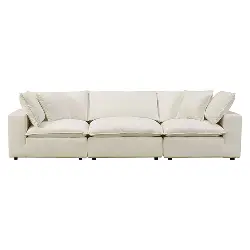
Performance Fabric
Cali Natural Performance Fabric Modular Sofa
A textured, stain-resistant performance weave that grips cushions more securely than a slick, smooth fabric—built as modular sections you can rearrange as your room changes.
Shop This Sofa →
6. Choosing By Budget and Effort
If you're not sure where to start, the decision is simpler than it looks. Begin with a non-slip pad—it's the cheapest option and requires zero commitment. If the pad alone isn't quite enough, move up to Velcro. Only consider foam restoration if your cushions have genuinely lost their shape rather than just their grip.
Combining two methods often solves the problem more permanently than relying on just one—a non-slip pad plus Velcro, for example, addresses both surface friction and fixed positioning at the same time. Whichever combination you land on, none of these fixes require professional help or special tools. Everything here uses basic household items or an inexpensive hardware-store purchase.
When to Replace Instead of Fix
If you've tried multiple fixes and cushions keep sliding regardless, and the foam has visibly compressed or the frame itself has loosened underneath, your couch may simply be past the point where a workaround makes sense. That's not a sales pitch—it's a practical threshold. Repeated fixes on a couch nearing the end of its lifespan often end up costing more time and effort than they save.
A couch with attached, well-supported cushions and a grippier performance fabric largely avoids this problem from the start, rather than needing a fix added after the fact. Coleman's Cali modular collection combines performance fabric with well-supported cushion construction, which genuinely reduces cushion drift going forward instead of requiring a workaround down the line.
Keeping Your Cushions in Place for Good
Most sliding-cushion problems really are quick, inexpensive fixes—it's only a genuinely worn-out couch that calls for something more. If you're wondering how to keep couch cushions from sliding for good, the answer is usually simpler than expected: diagnose the cause first, start with a non-slip pad, add Velcro if that alone doesn't hold, and only look at foam restoration or replacement once the cushions have visibly lost their shape.
Coleman Furniture offers a wide selection of couches built with well-supported cushions and grippier performance fabrics, all backed by free white glove delivery on thousands of items. Find the couch you've been looking for and leave the sliding cushions behind for good.
-

Performance Velvet
Cali Chocolate Brown Performance Velvet Modular Large Sectional
A rich chocolate brown velvet over well-supported modular cushions, built to resist the drift that comes with slick fabrics and worn-out foam.
Shop This Sectional →
Design that delivers.
Well-supported cushions, grippier performance fabrics, and couches built to hold their shape—all with free white glove delivery on thousands of items.
How to Keep Couch Cushions from Sliding FAQs
This usually means the foam itself has compressed and lost its shape, which surface fixes like non-slip pads or Velcro can't fully solve on their own. At that point, foam restoration or a new couch becomes the more effective option than another surface-level fix.
No—adhesive-backed Velcro isn't recommended on leather, since the adhesive can damage the finish over time. Sew-on strips or a gap-filling method like foam wedges are the safer choice for leather couches.
A cut-to-size rubber shelf liner or a spare rug pad is the lowest-cost fix, and it works for most standard cushion-sliding cases where the cushion simply lacks grip against the frame.