

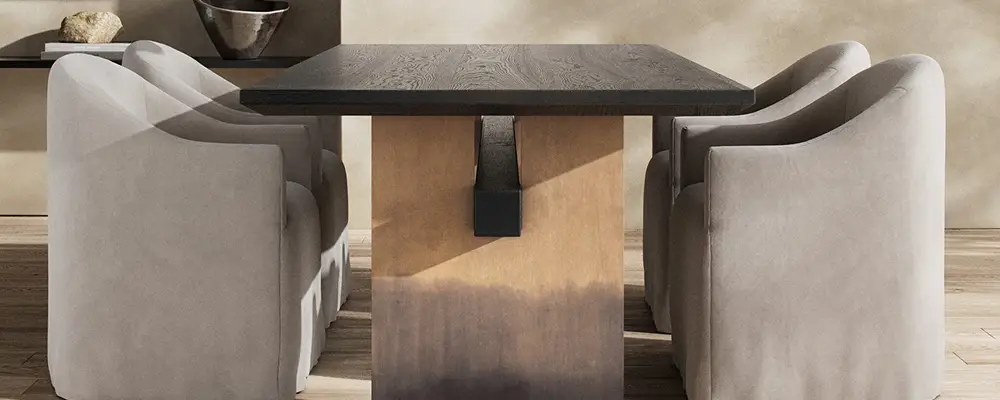
How to Match a Kitchen Table With Your Decor
Most people shop for a kitchen table and hope for the best — they find something they love online, order it, and wait anxiously to see if it fits the room. Knowing how to match a kitchen table with your decor reverses that process entirely, starting with what you already have and working toward the table that belongs there. Your existing style, colors, and floor space tell you exactly what to look for before you ever open a browser tab.Key Takeaways
- Your existing decor style — traditional, modern, farmhouse, or industrial — is the single strongest filter for narrowing table options before you browse.
- Color undertones in your floors, cabinets, and walls determine whether warm wood tones or cool finishes will feel cohesive.
- Shape and size follow from your room dimensions, not personal preference — 36 inches of clearance on all sides is the minimum for comfortable circulation.
- Chair pairing doesn't require a perfect match; coordinating undertones or mixing materials intentionally both work, as long as one element anchors the look.
- How you actually use the table — daily family meals, frequent hosting, or dual-purpose work-and-dining — should drive your material choice as much as aesthetics.
Start With Your Existing Decor Style
The fastest way to narrow a table search is to name the design language your kitchen already speaks. Every room has one, even if you've never labeled it, and the table that fits will reflect that same language in its legs, finish, and material.
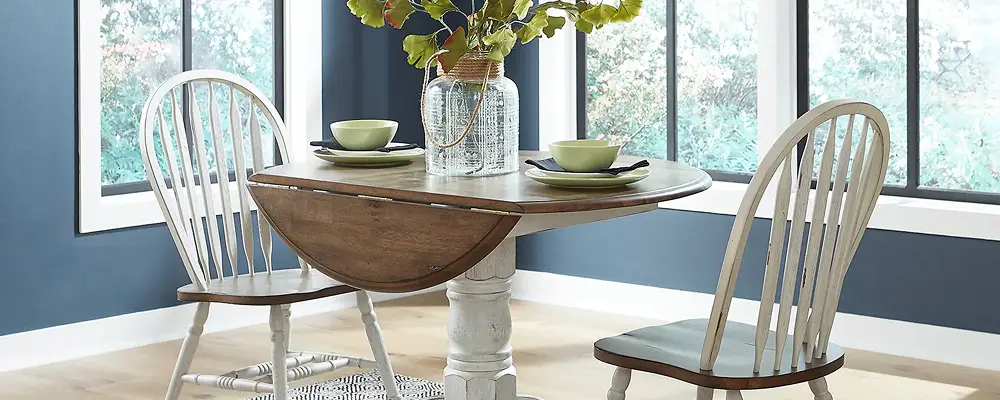
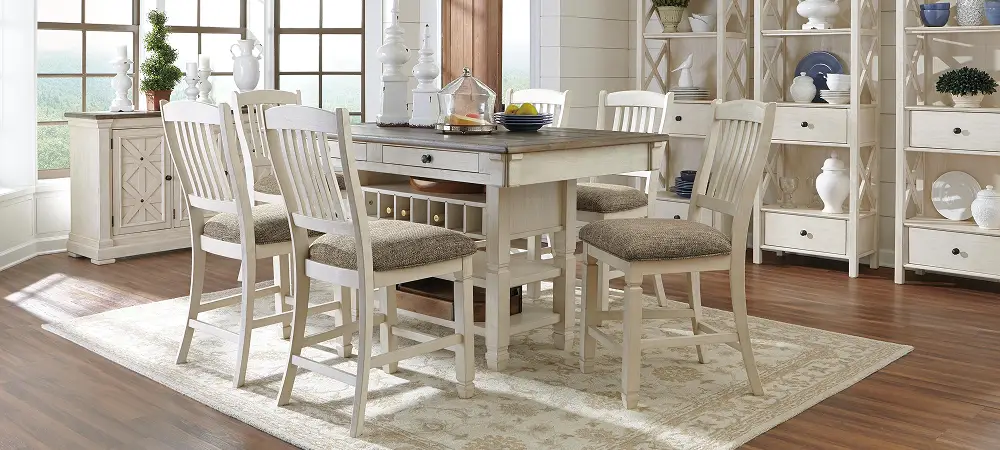
Five styles dominate most kitchen and dining spaces. Traditional rooms feature ornate carved legs, dark cherry or mahogany wood, and refined silhouettes. Farmhouse spaces lean into distressed finishes, chunky solid wood, and natural, unpolished textures. Mid-century modern rooms are defined by tapered legs, walnut or teak surfaces, and organic shapes with restrained ornamentation. Industrial kitchens pair metal bases with reclaimed or concrete-look tops. Modern and contemporary spaces favor clean lines, mixed materials — stone, glass, lacquered wood — and an absence of decorative detail.
Even one mismatched piece can throw off an otherwise cohesive room. A rustic farmhouse table placed in a sleek contemporary kitchen creates friction that's hard to put your finger on but impossible to ignore. If you're unsure which style your kitchen falls into, look at three things: your cabinet hardware, your light fixtures, and any upholstered seating. Those three elements almost always agree on a direction. For more visual inspiration before you shop, our 25 Dining and Kitchen Table Ideas for Inspiration guide is a useful place to start.
| Style | Defining Table Characteristics | Materials to Look For |
|---|---|---|
| Traditional | Ornate carved legs, formal proportions | Dark cherry, mahogany, rich walnut |
| Farmhouse | Distressed or whitewashed finishes, chunky bases | Solid pine, reclaimed wood, whitewash |
| Mid-Century Modern | Tapered angled legs, organic shapes, minimal ornamentation | Walnut, teak, molded plywood |
| Industrial | Metal bases, raw or textured tops | Steel, reclaimed wood, concrete |
| Modern / Contemporary | Clean lines, mixed materials, no decorative detail | Glass, lacquered wood, stone, mixed metal |
Match Your Table to Your Room's Color Palette
Dining room color coordination isn't about matching everything to the same shade — it's about aligning undertones. Every finish, whether in your floors, walls, or cabinets, leans either warm or cool, and a table that contradicts that undertone will feel out of place even if the colors look similar on screen.
Warm rooms — honey oak cabinets, cream or butter-yellow walls, terra cotta accents — need warm-toned tables. Natural wood, cognac, warm white, or amber-stained finishes will sit comfortably in that environment. Cool rooms — white shaker cabinets, gray or slate floors, stainless appliances — work best with espresso, white-gray, charcoal, or matte black finishes.
The most common mistake is treating neutral as neutral. A warm oak cabinet paired with a cool gray table creates visual tension even when both pieces are technically understated. The table doesn't need to match the cabinets exactly, but the undertones must agree. If you're struggling to identify your room's undertone, hold a piece of white paper next to your floor or cabinet surface: if it looks yellow by comparison, you're in a warm room; if it looks blue or slightly pink, you're cool.
Quick Undertone Test: Hold a white piece of paper next to your cabinet door or floor. If the surface looks yellowish by comparison, your room has warm undertones — choose natural wood, warm white, or cognac finishes. If it looks bluish or pink, your room runs cool — look for espresso, white-gray, or black finishes.
Two tables illustrate this well. The Bolanburg White and Gray Rectangular Counter Height Dining Table reads distinctly cool — its two-tone gray-and-white finish pairs naturally with white shaker cabinetry, gray LVP flooring, or rooms accented with brushed nickel hardware. On the warm side, the Spring Creek Brown Espresso Extendable Dining Table has a deep, rich finish that grounds warm wood floors, natural stone countertops, and spaces with earthy or terracotta accents.
-
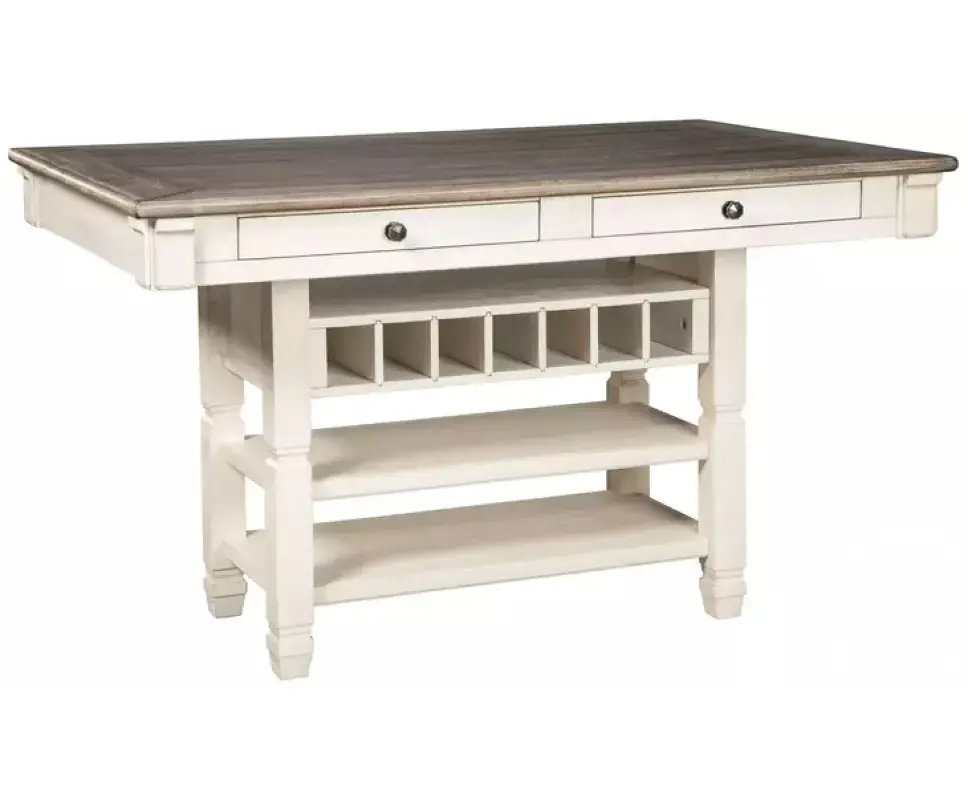
A cool-toned two-tone finish that works beautifully in contemporary and transitional kitchens with gray floors or white cabinetry.
Shop This Table -
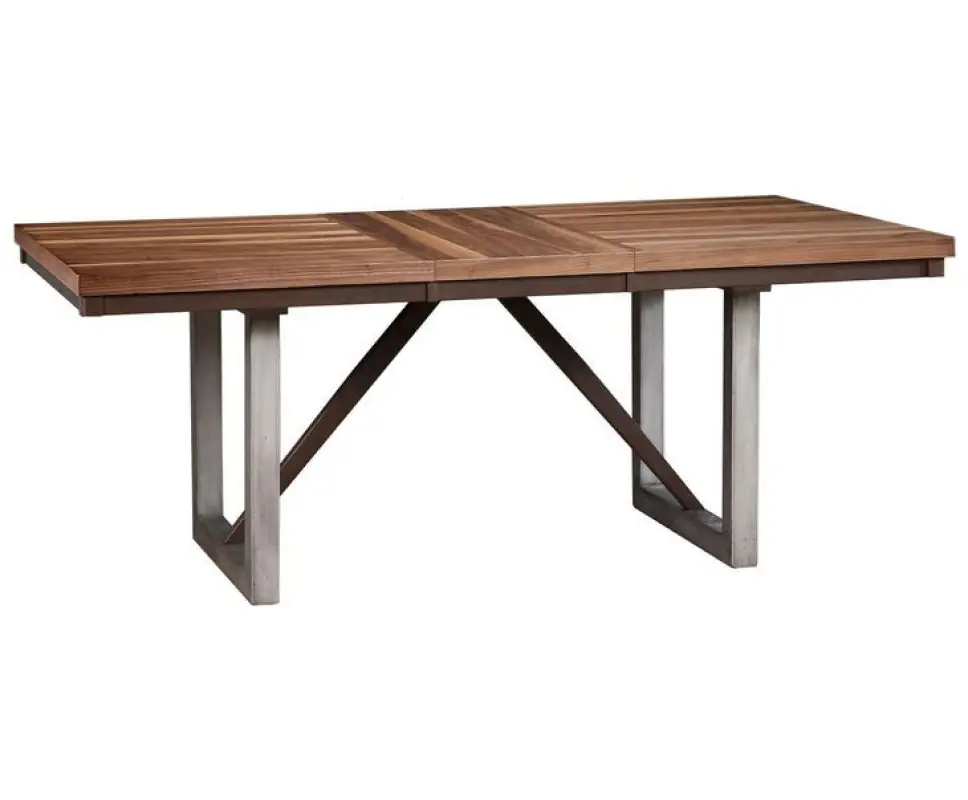
A rich espresso finish with warm brown undertones — ideal for kitchens with wood floors, honey oak cabinets, or earthy accent tones.
Shop This Table
Choose the Right Shape and Size for Your Space
Shape and size aren't stylistic preferences — they're practical constraints that follow from your room geometry. Getting this step wrong means chairs that can't pull out, traffic patterns that are blocked, and a table that dominates the room rather than living in it.
The baseline rule is 36 inches of clearance on all sides of the table: from the table edge to the nearest wall, cabinet, or obstruction. Below 36 inches, chairs can't slide back comfortably and the space will feel cramped in daily use. In a smaller kitchen where 36 inches isn't achievable on every side, 30 inches is the absolute minimum for one side against a wall.
Room geometry should guide shape selection. Rectangular rooms are naturally suited to rectangular tables, which echo the room's proportions and maximize seating capacity. Square rooms gain visual balance from round or square tables, which avoid a competing axis. Open-plan spaces — where the dining area flows into a living room without a hard wall boundary — often work best with oval tables, whose softened corners read as less dominant in the wider space. Round tables are particularly effective in smaller kitchens because they promote conversation and eliminate corner-crowding; the trade-off is limited seating capacity compared to a rectangular table of similar footprint.
If you regularly host larger groups, an extendable table is worth prioritizing. A well-designed extendable table maintains a 4-person footprint for everyday use — typically around 60 to 72 inches — and expands to seat 6 to 8 guests when the leaf is added. For more guidance on this decision, see our complete guide on What Is the Best Shape for a Kitchen Table?
-
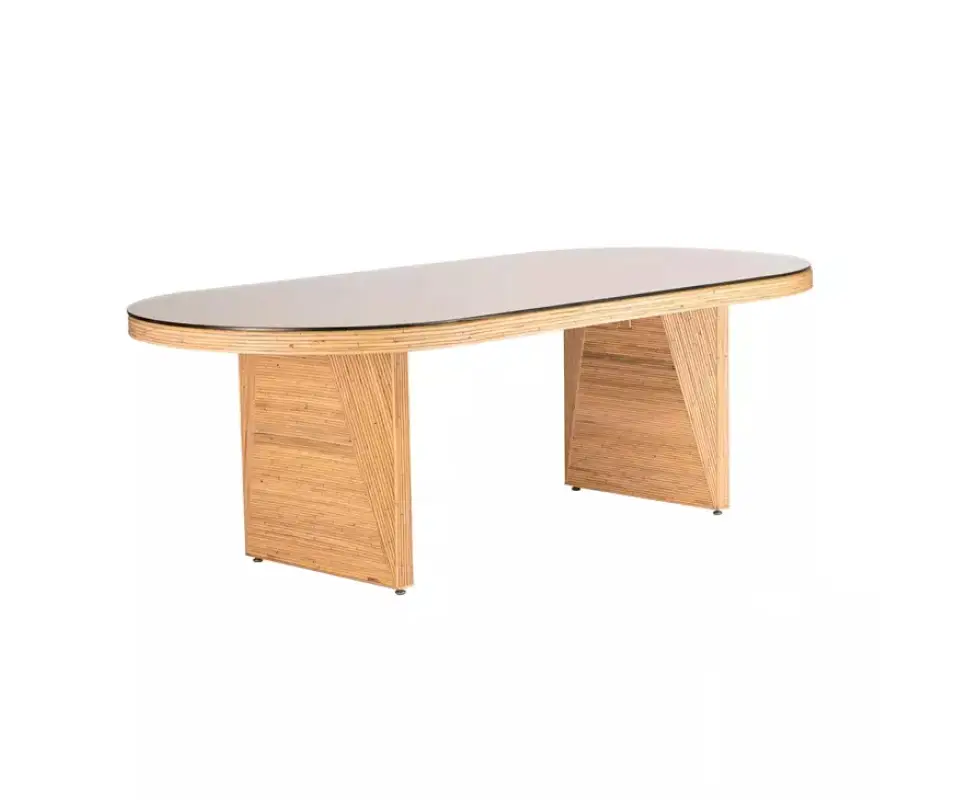
An oval silhouette with a natural rattan base and glass top — a light, open choice that softens open-plan spaces without overpowering them.
Shop This Table
Coordinate Your Chairs and Seating
Knowing how to style a dining table means knowing that the chairs are part of the decision — not an afterthought. The right pairing reinforces the table's character; the wrong one dilutes it. There are three reliable approaches, and each achieves a different effect.
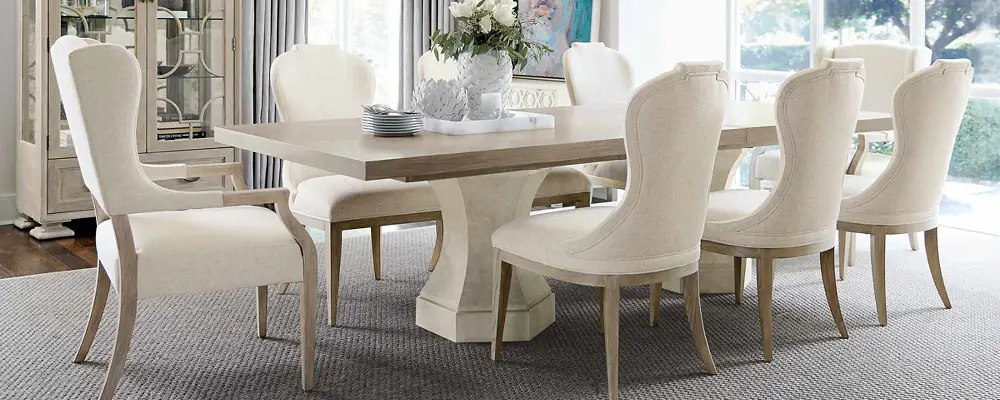
Match exactly. Choosing chairs in the same material and finish as the table creates a unified, formally dressed look. This works especially well in traditional and modern-contemporary rooms where deliberate cohesion is the point. The limitation is that it can feel static — every element competing for the same note.
Coordinate, don't match. Pairing chairs from the same style family but in a different tone — a walnut table with lighter natural oak chairs, for instance — keeps the room feeling intentional without rigidity. Both pieces share warm wood undertones, so they belong together even without being identical.
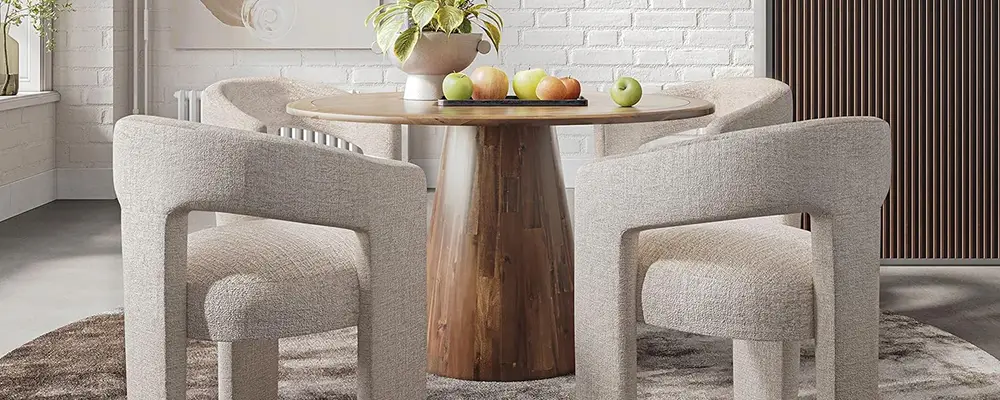
Mix intentionally. Contrast material or style when you want visual interest. A metal-base table with upholstered fabric chairs softens the industrial edge. A farmhouse wood table with mid-century tapered-leg chairs introduces an unexpected, curated tension that reads as collected rather than mismatched. The rule when mixing: anchor one element. If the table is the statement piece — bold material, distinctive shape — keep the chairs simple and understated. If the chairs are the focal point — patterned upholstery, unusual silhouette — keep the table clean.
Bench seating on one side of a rectangular table is another option worth considering. It adds seating flexibility and a relaxed, informal feel that works particularly well in farmhouse and mid-century modern kitchens. The Brennan Worn Black Dining Table is a table that handles this pairing well — its textural finish is versatile enough to pair with upholstered chairs for contrast or with matching worn-finish chairs for a more consistent look.
-
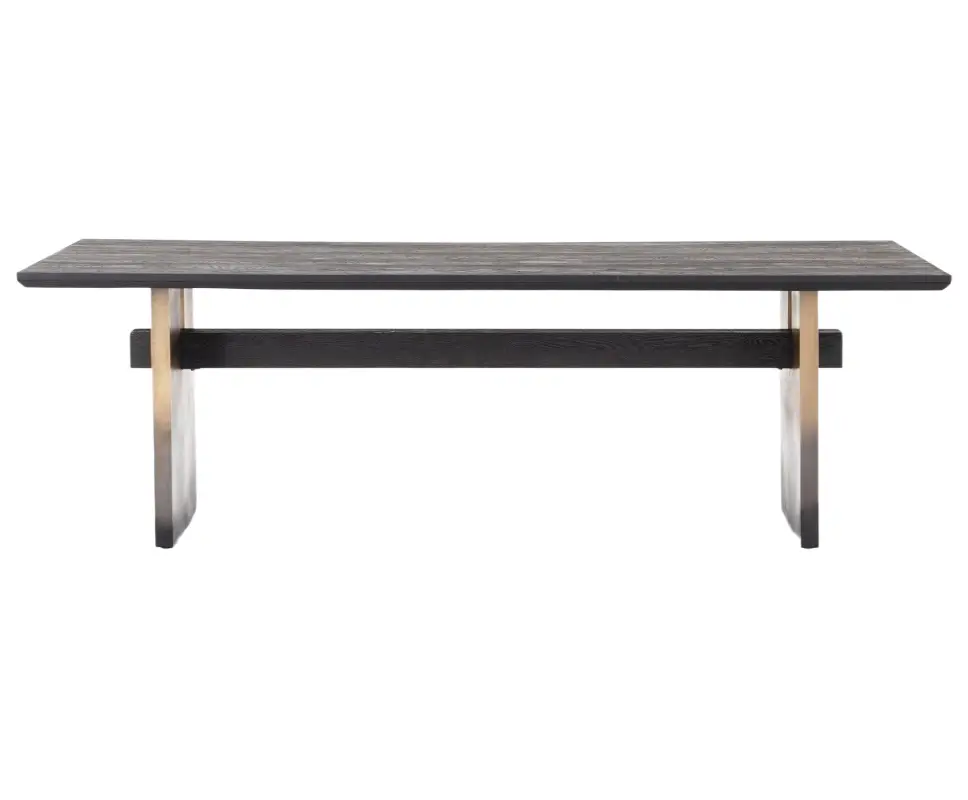
A bold, textured finish that pairs naturally with upholstered or mixed-material chairs — versatile enough to anchor both curated and eclectic dining rooms.
Shop This Table
Factor In How You Actually Use the Table
A beautiful table that can't handle daily life becomes a source of stress rather than satisfaction. Before finalizing a material or finish, it's worth being honest about how the table will actually be used — and by whom.
Families with young children are best served by solid wood with a durable lacquered finish or metal-base tables with a hard top. Both withstand everyday impact, are easy to wipe clean, and don't show minor wear dramatically. Glass tops carry fingerprint and breakage risk that makes daily use stressful with small children; highly porous stone requires regular sealing and careful maintenance.
Households that host frequently should prioritize extendable tables with finishes that age gracefully. Avoid lacquer or veneer finishes that show every hairline scratch — look instead for oil-rubbed wood or textured surfaces that absorb character rather than just showing damage.
Smaller households and apartment dwellers benefit most from a round or oval table, which maximizes usable floor space and frees up circulation. A pedestal base — a single central column rather than four legs — also frees up leg room and makes seating more flexible.
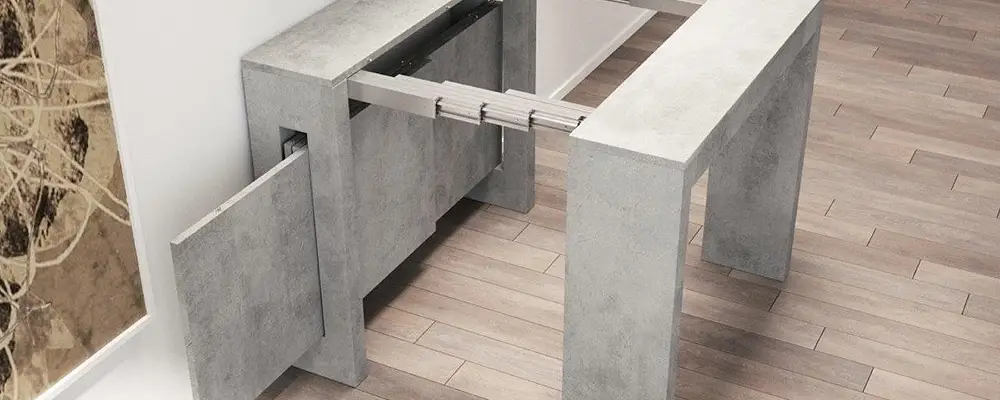
For multi-purpose tables — the ones handling homework, remote work, and dinner in rotation — a hard, easy-to-clean surface is non-negotiable. Solid wood with a lacquer finish holds up well; stone-look surfaces offer a similar durability with a more contemporary appearance.
-
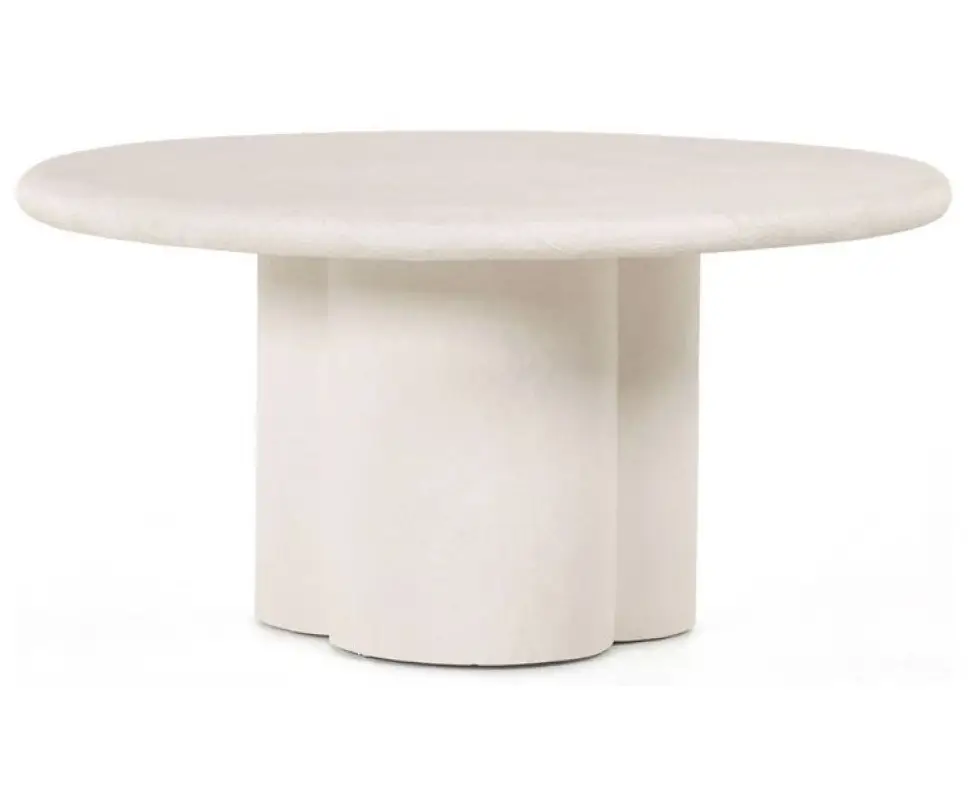
A concrete-look surface that's durable, easy to clean, and resistant to everyday wear — a grounded choice for busy households that still want a design statement.
Shop This Table -
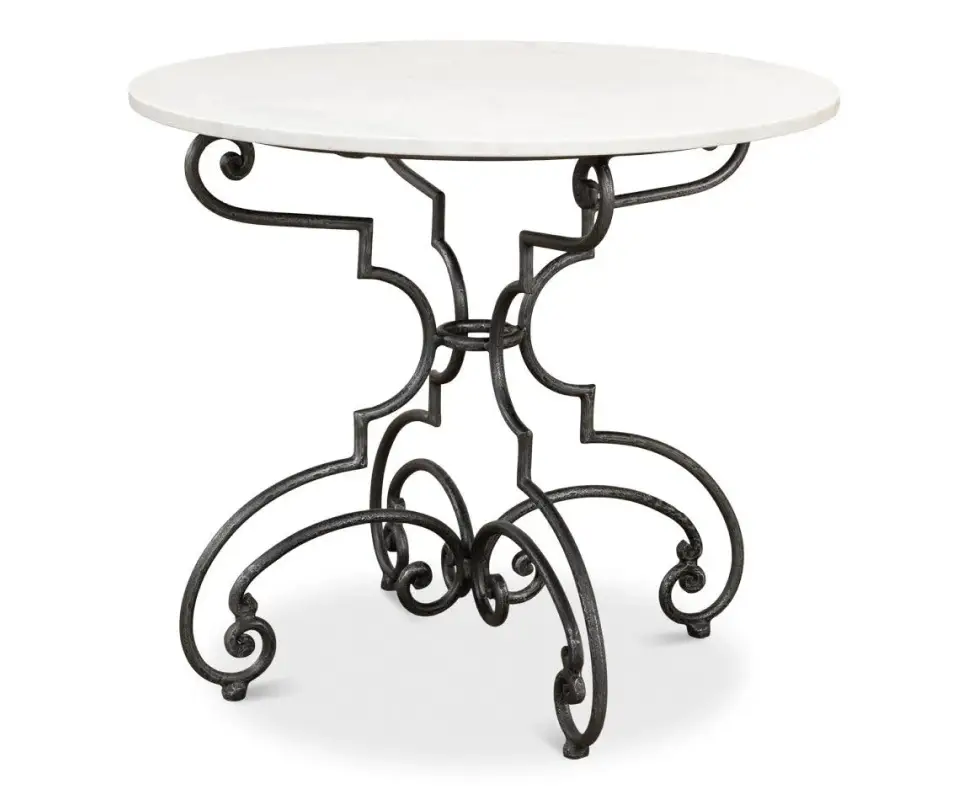
A marble top with an iron base — a statement-making choice for lower-traffic households where elegance takes priority over everyday practicality.
Shop This Table
How Coleman Furniture Helps You Find the Right Match
Once you've worked through your room's style, undertones, dimensions, and use case, the browsing process becomes a filter rather than a search. You're no longer looking for a table you like — you're looking for the table that fits the specific criteria your room has already set.
Coleman Furniture's dining table collection spans all five style categories covered in this guide, with options in solid wood, metal, glass, stone-look, and mixed materials across a range of sizes and price points. Whether you're furnishing a compact apartment kitchen with a pedestal round table or anchoring a dedicated dining room with a large extendable rectangular table, the right option is in the collection.
Every table purchased from Coleman ships with free white glove delivery — meaning it arrives assembled, placed in the room of your choice, and ready to use. There's no guessing about whether it'll fit once it's in the box; our team handles setup so you can focus on how it looks in your space.
Ready to Find the Table That Fits Your Room?
The right kitchen table starts with the room you already have — your style, your colors, your dimensions. Browse Coleman Furniture's full collection to find the size, material, and finish that belongs in your space.
Frequently Asked Questions
Your kitchen table doesn't need to match your cabinets exactly — it needs to share the same undertone. Warm-toned cabinets (honey oak, natural wood, cream) work with warm-toned tables; cool-toned cabinets (white shaker, gray, two-tone) work with cool finishes like espresso, gray, or matte black. Matching the exact wood species or color will often read as too uniform; aligning undertones creates cohesion without making the room feel like a showroom display.
The 3-5-7 rule of decorating refers to arranging decor items in groupings of odd numbers — three, five, or seven pieces — to create visual interest and avoid the static appearance that paired or even-numbered arrangements produce. In a dining or kitchen context, this principle applies to table styling: a centerpiece grouping of three elements (a vase, a candle, and a small bowl, for example) tends to read as more intentional and dynamic than two identical candlesticks placed symmetrically.
A styled kitchen table typically includes a low centerpiece that doesn't obstruct sightlines across the table — a ceramic bowl, a small vase with greenery, or a cluster of candles works well. A table runner in a texture that complements the surface (linen on a wood table, woven jute on a farmhouse table) adds warmth without clutter. Keep daily styling simple and save more elaborate arrangements for entertaining; the table should function easily on ordinary days and look intentional when guests arrive.
A kitchen table does not need to match its chairs. The three approaches — exact match, coordinated (same style family, different finish), and intentional mix — all work, provided one element anchors the combination. If you're mixing materials or styles, the table and chairs should share at least one connecting element: undertone, finish type, or design era. The combination fails when nothing ties the two pieces together, which reads as accidental rather than curated.
Start by measuring your room and subtracting 72 inches from each dimension — that accounts for 36 inches of chair clearance on both sides. The resulting number is the maximum usable table length and width. For example, a room that's 10 feet wide (120 inches) can accommodate a table up to 48 inches wide. From there, estimate seating: plan for 24 inches of table length per person. A 60-inch rectangular table seats four comfortably; a 72-inch table seats six. Round tables seat fewer people for the same footprint but improve traffic flow in smaller spaces.